Solar Energy Society’s Voluntary Contributions Exempt; Not “Business Income” under Proviso to Sec 2(15)

By | December 12, 2025

Solar Energy Society’s Voluntary Contributions Exempt; Not “Business Income” under Proviso to Sec 2(15)

Issue

Whether voluntary contributions received by a society engaged in the promotion of solar energy should be treated as taxable “membership fees” arising from commercial activity (invoking the proviso to Section 2(15)), or if they remain exempt charitable income under Sections 11 and 12.

Facts

  • Assessee: A society engaged in developing solar energy, making it affordable, and ensuring the growth of the solar industry (General Public Utility).

  • The Receipt: The society received amounts classified as “voluntary contributions” from various donors.

  • AO’s Action: The Assessing Officer (AO) treated these receipts as “annual membership fees,” arguing that the society’s activities were in the nature of trade, commerce, or business. Consequently, the AO invoked the Proviso to Section 2(15) to deny the exemption and taxed the receipts as business income.

  • Assessee’s Defense:

    • Variable Amounts: The donations were of different amounts, not a fixed fee, which distinguishes them from standard membership fees.

    • Specific Purpose: Details regarding the specific charitable purposes of the donations were provided.

    • Past Precedent: In earlier years, identical donations for the same objects were granted exemption under Sections 11, 12, and 80G.

Decision

  • Donation vs. Fee: The Tribunal found that the amounts contributed were voluntary and variable, not fixed fees for specific services. Therefore, characterizing them as “membership fees” or commercial receipts was factually incorrect.

  • Proviso Not Applicable: The proviso to Section 2(15) applies only when a charitable entity engages in trade, commerce, or business for a fee or cess. Since the assessee was receiving voluntary donations to promote a public cause (solar energy) without a commercial quid pro quo, the proviso was not attracted.

  • Consistency: Citing the principle of consistency, the Tribunal noted that the Revenue could not take a different view on the same facts that were accepted in earlier assessment years.

  • Ruling: The addition was deleted, and the society was held eligible for exemption under Sections 11 and 12.

Key Takeaways

“Quid Pro Quo” Test: For an activity to be hit by the Proviso to Section 2(15), there must be a commercial exchange (service for a fee). Voluntary contributions, even from industry players, do not automatically become “business income” unless they are directly linked to specific commercial benefits.

Environment as Charity: Promoting renewable energy falls under “preservation of environment” (Section 2(15) specific clause) or “advancement of any other object of general public utility.”

IN THE ITAT DELHI BENCH ‘SMC’
National Solar Energy Federation of India (NSEFI)
v.
Income Tax Officer, Exemption
Ms. Madhumita Roy, Judicial Member
IT Appeal No. 5483 (DELHI) OF 2025
[Assessment year 2017-18]
NOVEMBER  20, 2025
Manoj Pahwa, CA for the Appellant. Manoj Kumar, Sr. DR for the Respondent.
ORDER
1. The instant appeal, filed by the assessee, is directed against the order dated 25.08.2025 (DIN & Order No.: ITBA/APL/S/250/2025-26/1079950703(1) passed by the Commissioner of Income Tax, Appeal Addl/JCIT(A), Agra, arising out of the order dated 24.12.2019 passed by the Income Tax Officer, Ward Exemp. 2(4), Delhi, under Section 143 of the Income Tax Act, 1961 (hereinafter referred to as “the Act”), for Assessment Year 2017-18.
2. The assessee has raised the following grounds of appeal:
“1. That the CIT(A) as well as the Assessing Officer have gravely erred in law and on facts by treating the contributions of Rs. 78,63,150 received from different entities as “membership fees in lieu of services.”
2. That the Ld. CIT(A) and Assessing Officer have erred in application of the proviso to section 2(15) by treating the appellant’s genuine activities as charitable the commercial in nature. The application of the proviso in the appellant’s case is based on mere assumptions and contrary to law, as appellant’s activities were purely charitable, carried out in public interest, and not in the nature of any trade, commerce, or business.
3. That the Ld. CIT(A) and Assessing Officer have erred in inferring that the appellant rendered services merely because some contributors deducted tax under section 194C. This conclusion is factually untenable. and legally untenable.
4. That the Ld. CIT(A) and Assessing Officer have erred in law and facts by denying the appellant’s exemption under sections 11 and 12 even though the Appellant holds a valid registration under Section 12AA and approval under Section 80G. The denial of exemption is therefore arbitrary contrary to binding judicial precedents.
5. That the Ld. CIT(A) and Assessing Officer have erred in law and facts by disallowing the Appellant’s claim for accumulation under section 11(2) on the ground that the purpose mentioned in Form 10 (“Awareness in Solar Power and Events”) was vague. This observation is factually and legally incorrect. Denial of benefit without granting such an opportunity violates the principles of natural justice.
6. The learned CIT(A) gravely erred in dismissing the appeal without considering the appellant’s detailed reply dated 01.07.2025, filed in response to notice under section 250 23.06.2025. dated Thus, constituting a clear violation of the principles of natural justice.
7. That the Ld. CIT(A) order passed is contrary to facts, bad in law, unjustified. The appellant reserves the right to add, alter, modify or withdraw any ground of appeal at the time of hearing.
3. Brief facts, as noticed in the assessment order are that the assessee is a Society, registered under section 12AA of the Income Tax Act by and under the Notification No. DEL-NR24109-09122014 dated 09.12.2014 issued by the DIT(E), New Delhi.
3.1 The assessee, as per the Revenue, during F.Y. 2015-16 had filed income and expenditure account, showing income from Events and Advertisement and paid taxes on resultant surplus conceding it to be commercial activities. However, in the year under consideration the assessee has not shown such income separately and receipt of annual contribution from members amounting to Rs.78,63,150/- has been claimed as donation under Section 80G of the Act which has duly been allowed. According to the Revenue, the Annual membership fee is not a voluntary donation but is charged in lieu of services received/receivable from the organization upon entering into the membership by consenting to the terms and conditions of the organization. Further, according to the Revenue activities of the registered public charitable trust can be characterized as ‘advancement of object of General Public Utility’ as defined in section 2(15) of the Act. According to Revenue assessee is activity which can be characterized as activity in the nature of trade, commerce or business or any rendering of service in relation to any trade commerce of business for a cess or fee or other consideration.
3.2 Show cause notice was issued on 12.11.2019 wherein the assessee replied as follows:
“Reply: The trust is doing charitable activities in the field of solar energy and is registered under section 12AA Trust is spreading awareness by organizing seminars and events for solar power. NSEFI is dedicated to promoting the solar energy and it’s access to the masses, with joint efforts with the member companies and supported the governments at centre and states in achieving their goals of achieving exponential growth in development of solar power plants.
For running the affairs of the association and organizing various events in social interest funds are required. So the trust has created a structure of member ship fees. The donations from the member companies are used for meeting the cost of establishment – rented office accommodation, employees’ salary, and administrative expenses. Educating the companies and groups on energy access to masses at affordable cost. The trust do not contribute from general public or taking any grant from the government.
2. Reply: As per Object Clause of the trust clause 601 (x) “To undertake all activities that may generate funds, create awareness about lead to adoption of help in generation of new ides and promotion of solar energy in general and in furtherance of the objects of the Public Trust” It is clearly mention about awareness of solar energy power and the same was communicated in Form 10. Therefore exemption u/s 11(2) should not be disallowed.”
3.3 The Learned Assessing Officer was of the view that Form 10 filed by the assessee on 30.10.2017 showing accumulation an amount of Rs.33,11,589/- under Section 11(2) of the Act is not eligible for exemption. Further that no specific purpose has been mentioned in Form 10 and it merely states ‘Awareness in Solar Power and Events’. The same cannot be said to be the fulfillment of conditions for allowing the accumulation of income. The purpose mentioned is vague and therefore, held that the assessee is a not a mutual organization and is hit by proviso to Section 2(15) of the Act. The entire voluntary contribution received by the assessee amounting to Rs. 78,61,580/- was found to be actual annual membership fees and therefore, the Assessing Officer computed the taxable income at Rs. 48,67,980/-. The AO finalized the assessment denying the exemption under Section 11 & 12 of the Act.
3.4 In appeal, the assessee filed relevant documents in support of the claim along with the donation and ledger. The Learned CIT(A) affirmed the action of the Assessing Officer on the pretext that receipts are commercial in nature and the assessee is hit by proviso to Section 2(15) and 13(8) which disentitle the assessee for exemption. Hence this appeal before us.
4. Heard the parties and perused the materials available on record. After perusal of the entire set of documents it is noticed that as per the Trust Deed, following are the objects of the assessee Trust –
“OBJECTS OF THE PUBLIC TRUST
6.1 The primary object of the Public Trust is development of solar energy and all related industry in India and to make solar energy affordable for all and to ensure widespread use and speedier growth and global competitiveness of solar industry in India and thereby to serve the cause of global warming and climate change and to contribute towards nation building. To this end, the Public Trust may carry out or cause the carrying out of the following main objects:

(1) To arrange seminars, workshops, group discussions, exhibitions etc. on the subjects of mutual interest.

(ii) To work in close cooperation and coordination with the Government of India as also State Governments to achieve national goals for solar energy.

(iii) To provide a forum fchange of ideas and experience gained.

(iv) To generate white papers, research papers and studies on various issues affecting the solar industry

(v) To render advice and give suggestions to the policy makers in a constructive manner for a balanced and sustainable growth of the industry -on the lines of CII, FICCI and similar national industry associations

(vi) To help the Government and other institutions in carrying out research and demonstration of new technologies and products in the field of solar energy.

(vii) To interact with the central and state regulators and similar bodies such as CERC, CEA, state nodal agencies etc. for challenges effecting the solar industry.

(viii) To collaborate with similar international bodies and undertake activities of mutual interest.

(ix) To take up issues of immediate national interest including RPO enforcement, bankability of RECs, promoting indigenization in a sustainable manner, priority sector lending by nationalized banks and other financial institutions, availability of finance at internationally competitive rates and help in creation of dedicated financial institutions for supporting the solar energy related industry in India.

(x) To undertake all activities that may generate funds, create awareness about, lead to adaptation of, help in generation of new ideas and promotion of solar energy in general and in furtherance of the objects of the Public Trust.

(xi) To do all such things as the Trustees may decide from time to time for welfare of the Public Trust and in pursuance of the above objects of the Public Trust.”

4.1 The case of the assessee is as follows:
(i)For the Assessment Year 2017-18, the appellant filed its return of income declaring Nil income. During the relevant year, the trust received 78,63,150 as voluntary contributions, which were incorrectly classified by the Assessing Officer (AO) as “annual membership fees” without proper factual analysis.
(ii)It is submitted that the amount of 78,63,150 consists of donations from multiple entities, as shown in the ledger. These contributions vary widely in quantum and timing. If these had been uniform membership fees, as alleged by the AO, the amount received from each contributor would have been identical or fixed by policy. However, the ledger clearly reveals that different donors contributed unequal and unstandardized amounts, which is inconsistent with the nature of a fee and confirms the voluntary and donation-based character of the receipts.
(iii)Furthermore, no specific service or benefit was extended to any contributor in exchange for the donation. The funds were collectively utilized for charitable activities such as seminars, capacity-building, and solar energy awareness. Hence, there was no element of quid pro quo or commercial transaction.
(iv)The AO has, without basis, presumed these receipts to be commercial in nature based solely on a few companies having mistakenly deducted TDS under section 194C. However, this deduction was done unilaterally by the payers, and it cannot alter the true nature of receipts in the hands of the appellant.
(v)Accordingly, the classification of donations as “membership fees” is factually incorrect and legally untenable. The denial of exemption under sections 11 and 12 and the application of the proviso to section 2(15) are therefore unjustified:
4.2 The assessee further submits as follows:
(vi)The donation ledger clearly shows varied amounts received from different entities, disproving the AO’s assumption of uniform membership fees. If these were fixed membership dues, all members would have paid the same amount. No contractual obligation, service agreement, or quid pro quo existed between the trust and the contributors. The contributions were voluntary in nature, with no service rendered in return. The funds were applied towards organizing awareness seminars, policy outreach, and renewable energy promotion, which fall squarely within the trust’s charitable objectives. The AO’s reliance on labels or mistaken TDS deductions by donors is misplaced; the substance and intent of the transaction matter, not the terminology or form used.
4.3 The assessee relied upon the following case laws:
(a)In the case of Commissioner of Income-tax-II, Thane v. Mumbai Metropolitan Regional Iron & Steel Market Committee ((1991) 192 ITR 290 (Bom.)], the High Court of Bombay held that Even if receipts resemble commercial form, the dominant intention and use of funds determine their nature. Voluntary contributions toward a charitable cause cannot be taxed as business income without proof of service rendered.
(b)In the case of Director of Income-tax v. Garden City Educational Trust [(2013) 353 ITR 12 (Kar)], the High Court of Karnataka held that When receipts are voluntary and not against any specific service, they cannot be taxed as commercial income. Label of “fee” alone is not sufficient.
(c)In the case of Commissioner of Income-tax (Exemptions) v. Ahmedabad Urban Development Authority [(2022) 448 ITR 304 (SC)], the Hon’ble Supreme Court of India held that Even if revenue is generated, the dominant purpose being charitable ensures exemption under section 11.
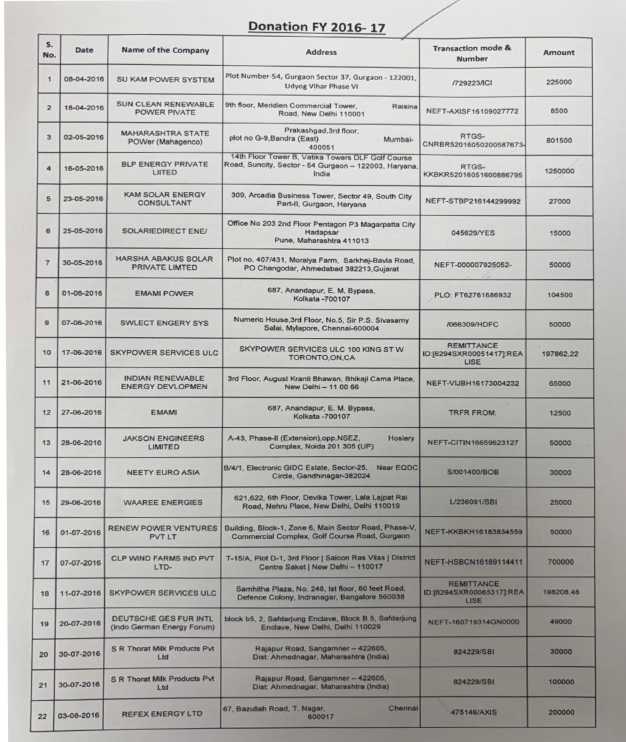
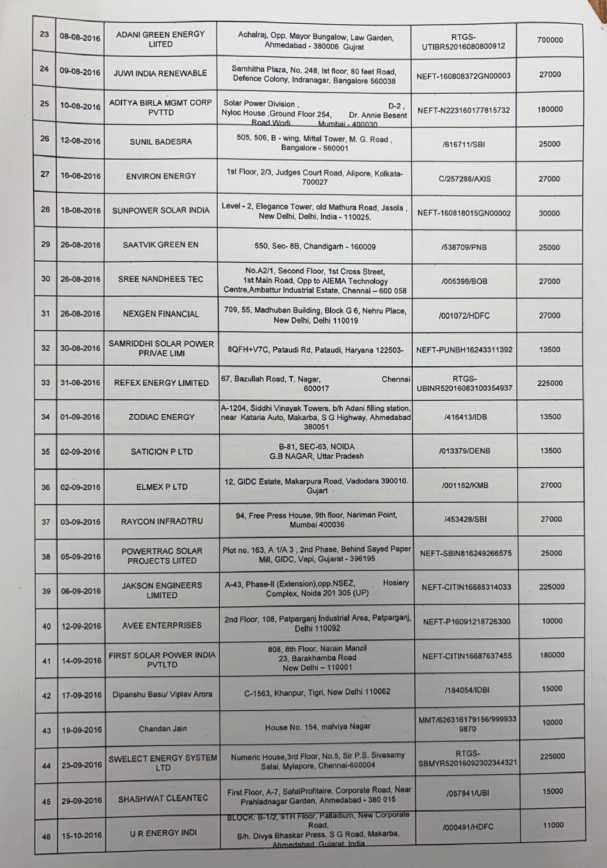
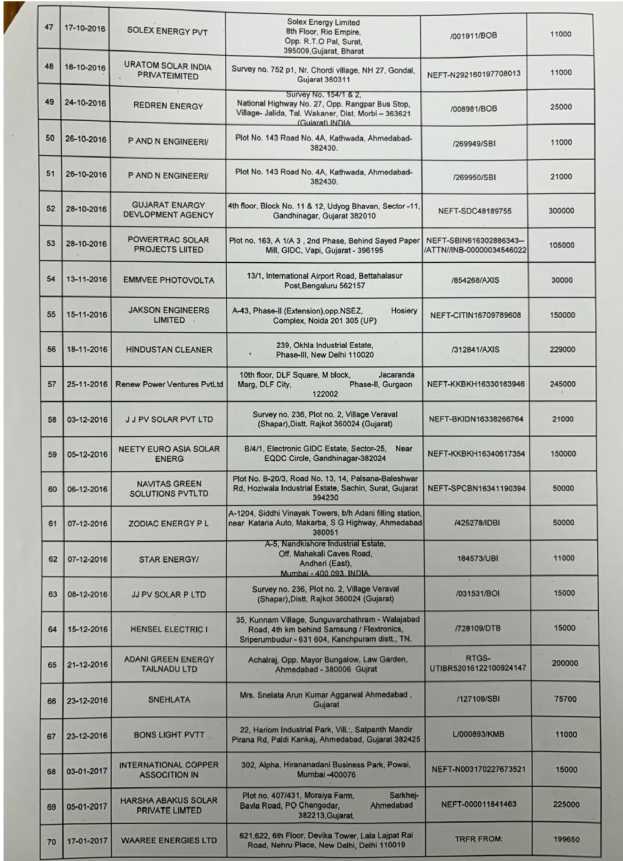
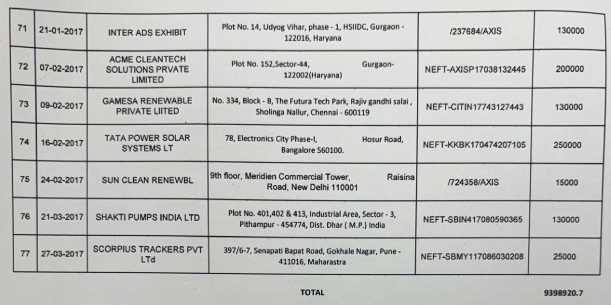
4.4 The assessee before us submitted all the details of the donations received. The details of donation for F.Y. 2016-17, which is on record, are as under:
4.5 It appears that the amounts donated by the donors are not of specific amount rather different amounts of donations have been made by the donors which cannot be termed as membership fees. The details of specified purposes for donations are also part of the Paper Book which has been duly perused.
4.6 Apart from that the details of assessment orders for A.Y. 2018-19, A.Y. 2019-20, A.Y. 2020-21, A.Y. 2021-22, A.Y. 2023-24 and A.Y. 2024-25 wherein the objects of General Public utility as per Section 2(15) has been shown at 0% ; no such dispute on the identical donations received by the assessee to run the objects of the Society has been raised by the Revenue and in all the years the exemption under Sections 11, 12 and 80G was granted. Thus, having regard to the entire aspect of the matter and the details of donations furnished by the assessee, the view taken by the Revenue that the activity of the assessee is hit by proviso to Section 2(15) of the Act is not found to be sustainable. The addition made by the Assessing Officer is, therefore, deleted. The Ld. AO is directed to grant relief to the assessee in terms of the order passed by the Bench under Sections 11 & 12 of the Act and other relief accordingly,
5. In the result, assessee’s appeal is allowed.