ORDER
Krinwant Sahay, Accountant Member.- This is an appeal filed by the Assessee against the order of the Ld.CIT(A), NFAC, Delhi dt. 16/10/2025 for the Assessment Year 2019-20.
2. In the present appeal Assessee has raised the following grounds:
| 1. |
|
That on the facts and in the circumstances of the case and in law, the Ld. CIT(A) has erred in upholding the order passed u/s 147 dated 26.03.2024 whereby an addition of Rs.13,55,000/- has been made u/s 69 over and above the returned income of Rs.3,91,380/-. |
| 2. |
|
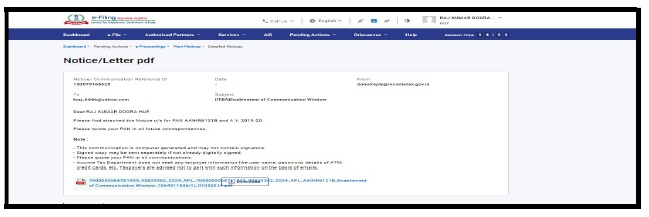
That the Ld. CIT(A) erred in dismissing the appeal as notices were sent to the wrong e-mail ID kraj 6666@yahoo.cominstead of the appellant’s registered ID “rkdogra@gmail.com as per Form 35. |
| 3. |
|
That the Ld. CIT(A) has erred in appreciating that the assessment completed u/s 147 is bad in law, being void ab initio, as no valid prior approval wasobtained u/s 148B before issuance of notice u/s 148. |
| 4. |
|
That the Ld. CIT(A) has erred in law in upholding the validity of notice issued u/s 148 despite the fact that neither the information or material forming the basis of the notice nor the satisfaction recorded by the AO, including the alleged Excel-sheet data and purported employee statements, were ever supplied to the appellant; thereby rendering the proceedings bad in law as the reassessment has been initiated and sustained without any cogent, admissible, or incriminating material establishing that the appellant made any cash payment. |
| 5. |
|
That the Ld. CIT(A) has erred in law in upholding the notice issued u/s 148 despite the admitted incorrect assumption that the property was purchased from the searched party i.e., M/s Omaxe Group, whereas the actual seller was M/s Bhanu Infrabuild Pvt. Ltd. |
| 6. |
|
That the learned CIT(A) has erred in law and on facts in upholding the reassessment proceedings, ignoring the fact that the jurisdictional notice issued under section 148 is bad in law, as the approval granted by the learned PCIT under section 151 is mechanical and without independent application of mind, particularly when the appellant had purchased the property from M/s Bhanu Infra Private Limited and not from Omaxe group. |
| 7. |
|
That the appellant craves leave to add to, amend, alter or withdraw any of the above grounds at the time of hearing of the appeal. |
3. Briefly the facts of the case are that the assessee, being a Hindu Undivided Family, filed its return of income for the Assessment Year 2019-20 declaring gross income of Rs.5,45,379/-, comprising interest income and agricultural income. Subsequently, the case of the assessee was reopened by issuance of notice under section 148 dated 31.03.2023 on the basis of information flagged under the Risk Management Strategy in the category of High Risk CRI/VRU cases. As per the reasons recorded, it was alleged that the assessee had paid cash amounting to Rs.13,55,000/- over and above the recorded sale consideration for acquisition of Unit No. INTT/FIRST/SHOP/3-5/UD/29 situated in the project namely International Trade Tower, Chandigarh, during the financial year 2018-19. The reopening proceedings were stated to have been initiated on the basis of information emanating from search and seizure action conducted under section 132 of the Act in the case of the Omaxe Group on 14.03.2022, after obtaining prior approval from the Ld. Principal Commissioner of Income Tax by invoking Explanation 2(iv) to section 148 of the Income-tax Act, 1961.
3.1 During the course of assessment proceedings, the assessee categorically submitted before the Assessing Officer that the agreement for purchase of the impugned property had been executed with M/s Bhanu Infrabuild Private Limited and not with Omaxe Group as alleged in the reasons recorded. It was contended that the very basis of reopening was factually incorrect and misconceived. The assessee further submitted that the commercial unit in question had been purchased for a total consideration of Rs.13,91,130/- only, and in support thereof, copy of the purchase agreement along with other documentary evidences were duly furnished before the Assessing Officer.
3.2 The assessee also brought to the notice of the Assessing Officer that the entire payment towards purchase of the aforesaid property had been made through proper banking channels. It was explained that a substantial portion of the sale consideration was paid out of loan funds obtained from Swan Women Multipurpose Cooperative Society, which were directly disbursed to M/s Bhanu Infrabuild Private Limited through RTGS. The remaining amount of Rs.91,130/- was also paid through banking channel in the subsequent year. Accordingly, it was contended that the entire transaction stood fully substantiated from documentary evidences available on record and, therefore, the unverified information allegedly gathered during the course of search proceedings could not be relied upon for making any adverse inference against the assessee.
3.3 The Assessing Officer, however, placed reliance upon Annexure A-35, stated to be a hard disk seized during the course of search proceedings conducted at 14, Local Shopping Centre, Kalkaji, New Delhi, being office premises of Omaxe Limited. Reliance was also placed upon Annexure A-27 from which certain Excel files were allegedly extracted. On the basis of such annexures, the Assessing Officer prepared a chart mentioning details of the alleged seized documents, their respective paths, premises and remarks. The Assessing Officer further relied upon the statement of Shri Sahil Juneja, stated to be a key employee of Omaxe Group, and drew adverse inference against the assessee on the basis of such material. The assessee, however, contended that neither the alleged seized material nor the statements relied upon by the Assessing Officer were ever supplied during the course of assessment proceedings. It was thus submitted that reliance upon such material without affording opportunity of inspection and rebuttal was in gross violation of principles of natural justice and, therefore, any addition based thereupon was liable to be deleted.
3.4 The Assessing Officer, however, proceeded to hold, merely on the basis of preponderance of probabilities, that the assessee had made cash payment of Rs.13,55,000/- over and above the recorded consideration and accordingly made addition of the said amount under section 69 of the Income-tax Act, 1961. According to the assessee, the addition so made was purely based on conjectures, surmises and unverified third-party material without there being any independent corroborative evidence on record, despite the settled legal proposition that suspicion, however strong, cannot take the place of evidence.
4. Against the order of the AO, the assessee went in appeal before the Ld. CIT(A. However, the assessee could not effectively participate in the appellate proceedings, as the notices as well as the appellate order were sent to an incorrect e-mail address, namely “kraj 6666@yahoo.com”, instead of the assessee’s correct and registered e-mail address “rkdogra@gmail.com” as mentioned in Form No. 35 and accordingly Ld. CIT(A) dismissed the appeal vide order dated 16.10.2025 on account of non response from the side of appellant.
5. Against the order of the Ld. CIT(A) the assessee preferred an appeal before the Tribunal.
6. During the course of hearing, the assessee filed ground-wise submissions, which are reproduced as under:
1. Submissions to Ground No.3
Ground No.3:-That the Ld. CIT(A) has erred in appreciating that the assessment completed u/s 147 is bad in law, being void ab initio, as no valid prior approval was obtained u/s 148B before issuance of notice u/s 148.
| (a) |
|
It is respectfully submitted that the reassessment proceedings in the present case were initiated under section 147 of the Act on the basis of information referred to in Explanation 2(iv) to section 148., and notice under section 148 dated 31.03.2023 was issued after obtaining prior approval of the Ld. PCIT vide Reference No. 100000038618264.The Copy of the same is enclosed at page no.1 of PB. |
| (b) |
|
Your Honours will appreciate that the Assessing Officer has completed the impugned assessment under section 147 vide order dated 26.03.2024. However, no approval as mandated under section 148B of the Act has been obtained or recorded. The assessment order is completely silent on this aspect, which is evident from page 36 of the assessment order. |
| (c) |
|
Your Honours would further appreciate that once the assessment proceedings were initiated under section 148 by invoking Explanation 2, it was incumbent upon the Assessing Officer to obtain the mandatory approval of the specified authority, i.e., the Additional Commissioner/Additional Director/Joint Commissioner/Joint Director, before completing the assessment as required under the provisions of section 148B of the Act. In the present case, no such approval has been obtained. The relevant provision is reproduced for your ready reference:- |
148B:-No order of assessment or reassessment or recomputation under this Act shall be passed by an Assessing Officer below the rank of Joint Commissioner, in respect of an assessment year to which clause (i) or clause (ii) or clause (iii) or clause (iv) of Explanation 2 to section 148 apply except with the prior approval of the Additional Commissioner or Additional Director or Joint Commissioner or Joint Director.
| (d) |
|
This lapse constitutes a fatal legal defect, as the assessment could not have been validly framed without obtaining the mandatory approval prescribed under section 148B. In view of the above, it is most humbly submitted that the impugned assessment proceedings are bad in law and liable to be quashed for want of requisite statutory approval. |
| (e) |
|
It is settled law that where the statute prescribes a particular procedure to be followed before assumption of jurisdiction, the same is required to be strictly complied with, failing which the entire proceedings become void ab initio. The requirement of approval under section 148B is a substantive safeguard introduced by the legislature to ensure application of independent mind by the specified authority before completion of reassessment, particularly in cases based on information arising out of search proceedings under Explanation 2(iv) to section 148. |
| (f) |
|
Furthermore, it is important to reiterate that while introducing this provision, the Memorandum Explaining the Finance Bill, 2022 specifically emphasized the legislative intent behind section 148B — to ensure that search-related assessments are subject to a higher level of scrutiny and oversight, thereby reducing avoidable inaccuracies in such assessments. The memorandum explaining the Finance bill 2022 is reproduced as under: |
“4. In order to align the scheme of search assessments with the intent of the Act, it is proposed to –
(iii) insert a new section 148B to provide that no order of assessment or reassessment or recomputation under the Act shall be passed by an Assessing Officer below the rank of Joint Commissioner, except with the prior approval of the Additional Commissioner or Additional Director or Joint Commissioner or Joint
Director, in respect of assessments consequent to search, survey and requisition, to reduce avoidable inaccuracies.”
| (g) |
|
In Shin-Etsu Chemical Co. Ltd. v. Aksh Optifibre Ltd. [2005] 7 SCC 234 (2005 (8) TMI 622 – SC), the Supreme Court has observed that if the requirements of a statute which prescribes the manner in which something is to be done are expressed in negative language, that is to say, if the statute enacts that it shall be done in such a manner and in no other manner, it has been laid down that those requirements are in all cases, absolute, and that neglect to attend to them will invalidate the whole proceeding. Further, In Vijay Narayan Thatte v. State of Maharashfra [2009] 9 SCC 92,(2009) (8) TMI 1177) the Supreme Court has held that it is well settled that when a statute is couched in negative language it is ordinarily regarded as peremptory and mandatory in nature. The Supreme Court, in some decisions has held that merely because a provision of law is couched in a negative language implying mandatory character, the same is not without exceptions. However, the present case deals with the interpretation of a taxing statute. It is well settled that a taxing statute has to strictly construed, therefore, from the language employed in section 153D of the Act, the requirement of obtaining the prior approval of the Joint Commissioner has to be regarded as mandatory in nature. |
| (h) |
|
In absence of the mandatory approval under section 148B, the impugned assessment order suffers from a jurisdictional defect and is liable to be quashed. Accordingly, the reassessment order passed under section 147 read with section 144B deserves to be held as void ab initio and liable to be set aside on this ground alone.In this regard reliance is placed on the following Judicial Precedents: |
| ?Homelife |
|
Buildcon (P.) Ltd. v. Dy. CIT (Chd-Trib)/2025 (7) TMI 1231 (Chd-Trib). |
| ?Malbros |
|
International (P.) Ltd. v. Dy. CIT (Chd-Trib)/2026 (1) TMI 983 (Chd-Trib) |
| ? |
|
Jamna Dass Nikkamal Jain Saraf (P) Ltd v. Dy. CIT [IT Appeal No. 403 (Chd) of 2025, dated 4-11-2025]/2025 (12) TMI 171 – ITAT CHD. Pr. CIT v. Sunrise Finlease (P.) Ltd (Guj) [28-11-2017]. |
| ? |
|
Sumer Associates v. Dy. CIT [IT Appeal No. 4916 (Mum) of 2016, dated 26-12-2018]/2019 (2) TMI 1529 – ITAT MUM. |
| ? |
|
CIT v. Gulamali Somji [SLP (Civil) No. 19389 of 2013, dated 5-8-2013]/2013 (8) TMI 1186 (SC) AND CIT v. Shri. Akil Gulamali Somji [IT Appeal (L) No. 1416 of 2012, dated 15-1-2023]/2013 (1) TMI 790 BOM AND IN THE ITAT PUNE BENCH ‘B’ Akil Gulamali Somji v. ITO 137 ITD 94 (Pune). |
| ? |
|
Madan Lal v. Dy. CIT [IT Appeal No. 112 to 118 (Asr) of 2018, dated 16-8-2021]/2021 (8) TMI 1336 – ITAT AMRITSAR. |
| ? |
|
Saurabh Agarwal v. Dy. CIT [IT Appeal No. 263 to 267 (Asr) of 2017, dated 18-9-2019]/2019 (9) TMI 866 – ITAT AGRA. |
| ? |
|
Ajay Sharma v. Dy. CIT [IT Appeal No. 3554 (Delhi) of 2015, dated 14-2-2020]/2020 (2) TMI 718 – ITAT DELHI. |
| ? |
|
Sunny Arora v. Dy. CIT [IT Appeal No. 477 (Asr) of 2019, dated 2-9-2022]/2022 (9) TMI 494 – ITAT AMRITSAR. |
| ? |
|
Smt. Sarika Mittal v. Asstt. CIT [IT SS Appeal Nos. 12 to 14 (Jab) of 2014, dated 4-3-2021]/2021 (4) TMI 986 – ITAT JABALPUR. |
2. Submissions to Ground No.4
Ground No.4:-That the Ld. CIT(A) has erred in law in upholding the validity of notice issued u/s 148 despite the fact that neither the information or material forming the basis of the notice nor the satisfaction recorded by the AO, including the alleged Excel-sheet data and purported employee statements, were ever supplied to the appellant; thereby rendering the proceedings bad in law as the reassessment has been initiated and sustained without any cogent, admissible, or incriminating material establishing that the appellant made any cash payment.
| (a) |
|
That the Ld. AO has erred in law and on facts in alleging that the appellant made cash payment over and above the stated sale consideration for acquisition of Unit No. INTT/FIRST/SHOP/3-5/UD/29 merely on the basis of documents allegedly seized from the premises of the Omaxe Group. |
| (b) |
|
That it is respectfully submitted that the copies of the excel sheets and the statement relied upon by the AO were never confronted to the appellant for rebuttal and thereby violating the principle of natural justice. The right to a fair hearing and the right to rebut adverse evidence are fundamental to the principles of natural justice. The failure to confront the excel sheets, especially when they are being used as the basis for making significant additions, deprived the appellant of an opportunity to challenge their authenticity, context, or relevance to the transactions under scrutiny. This failure to provide an opportunity to the appellant to explain or rebut the seized material severely undermines the fairness of the assessment process. |
| (c) |
|
Moreover, the summary of theexcel sheets reproduced in the assessment order neither contain the name of the appellant nor establish any nexus whatsoever with the appellant. Further, there is nothing on record to demonstrate how the statements were utilized to draw any adverse inference against the assessee. Moreover, even the extracts of the statement reproduced in the assessment order do not demonstrate or establish that the said excel sheets contain details of any cash allegedly received over and above the consideration recorded in the registered sale deed. In absence of any direct reference to the appellant or corroborative material linking the appellant with the alleged entries, the inference drawn by the Ld. AO is based on mere presumption and surmises and is therefore unsustainable in law. |
| (d) |
|
Furthermore, the AO in para 8 on page no.35 of Assessment Order itself mentioned that the preponderance of probability of the payment of Rs 13,55,000/- in cash by the assessee is very much there, which itself signifies that department relies on circumstantial evidence, patterns, or alleged seized material to argue that a transaction likely occurred in a particular manner. However, such conclusion is not supported by any credible material having nexus with the assessee, and addition cannot be based merely on assumptions, suspicion, or generalized allegations. |
| (e) |
|
It is a settled position of law that addition cannot be made merely on the basis of third party documents unless a clear nexus is established between such documents and the assessee. Suspicion, however strong, cannot take the place of evidence. In the present case, the Ld. AO has proceeded merely on presumptions and general observations relating to certain excel sheets allegedly found from the premises of Omaxe Group, without bringing any corroborative material on record to demonstrate that the appellant has actually made any cash payment over and above the recorded consideration and thus the order passed on the assumptions is bad in law. Reliance is placed on the following judicial precedents : |
| ? |
|
Anupama Gupta v. ITO [IT Appeal No. 972 (Chd) of 2025, dated 8-12-2025]/2025 (12) TMI 1813 – ITAT CHD. |
| ? |
|
Rasila Lalitkumar Cholera v. ITO [IT Appeal No. 7544 (Mum) of 2025, dated 13-2-2026]/2026 (2) TMI 870 – ITAT MUM. |
| ? |
|
Dilip Bhanverlal Dangi (HUF) v. ITO [IT Appeal No. 6008 (Mum) of 2025, dated 13-2-2026]/2026 (2) TMI 811 – ITAT MUM. |
| ? |
|
Pr. CIT v. Shipra Enclave (P.) Ltd 2026 (2) TMI 321 (Cal) |
| ? |
|
SKZ Developers LLP v. ACIT/DCIT (Ahd-Trib)/2026 (1) TMI 817 – ITAT AHD. |
| ? |
|
Dy. CIT v. Das Offshore Ltd [IT Appeal No. 2944 (Mum) of 2025, dated 30-12-2025]/2026 (1) TMI 187. |
| (f) |
|
That the appellant duly furnished complete documentary evidences establishing that the entire consideration for the said unit was paid through proper banking channels and no payment in cash was made over and above the agreed consideration. The appellant placed on record the copy of allotment agreement evidencing advance payment of Rs.13,91,130 (refer page no. 2-21 of PB), wherein para 2 specifically provides that all payments shall be made through account payee cheque, demand draft, banker’s cheque or online banking channels. Further, Schedule-D forming part of the allotment agreement clearly reflects the total consideration at Rs.13,91,130.Additionally, certificate issued by Swan Women Multipurpose Cooperative Society confirming sanction and disbursement of loan directly to M/s Bhanu Infra Build Private Limited further substantiates that the entire transaction was carried out through verifiable banking channels, thereby completely negating the allegation of any alleged cash component.(Refer page 22-23 of PB) |
| (g) |
|
Further, reliance is also placed upon the letter issued by Bhanu Infra Private Limited (refer page 24 of PB), wherein the total sale consideration has been clearly stated as Rs.13,70,155/- (excluding GST). Therefore, the allegation that any amount over and above the stated consideration was paid does not hold good, particularly when the builder itself has confirmed the consideration in accordance with the sale agreement.It is submitted that the said document is a vital piece of evidence, which has been duly placed on record before the Assessing Officer. In view of the above, the addition made merely on presumptions and without conducting proper verification is unsustainable in law. |
| (h) |
|
That the appellant has duly discharged the onus cast upon it by furnishing complete documentary evidences demonstrating that the entire consideration for purchase of the property has been paid through verified banking channels and no payment has been made in cash over and above the recorded consideration. The appellant has placed on record the allotment agreement, payment details, bank statements and loan disbursement certificate evidencing that the transaction has been carried out through proper banking channels only. However, the Ld. AO has failed to bring any cogent material or corroborative evidence on record to establish that any cash payment has actually been made by the appellant. Reliance in this regard is placed on the following judicial precedents which deals with the similar facts as in the case of appellant: |
| ?Amarjot |
|
Singh Sohi, HUF v. ITO [IT Appeal No. 1065 (Chandi) of 2025, dated 7-1-2026]/2026 (2) TMI 351. |
| ? |
|
Nitin Arora v. Dy. CIT [IT Appeal No. 8283 (Delhi) of 2025, dated 27-2-2026]/2026 (4) TMI 548 – ITAT DELHI. |
| ? |
|
Smt. Ranjana Kumari v. DCIT/ACIT (Central) [IT Appeal No. 1056 (Chandi) of 2025, dated 8-4–2026]/2026 (4) TMI 769 – ITAT CHD. |
| (i) |
|
Further, the addition by assessing officer without confronting the material on which adverse inference is drawn against the appellant is wholly unsustainable and liable to be deleted. In this regard, the reliance is placed on the following Judicial Precedents: |
| ? |
|
Dy. CIT v. Vilpaben Pranavbhai Vora And (Vice-Versa) [IT Appeal No. 7595 (Mum) of 2025, dated 13-4-2026]/2026 (4) TMI 920 – ITAT MUM. |
| ?[28-01-2003] |
|
ITAT DELHI BENCH ‘E’ Babcock Power (Overseas Projects) Ltd v. Dy. CIT [2003] 86 (Delhi) (Mag.). |
| ? |
|
Bharat Solanki v. Dy. CIT (Mum-Trib).* |
| ? |
|
CIT v. Ram Kumar (Punj & Har).* |
3. Submissions to Ground No.5 and Ground No.6
Ground No.5:-That the Ld. CIT(A) has erred in law in upholding the notice issued u/s 148 despite the admitted incorrect assumption that the property was purchased from the searched party i.e., M/s Omaxe Group, whereas the actual seller was M/s Bhanu Infrabuild Pvt. Ltd.
Ground No.6:-That the learned CIT(A) has erred in law and on facts in upholding the reassessment proceedings, ignoring the fact that the jurisdictional notice issued under section 148 is bad in law, as the approval granted by the learned PCIT under section 151 is mechanical and without independent application of mind, particularly when the appellant had purchased the property from M/s Bhanu Infra Private Limited and not from Omaxe group.
| (a) |
|
That the case of the appellant was reopened and notice u/s 148 dated 31.03.2023 was issued after obtaining prior approval of the Ld. PCIT, Chandigarh-1 vide Reference No. 100000038618264, on the basis of alleged information stated to have been found from the office premises of Omaxe Limited during the course of search conducted in the case of Omaxe Group on 14.03.2022. It is submitted that the approval and initiation of proceedings are solely based on third-party information without establishing any live nexus or linkage with the appellant, thereby rendering the assumption of jurisdiction arbitrary and unsustainable in law. |
| (b) |
|
That neither in the notices issued u/s 142(1) nor in the assessment order has the Ld. AO mentioned that the property alleged to have been purchased by the appellant from M/s Bhanu InfrabuildPvt. Ltd. The Ld. AO has repeatedly referred to alleged entries pertaining to various group entities without specifically identifying or establishing any connection with M/s Bhanu InfrabuildPvt. Ltd., from whom the appellant has actually purchased the property. The absence of reference to the correct counter-party clearly demonstrates non-application of mind and shows that the proceedings have been initiated on the basis of incorrect facts and assumptions, or for the purpose of making roving and fishing enquiries, which is impermissible in law. |
| (c) |
|
Further, the approval granted by the Ld. PCIT u/s 151 for issuance of notice u/s 148 is mechanical in nature and without independent application of mind, as the approval appears to have been granted merely on the basis of general information relating to Omaxe Group without examining whether any specific material exists against the appellant. The approving authority has failed to verify whether the alleged seized material specifically pertains to the appellant or evidences any unaccounted payment made by the appellant. |
| (d) |
|
It is a matter of record that no material was provided along with the sanction letter, despite the proforma for sanction clearly specifying that the sanction letter, along with the relied-upon documents, should be provided. Furthermore, this material was also not shared during the assessment proceedings, which further substantiates the fact that no material is available with the department. |
| (e) |
|
It is respectfully submitted that the provisions of section 151 require the approving authority to apply its independent mind to the material placed before it and to record satisfaction that it is a fit case for issuance of notice u/s 148. However, in the present case, the approval has been granted in a routine manner without examining whether any material exists linking the appellant with the searched party. The incorrect assumption that the property was purchased from Omaxe Group itself establishes that the approval has been granted without due verification of facts. |
4. Submissions to Ground No.2
Ground No.2:-That the Ld. CIT(A) erred in dismissing the appeal as notices were sent to the wrong e-mail ID “kraj_6666@yahoo.com” instead of the appellant’s registered ID “rkdogra@gmail.com as per form 35.
| (a) |
|
It is respectfully submitted that the Ld. CIT(A) vide order dated 16.10.2025 has dismissed the appeal of the appellant on account of alleged non-compliance and non-response to various notices issued during the course of appellate proceedings. However, the said finding is factually incorrect and contrary to the record. |
| (b) |
|
It is submitted that the appellant was never afforded a proper and effective opportunity of being heard, as all the notices issued by the Ld. CIT(A) were sent on an incorrect e-mail id, namely kraj 6666@yahoo.com, whereas the correct and registered e-mail id of the appellant as mentioned in Form No. 35 is rkdogra@gmail.com. Since the notices were not served on the correct e-mail address, the appellant remained completely unaware of the proceedings before the Ld. CIT(A) and was consequently prevented by sufficient cause from participating in the appellate proceedings and filing necessary submissions and evidences. The relevant snapshot is reproduced for your reference: |
| (c) |
|
It is a settled principle of law that an order passed without providing adequate and effective opportunity of hearing is violative of the principles of natural justice and is liable to be set aside. The dismissal of appal for alleged non-prosecution, without ensuring proper service of notice on the correct email address furnished in Form No. 35, renders the impugned order unsustainable in law. |
| (d) |
|
The appellant respectfully submits that the non-compliance was neither intentional nor deliberate, but occurred solely due to incorrect service of notices by the department. The appellant has a strong case on merits and is in possession of complete documentary evidences substantiating that no cash payment was made over and above the recorded consideration for purchase of the property. However, due to the above procedural lapse, the appellant was deprived of the opportunity to place the same before the Ld. CIT(A). The appellant therefore respectfully prays that the Hon’ble ITAT may kindly admit the submissions and adjudicate the grounds in the interest of justice. |
7. Per contra the Ld. DR strongly relied upon the orders of the lower authorities.
8. We have heard the rival submissions and perused the material available on record. The assessee has challenged the validity of reassessment proceedings initiated under sections 147/148 of the Income-tax Act, 1961 as well as the addition of Rs.13,55,000/- made under section 69 of the Act on account of alleged cash payment over and above the recorded sale consideration for purchase of commercial property.
8.1 At the outset, we find considerable force in the contention of the assessee that the very foundation of the reassessment proceedings is based upon incorrect and factually erroneous assumptions. The reasons recorded for reopening as well as the assessment order proceeded on the premise that the assessee had purchased the impugned property from Omaxe Group and had allegedly made cash payment based on certain excel sheets and material stated to have been found during the course of search conducted in the case of Omaxe Group. However, from the documentary evidences placed on record, including the allotment agreement and payment details, it emerges that the property in question was actually purchased from M/s Bhanu Infrabuild Pvt. Ltd. and not from Omaxe Group. Despite specific objections raised by the assessee during the course of assessment proceedings, the Assessing Officer failed to bring any material on record establishing any nexus between the assessee and the alleged incriminating material stated to have been seized from the premises of Omaxe Group. Thus, the very assumption of jurisdiction under section 148 suffers from nonapplication of mind and absence of tangible material having live nexus with the assessee.
8.2 We further find that the addition under section 69 has been made merely on the basis of alleged excel sheet entries and third-party statements which were never supplied or confronted to the assessee during the course of assessment proceedings. The assessment order itself reveals that the Assessing Officer proceeded merely on “preponderance of probabilities” without bringing any direct, cogent or corroborative evidence on record to establish that the assessee had in fact made any cash payment over and above the recorded consideration. It is a settled proposition of law that suspicion, however strong, cannot take the place of evidence and no addition can be sustained merely on the basis of conjectures, surmises or unverified third-party material without establishing direct nexus with the assessee.
8.3 The assessee, on the other hand, has placed on record complete documentary evidences including allotment agreement, payment schedule, loan disbursement certificate issued by Swan Women Multipurpose Cooperative Society and banking details demonstrating that the entire consideration for purchase of the property stood paid through proper banking channels. The allotment agreement itself specifically provides that all payments were to be made through account payee cheque, demand draft or online banking channels. Further, the loan amount was directly disbursed to M/s Bhanu Infrabuild Pvt. Ltd. through RTGS and the balance consideration was also admittedly paid through banking channels. No defect whatsoever has been pointed out by the Assessing Officer in these documentary evidences furnished by the assessee. In absence of any contrary material brought on record by the Revenue, the documentary evidences filed by the assessee remain unrebutted.
8.4 We also find merit in the legal contention raised by the assessee regarding violation of principles of natural justice. The alleged seized material and statements relied upon by the Assessing Officer were admittedly never furnished to the assessee for rebuttal. Any material sought to be relied upon against an assessee must necessarily be confronted to him so as to afford effective opportunity of rebuttal. Failure to do so vitiates the assessment proceedings. The addition made solely on the basis of un-confronted material therefore cannot be sustained in law.
8.5 Further, from the material available on record, it also emerges that the reassessment proceedings suffer from serious jurisdictional infirmities. The assessee has specifically contended that no valid approval as mandated under section 148B of the Act was obtained before completion of reassessment proceedings and the sanction granted under section 151 was mechanical in nature without independent application of mind. The Revenue has failed to place any material before us to controvert the aforesaid contentions of the assessee. Once the statute prescribes a particular manner for assumption and exercise of jurisdiction, the same has to be strictly complied with. Failure to adhere to the mandatory statutory safeguards renders the reassessment proceedings invalid in law.
8.6 Considering the entirety of facts and circumstances of the case, we are of the considered opinion that the reassessment proceedings initiated under sections 147/148 are unsustainable in law and the addition of Rs.13,55,000/- made under section 69 of the Act is devoid of any legally admissible evidentiary basis. Accordingly, the reassessment order passed by the Assessing Officer and sustained by the Ld. CIT(A) is hereby quashed and the addition made under section 69 stands deleted.
9. In the result, the appeal of the assessee is allowed.



