


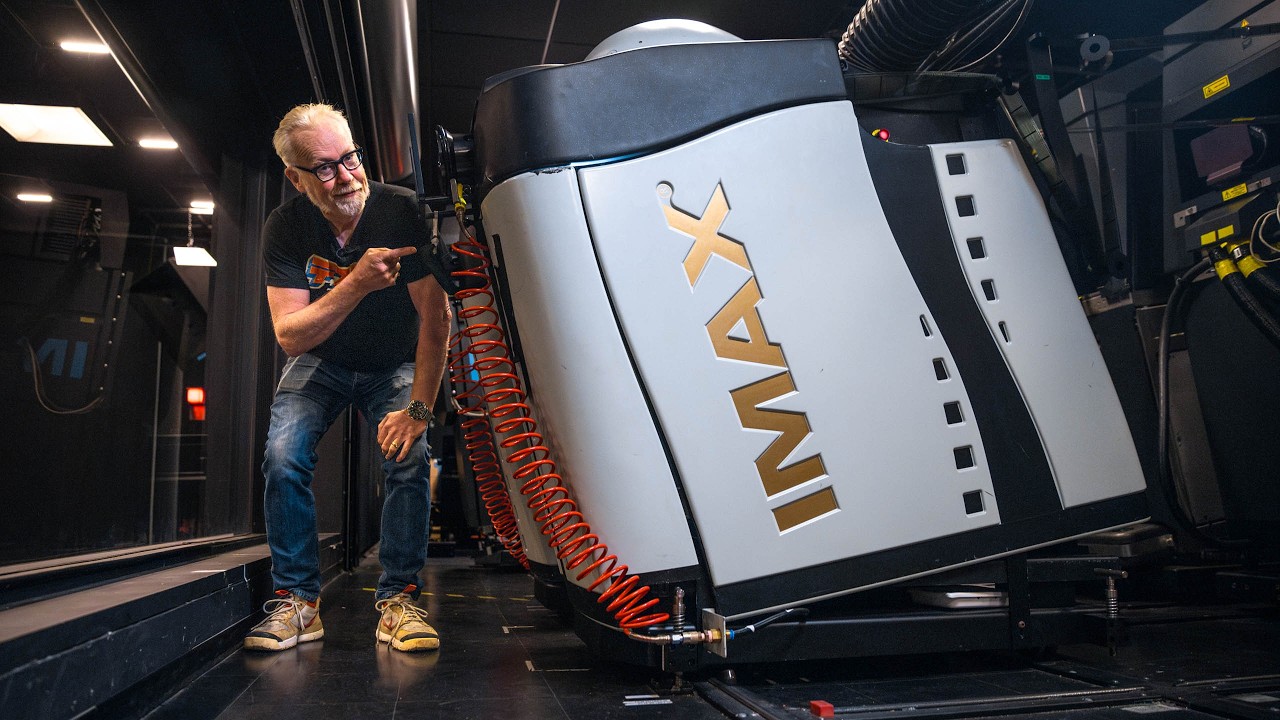
IMAX 70mm film is projected using a massive, horizontally-fed system known as “15/70” (15 perforations per 70mm frame), where film travels sideways at 337 feet per minute. A 15,000W-watt water-cooled lamp, often requiring protective armor for handling, illuminates the 10-times-larger-than-standard frame through a vacuum-sealed, air-cooled gate for incredible, high-resolution brightness. [1, 2, 3, 4, 5]
How the Projection Process Works
- Horizontal “Rolling Loop”: Instead of moving vertically, the film moves horizontally. A special projector mechanism pulls the film over a curved, vacuum-sealed platter to keep it perfectly flat, ensuring edge-to-edge sharpness on screens that can be 90 feet tall.
- Massive Film Reels: Because 70mm film runs so fast, a 2-3 hour movie requires a platter (spinning disk) that can be nearly 6 feet in diameter, often weighing over 500 lbs.
- The Light Source: The projector uses a 15,000-watt xenon arc lamp. This intense light source is water-cooled and must be precisely aligned by a technician to prevent brightness inconsistencies.
- The Projection Path: The film often feeds from a large platter, goes up to the projector, and back down to a take-up platter, moving at 337 feet per minute. [1, 2, 3, 4, 5]
Key 70mm IMAX Technical Facts
- Frame Size: Known as 15/70 because each frame covers 15 perforations, creating an image area ten times greater than standard 35mm film.
- Why It Looks Better: The vast amount of film passing through the projector provides unparalleled resolution, clarity, and brightness, particularly for 1.43:1 aspect ratio scenes.
- Sound: The audio is run on a separate, dedicated sound system (not directly on the film print) to maximize image space.

Read more
125. Gemini 3.1 Flash-Lite is now generally available on Gemini Enterprise Agent Platform
126. 5 helpful tools from Google to keep your account safe
127. Improvements To Help Me Write in Gmail
128. How Passkeys work: A Google security expert explains
129. Level up at I/O
130. How to Write an AI Prompt
133. Google Fitbit Air X Stephen Curry
134. Introducing the all-new Fitbit Air
135. New AI-powered bidding and budgeting innovations in Search and Shopping
136. Gemini 3.1 Flash TTS: the next generation of expressive AI speech
for more refer Artificial Intelligence website click here