


Level up at I/O
Level up at I/O
Tune in. Level up. Unlock. Join us live here on YouTube May 19 at 10am PT. The stage is set for Google’s biggest AI updates.
The updates are ready‚ are you?
Watch everything we shared on the stage at I/O 25 here:  • Google I/O 2025: Keynote
The main message of this video is an invitation to join the Google I/O 25 event. The video encourages viewers to “tune in” and “level up” for what is described as Google’s biggest AI updates (0:00 – 0:27).
Key details:
- Event Date: The event will be streamed live on YouTube on May 19 at 10am PT.
- Content: It promises to showcase the latest advancements and updates in AI.
- Additional Resources: Viewers are directed to a specific playlist (https://www.youtube.com/playlist?list=PL590L5WQmH8e6_yWMouOJsLXFQzGBNerh) to watch everything shared on the stage at I/O 25.
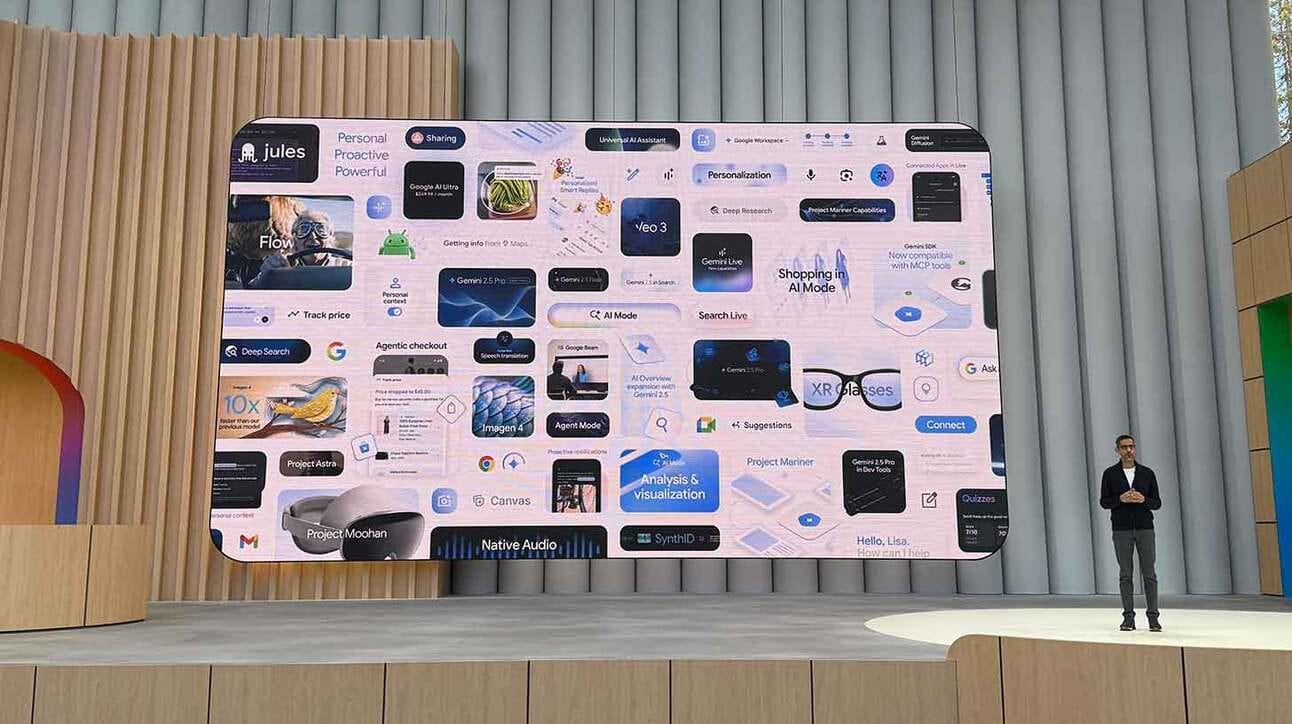
Google I/O 2026 has been a massive turning point for developers and tech enthusiasts alike, shifting the focus from “generative AI” to “agentic ecosystems.” If you’re looking to level up based on this year’s breakthroughs, there are three major pillars to master.
1. Mastering Agentic Architectures
The biggest shift this year is the move toward AI Agents that don’t just talk, but act. Mastering the Gemini Enterprise Agent Platform is now the gold standard for high-level development.
-
Reasoning Chains: Move beyond simple prompts. Start building with multi-step reasoning where the model can browse the web, execute code, and access private APIs in a single workflow.
-
The Agentic Data Cloud: Integrate your databases directly with model reasoning. This allows the AI to perform complex joins and analysis on live data without manual SQL intervention.
2. Infrastructure & Hardware: TPU v8
With the debut of the eighth-generation TPU (v8), the economics of scaling have changed.
-
Cost Efficiency: Level up by learning how to optimize models specifically for TPU v8 pods. The performance-per-watt ratio has seen its largest jump yet, making local fine-tuning of massive models more accessible for enterprise use.
-
Multimodal RAG: The new hardware allows for lightning-fast retrieval across diverse data types. Instead of just searching text, you can now build systems that “search” through thousands of hours of video or massive repositories of schematics in milliseconds.
3. Multimodal Integration & Localization
The integration of AI into physical and digital daily life is reaching its peak. To stay ahead, focus on these implementation areas:
-
Media Localization: New tools for automatic dubbing and real-time cultural adaptation are changing how content is distributed globally. This isn’t just translation; it’s the synchronization of tone, emotion, and lip-syncing.
-
Automotive & Ambient Computing: Google built-in for cars is evolving. Developers are now creating apps for infotainment screens that use the car’s sensors as context for the AI, creating a truly “aware” driving assistant.
-
Smart Productivity: The ability for Gemini to generate files—PDFs, Docs, and Sheets—directly from a prompt is a game-changer. Level up by automating the boring stuff: turn a 30-minute meeting transcript into a formatted Project Proposal and Budget Sheet in one command.
Read more
Level up at I/O
120. How to Use Google Flow Music (Free AI Music Tool)
121. Approximate location sharing Chrome for Android now with share your approximate location
122. Introducing ChatGPT for Excel and Google Sheets
123. Google Health Coach is becoming globally available
124. Meet Google Fitbit Air | Lighter, Gets Mightier
125. Gemini 3.1 Flash-Lite is now generally available on Gemini Enterprise Agent Platform
126. 5 helpful tools from Google to keep your account safe
127. Improvements To Help Me Write in Gmail
128. How Passkeys work: A Google security expert explains
for more refer Artificial Intelligence website click here