


Cash Sales Credited to Profit and Loss Account Cannot Be Added Again as Section 68 Cash Credits
Issue
Whether cash received from sales and already credited to the Profit and Loss Account as part of business turnover can be added again as unexplained cash credit under Section 68 of the Income-tax Act, 1961.
Facts
-
Original Assessment Completed: For Assessment Year 2014–15, the assessee filed its return of income, which was initially accepted in a scrutiny assessment.
-
Reassessment Proceedings Initiated: The Assessing Officer (AO) subsequently issued a notice under Section 148 based on information regarding cash deposits in the assessee’s bank account.
-
Addition Under Section 68: The AO completed the reassessment under Section 147 read with Section 144B and treated the cash deposits as unexplained cash credits under Section 68.
-
Part of Total Turnover: The cash deposits represented cash sales that had already been included in the total turnover on the credit side of the Profit and Loss Account.
-
No Separate Liability Created: The assessee had credited the sales account directly in its accounting books rather than crediting any individual person or showing the sum as a liability.
Decision
-
Double Taxation Impermissible: The Court/Tribunal held that since cash sales were already credited to the Profit and Loss Account as part of total turnover, they had already been accounted for in computing the assessee’s taxable income.
-
Section 68 Inapplicable: Since the amount was not credited as a liability or debt to any person, treating the same cash twice—first as sales turnover and again as unexplained cash credit—was erroneous.
-
Addition Deleted: The impugned addition made under Section 68 by the Assessing Officer and confirmed by the CIT(A) was set aside, deciding the matter in favor of the assessee.
Key Takeaways
-
No Re-Taxation of Sales Revenue: Cash sales that form part of the total business turnover credited to the Profit and Loss Account cannot be re-added as unexplained cash credit under Section 68, as doing so results in double taxation of the same revenue.
-
Accounting Treatment Matters: Section 68 targets unexplained credits appearing as liabilities or capital contributions; legitimate business receipts credited directly to sales do not fall within the scope of Section 68 additions.
IN THE ITAT , VARANASI BENCH (DB)
Shivam Silkfab (P.) Ltd.
v.
Additional/Joint/Deputy Assistant/Commissioner of Income-tax/Income-tax Officer (NFAC)*
Kul Bharat, Vice President
and Anadee Nath Misshra, Accountant Member
and Anadee Nath Misshra, Accountant Member
IT Appeal No. 239 (VNS) of 2024
[Assessment year 2014-15]
[Assessment year 2014-15]
JULY 20, 2026
Puneet Kumar Singh, CA for the Appellant. Koushlendra Tewari, CIT (D.R.) for the Respondent.
ORDER
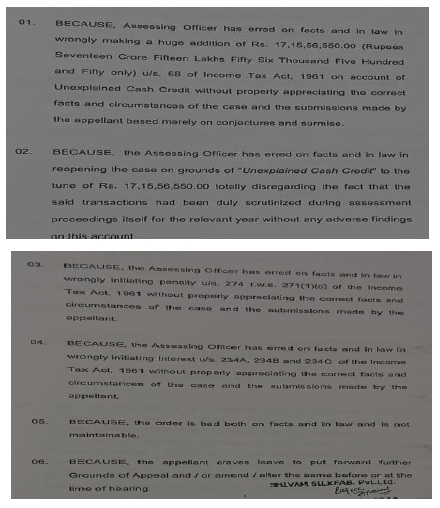
Anadee Nath Misshra, Accountant Member.- (A) This appeal vide I.T.A. No.239/VNS/2024 has been filed by the assessee for assessment year 2014-15 against impugned appellate order dated 24.12.2024 passed by learned Commissioner of Income Tax (Appeals) [“CIT(A)” for short]. In this appeal, the assessee has raised the following grounds: –
(B) In this case, the assessee filed its return of income on 28.11.2014 declaring total income of Rs.15,41,020/-, on 28.11.20214. Subsequently, assessment was completed on 13.12.2016 u/s 143(3) of the Income Tax Act, 1961 (“Act”, for short) wherein the return income of the assessee at Rs.15,41,020/- was accepted. The Assessing Officer (“AO”, for short) letter issued notice u/s 148 of the Act on the basis of information received from Insight Portal of Income Tax Department that the cash deposits amounting to Rs.17,15,56,550/- were made in the assessee’s bank account. In response to the notice u/s 148 of the Act dated 30.03.2021, the assessee filed return of income once again declaring total income of the aforesaid amount of Rs.15,51,020/-. Subsequently, assessment order dated 30.03.2022 was passed u/s 147 read with section 144B of the Act wherein the aforesaid amount of Rs.17,15,56,550/- was added to the assessee’s income u/s 68 of the Act and the assessee’s total income was determined at Rs.17,30,97,570/-. The relevant portion of the assessment order is reproduced below: –
“Information has been received from the Investigation Wing under category of High Risk CRIU/VRU Information through Insight Portal of the Department that the assessee is a beneficiary of unexplained credits by way of unexplained cash credits amounting of Rs. 17,15,56,550/- for the year under consideration.
Further, during the course of assessment proceedings a Draft Assessment Order proposing to addition of Rs. 17,15,56,550/- was given vide SON
(Show Cause Notice) dated 24/03/2022 as to why assessment should not bq completed as per Draft Assessment Order.
The assessee has replied vide his letter dated 28/03/2022 in response to SCN which is on record and submitted its explanation.
During the course of assessment proceedings the assessee was also provided an opportunity of e-hearing through VC (Video Conference) on 29/03/2022. The VC was duly conducted. Shri Puneet Kumar Singh, CA duly authorized by the assessee was present on behalf of the assessee. During VC they have reiterated the facts as mentioned in reply in response to SCN.
The submission of the assessee is duly considered. However, the submissions of the assessee don’t have any cogent force as it is seen from account no.50065635570 with Allahabad Bank, total credit turnover Rs.17,15,56,550/- was in cash out of total credit turnover of Rs.47,71,02,115/- during the year under consideration. In a private limited company, this huge amount of cash deposition is suspicious. Prima facie, this cash deposit is not as per accounting norms of the private limited company. The assessee has undertaken financial transactions much beyond the taxable limit. However, the source of entering such huge transactions is not conclusively proved from the details and data collected during the course of inquiry conducted by the Investigation Wing. During the course of assessment Proceedings the assessee was not proved that the assessee is not a beneficiary of unexplained credits by way of unexplained cash credits amounting of Rs.17,15,56,550/- for the year under consideration.
In view of the above, unexplained cash credits amounting of Rs.17,15,56,550/- is added u/s 68 of the Act to the total income of the assessee as unexplained cash credit.”
(B.1) The assessee’s appeal against the assessment order was dismissed by the Ld. CIT(A) vide impugned appellate order dated 24.12.2024 and the aforesaid addition of Rs.17,15,56,550/- was sustained. The relevant part of the order of the Ld. CIT(A) is reproduced below: –
“To summarise, needless to mention that all the claims of the appellant are purely heavily evidence-based claims and ought to have been substantiated and established by submission of the relevant details as well as supporting evidences. However, the fact remains that the appellant had squarely failed to discharge this onus at the time of subject assessment proceedings and the position also DID NOT improve during the present appellate proceedings. Resultantly, in the facts and circumstances of the matter relying on the decision of the Hon’ble Apex Court in the case of Kale Khan Mohammed Hanif V. CIT [1963] 50 ITR 1 (SC) it CANNOT be said that the assessee had discharged the statutory onus cast upon it in the present matter i.r.o captioned cash credits aggregating to Rs.171556550/- made in its bank account during year under consideration. Thus, the impugned order of the Ld. AO does not call for any interference on this account. Accordingly, the corresponding grounds do not succeed, hence, DISMISSED.”
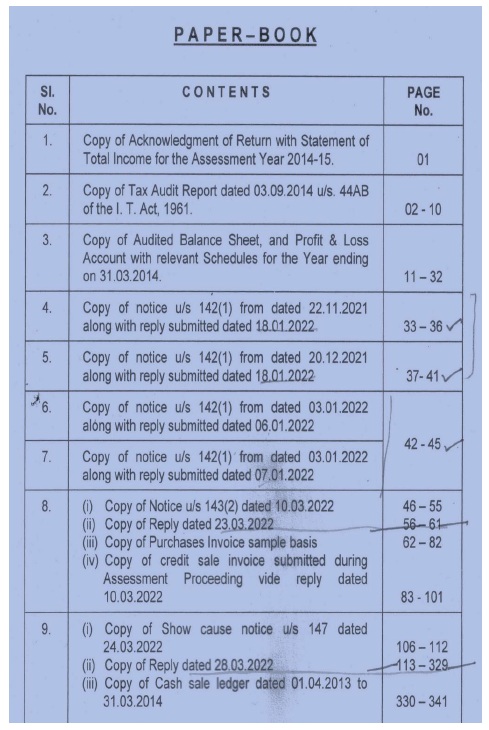
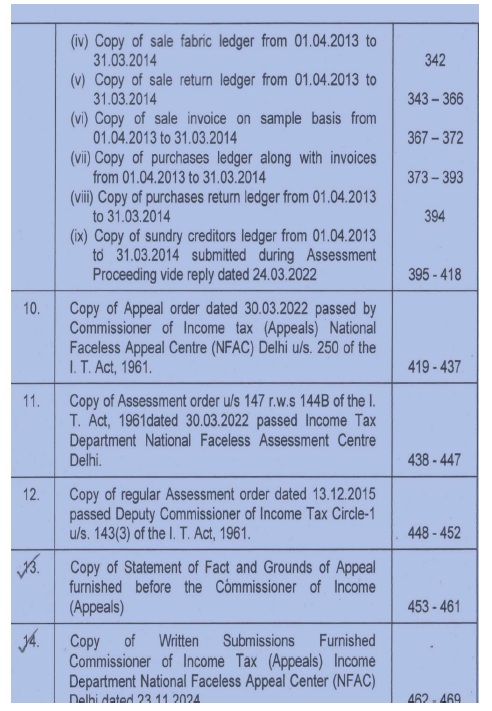
(B.2) The present appeal has been filed by the assessee against the aforesaid impugned appellate order dated 24.12.2024 of the Ld. CIT(A). In the course of appellate proceedings in Income Tax Appellate Tribunal (“ITAT”, for short), a paper book containing the following particulars was filed assessee’s side: –
(C) At the time of hearing, the Ld. Authorized Representative for assessee withdraw ground no. 4 of appeal. Therefore, ground no. 4 of appeal is dismissed as withdrawn by the appellant assessee.
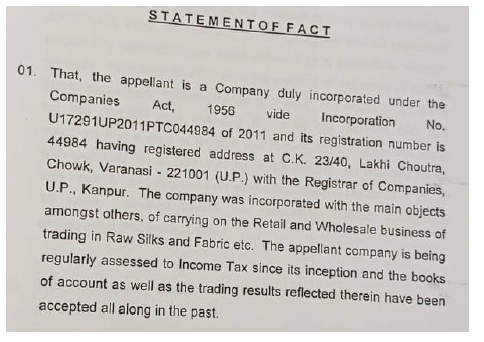
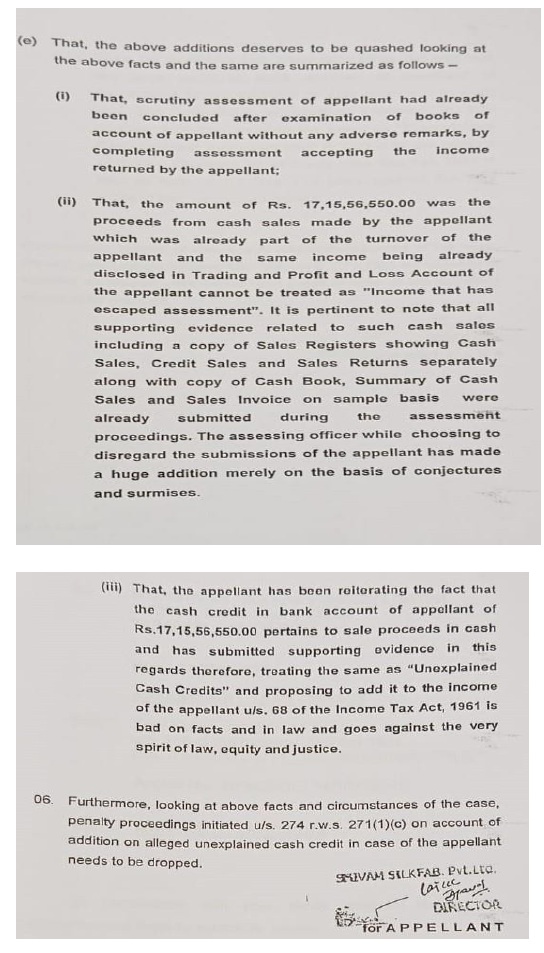
(C.1) As regards the, addition of the aforesaid amount of Rs.17,15,56,550/, the Ld. AR for the assessee drew our attention to the contents of ground nos. 1, 2 and 3 of appeal. He also drew our attention to the statement of facts filed along with assessee’s appeal in Form no. 36, for the ease of reference the same is reproduced below: –
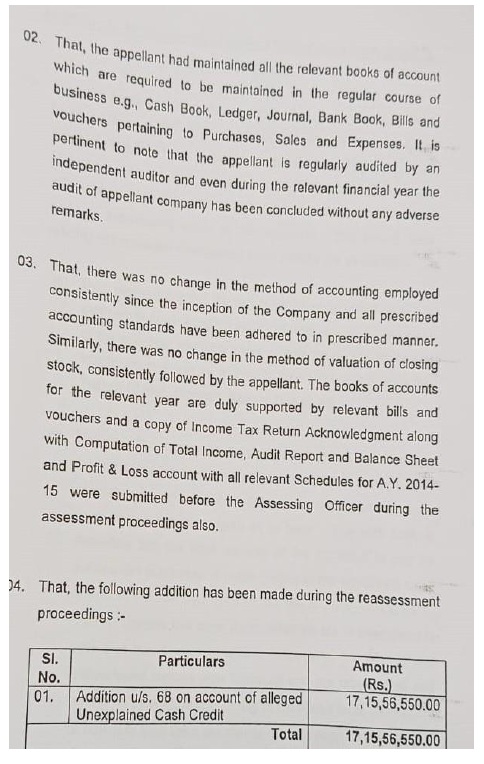
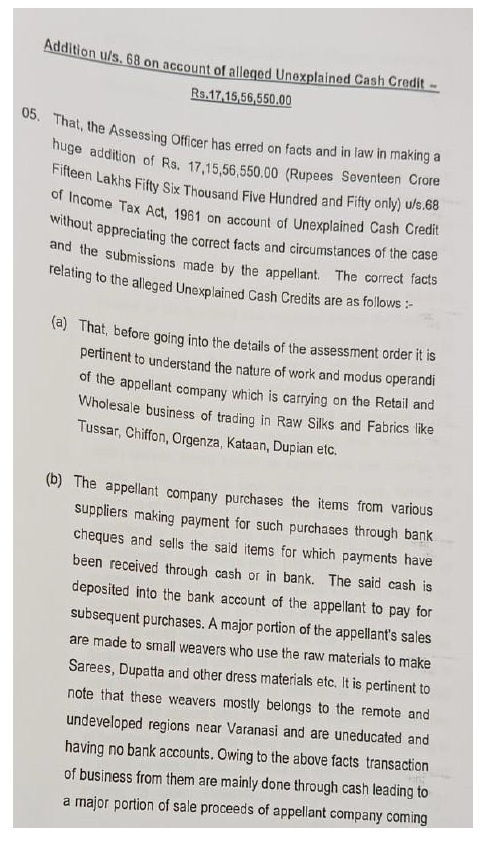
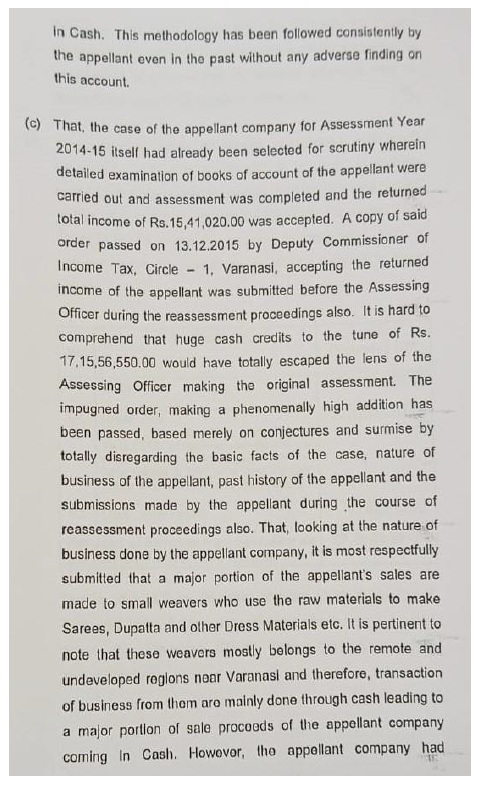
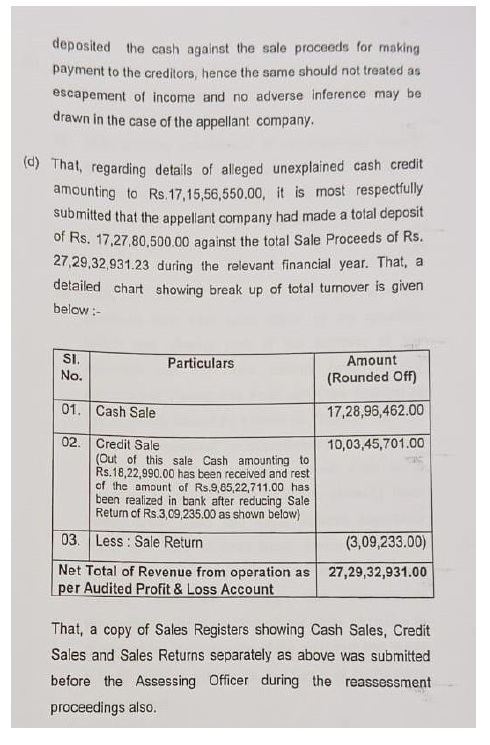
(C.2) He also drew our attention to the statement of facts and the grounds of appeal furnished before the Ld. CIT(A), which is reproduced below, for the ease of reference: –
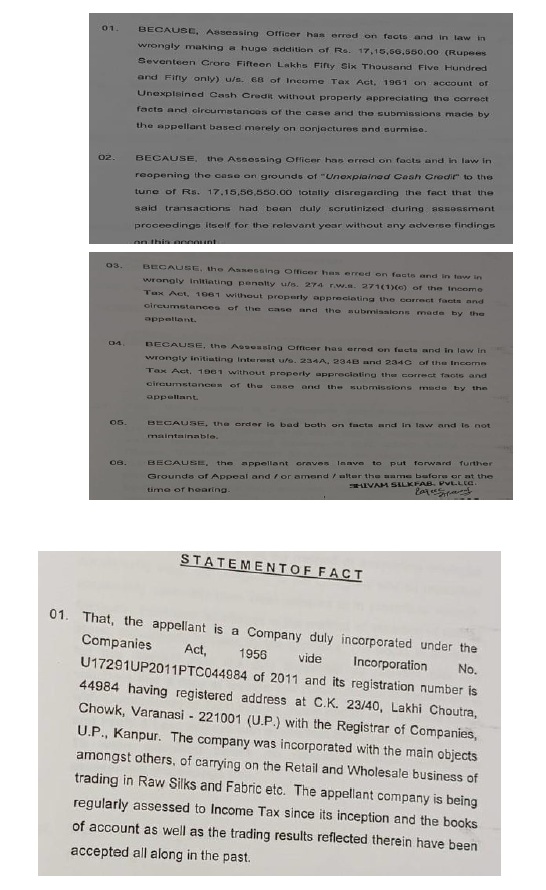
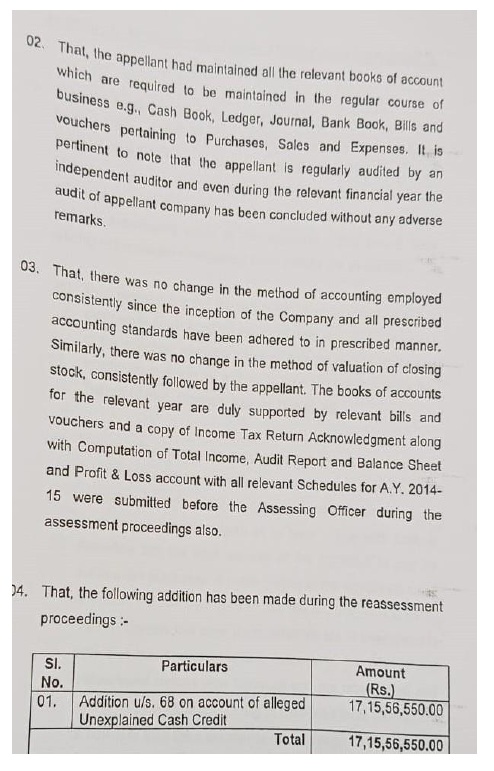
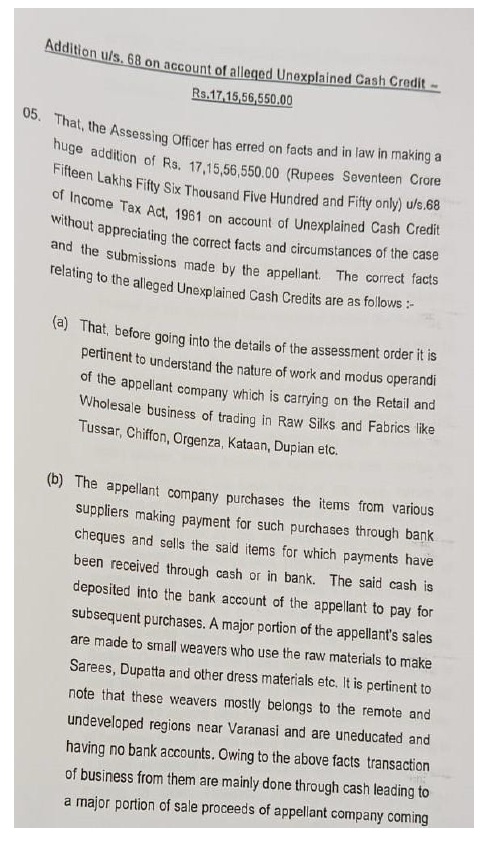
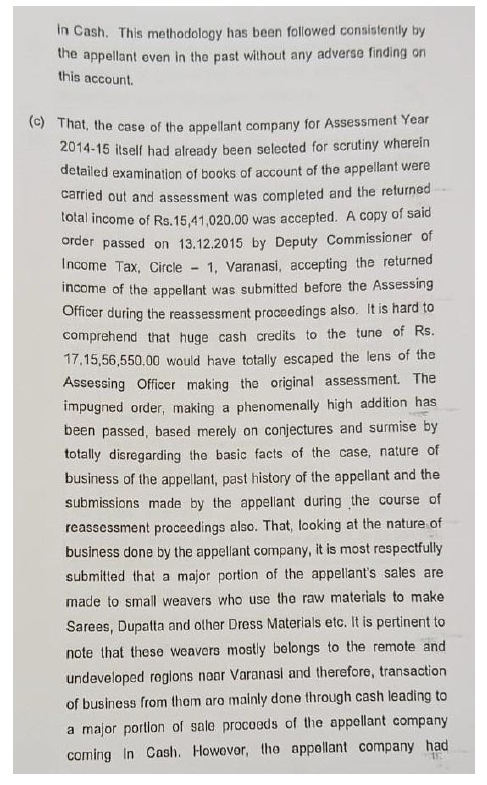
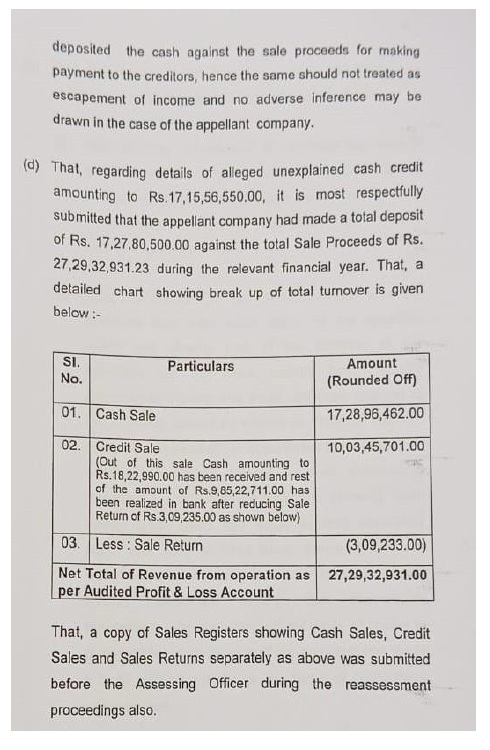
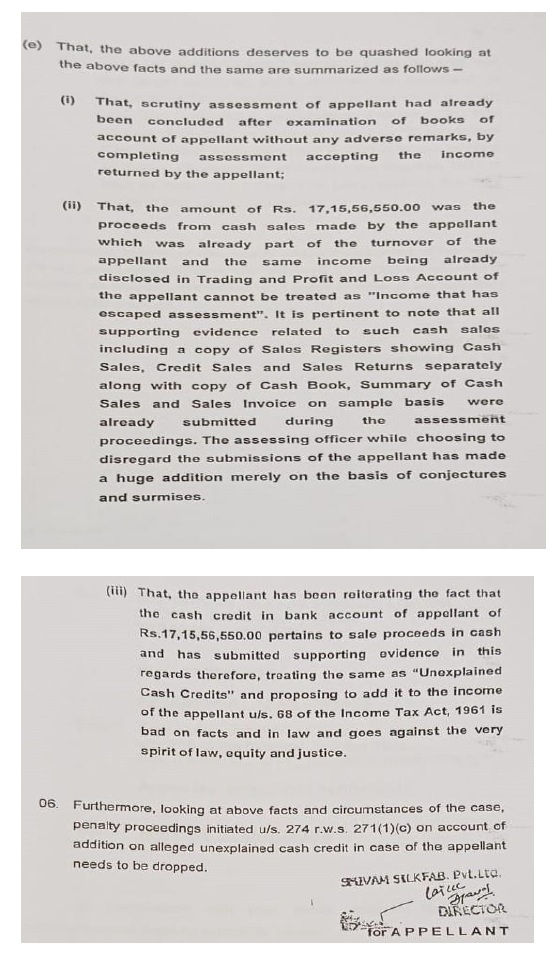
(C.2.1) He further drew our attention to the written submissions furnished before the Ld. CIT(A) during appellate proceedings before the Ld. CIT(A). The same is reproduced below, for the ease of reference: –
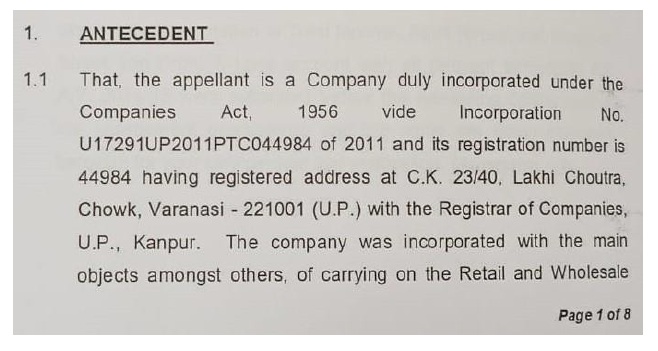
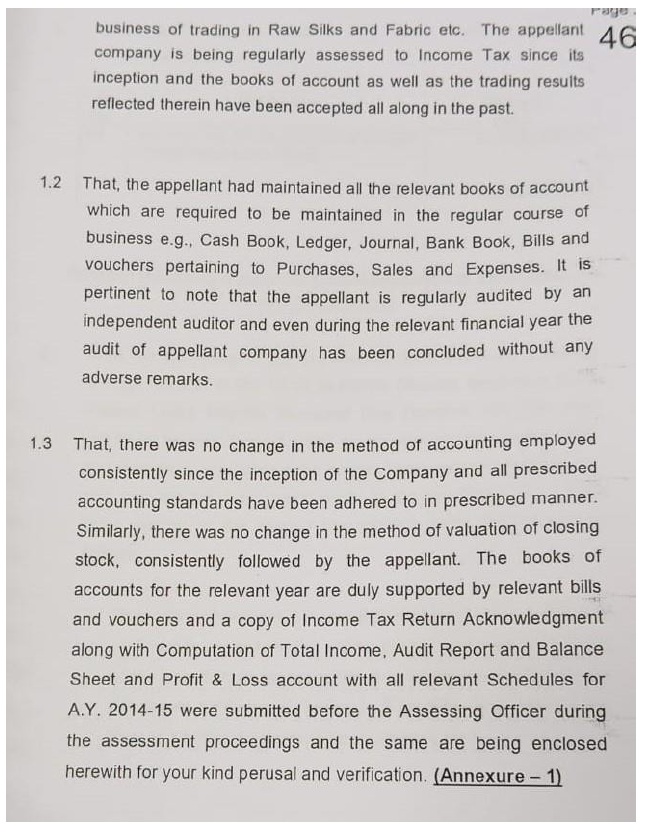
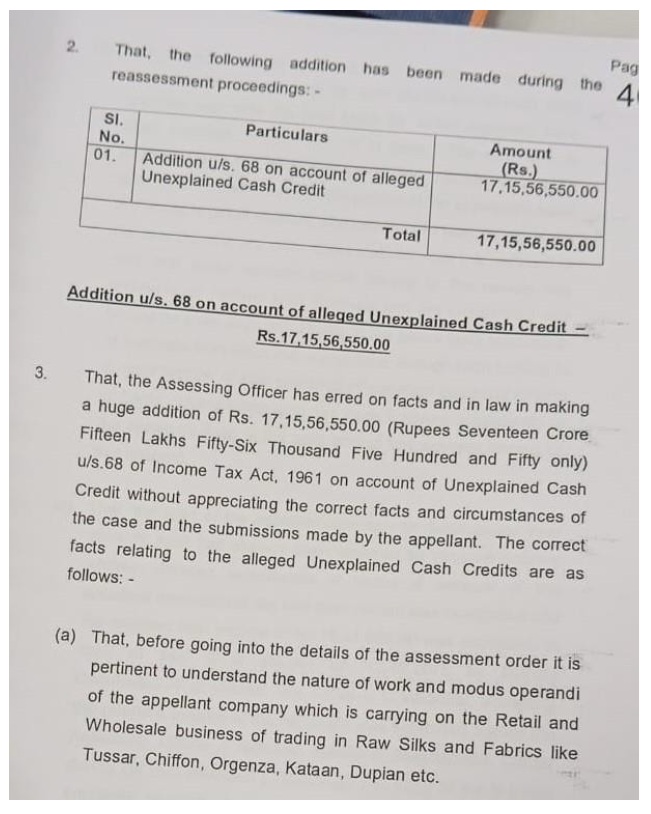
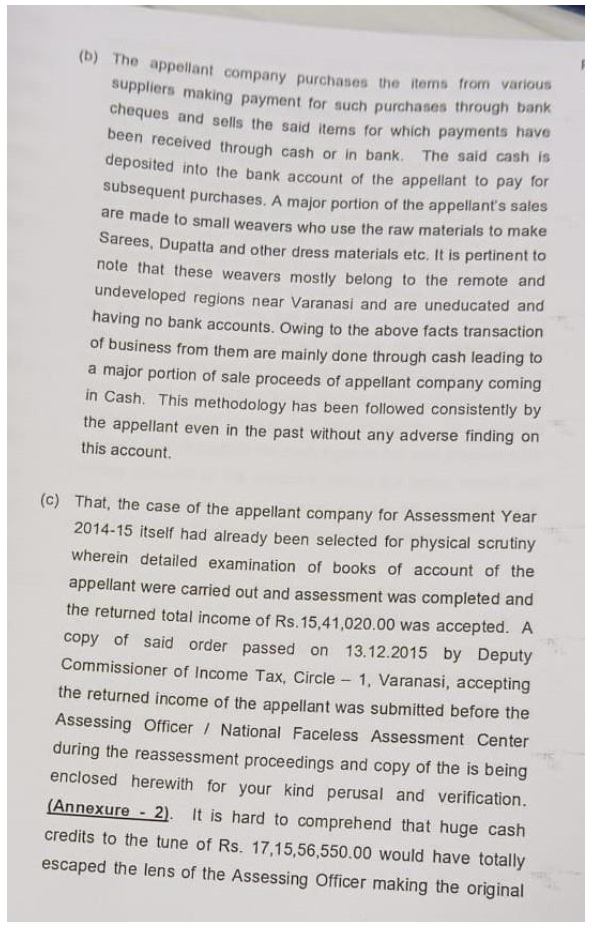
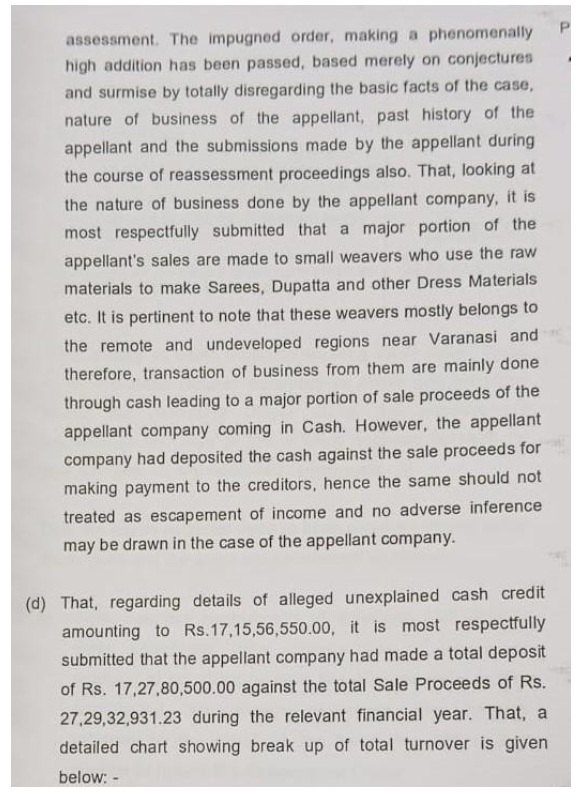
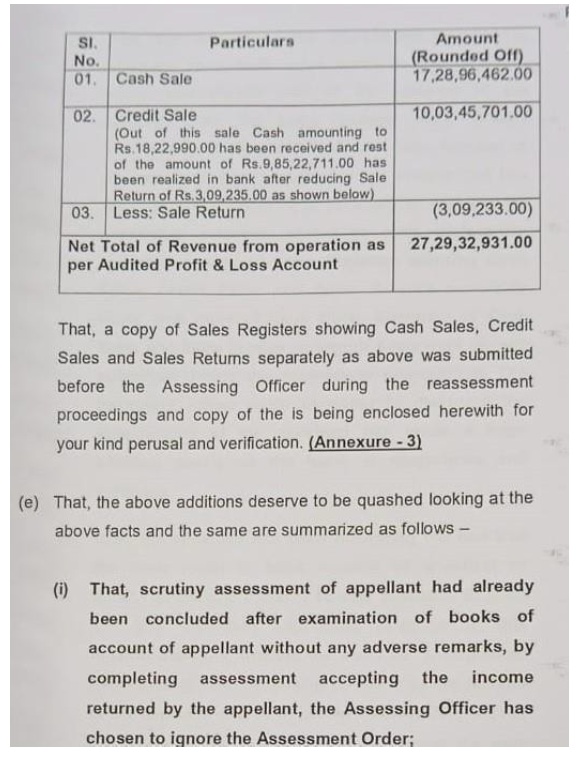
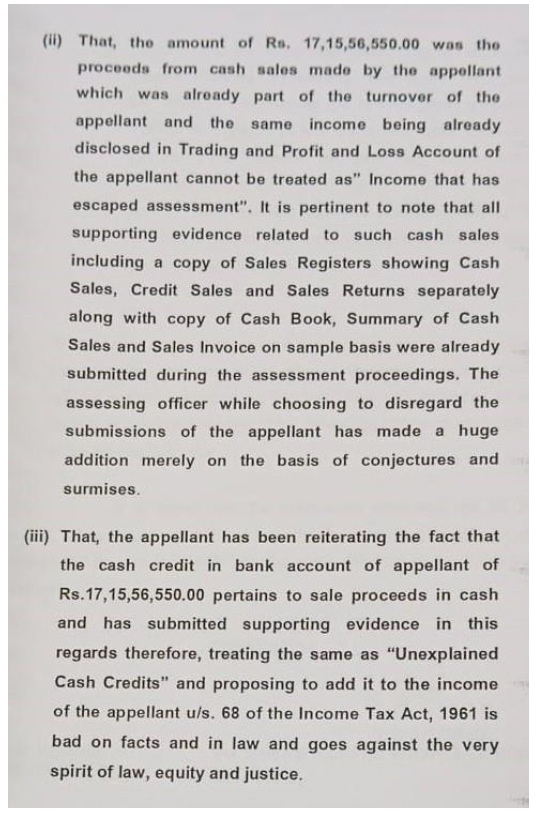
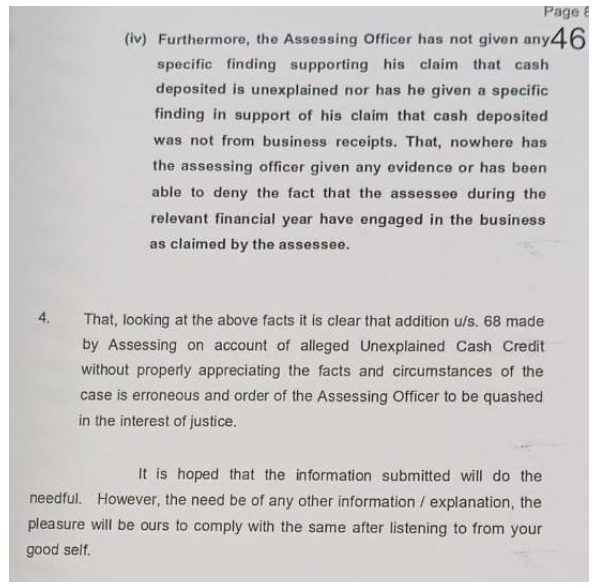
(C.2.3) At the time of hearing, the Ld. AR for the assessee also took us through submissions made during the assessment proceedings vide letters dated 18.01.2022, 06.01.2022, 07.01.2022, 23.03.2022 and 28.03.2022. These are included in the paper book referred to in foregoing paragraph (B.2) at SI. Nos.4, 5, 6, 7, 8 and 9 of the paper books.
(C.2.4) In his submissions made at the time of hearing, the Ld. AR for the assessee also took us through the contents of the paper book, which included sample copies of purchase invoices, credit sale invoices, cash sale ledger, sale fabric ledger, sale return ledger, sale invoices, purchase ledger, purchase return ledger, sundry creditor ledger, etc. He also drew our attention to comparative figures of the cash sales, credit sales and sales return of 2012-23, 2013-14 and 2014-15 which is reproduced below: –
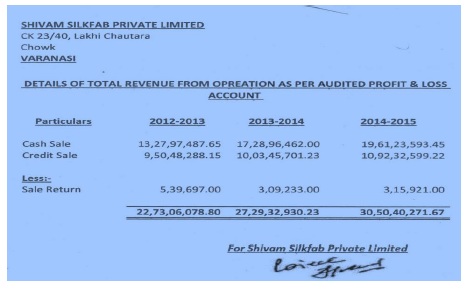
The Ld. AR for the assessee vehemently contended that the cash deposits made in the assessee’s bank account were nothing but the cash sales which have already been accounted for in the books of accounts of the assessee and profits thereon have already been reported in the profits and loss account and brought to tax. The Ld. Departmental Representative for Revenue supported the impugned appellate order of the Ld. CIT(A) and the assessment order, the relevant portions of which have already been referred to in foregoing paragraphs (B) and (B.1) of this order.
(E) We have heard both the sides. We have perused the material on record. We find that the return income of the assessee was already accepted after scrutiny of the assessee’s case in the aforesaid assessment order dated 30.03.2022 passed u/s 143(3) of the Act. Copy of this order is included at pages 448 to 452 of the aforesaid paper book. In the aforesaid assessment order, the Assessing Officer has recorded that authorized representative of the assessee appeared from time to time, filed reply and details. The Assessing Officer has further recorded that the authorized representative of the assessee had produced relevant documents like ledger, cash book, bank statement, books of accounts and other details during the course of assessment proceedings which were subjected to text check and the case was also discussed with the authorized representative of the assessee. No adverse finding is recorded by the Assessing Officer in the aforesaid assessment order. The assessment order dated 13.12.2015 accepting the assessee’s return of Rs.17,15,56,550/- was passed after considering the replies and details filed by the assessee. Further, we find that subsequent assessment order dated 30.03.2022 has been passed making the aforesaid addition of Rs.17,15,56,550/- the assessee had filed multiple replies which have been included in the paper book referred to in foregoing paragraph (B.2) of this order. However, in the assessment order dated 30.03.2022, the Assessing Officer has not discussed the contents of the aforesaid written submissions and replies of the assessee and he has rejected the replies and submissions of the assessee without any discussion of the contents of the replies and submissions. The comparative figures, as referred to in foregoing paragraph (C.2.4) of this order, clearly show that it is normal feature of assessee’s business to sell substantial amounts in sale. Under Income Tax Act purchases made by an assessee in cash, in excess of specified amount, are hit by section 40A(3) of the Act. However, there is no such restriction in Income Tax Act in respect of the cash sales of an assessee. The AO and Ld. CIT(A) have invoked section 68 of the Act without careful consideration of accounting principles and applicable law. Section 68 of the Act can be invoked only if the sum found credited in the books of an assessee is not already taken into account in computing the income of the assessee. In the present case, the cash sales reported by the assessee are part of total turnover, and consequently, have already been taken into account in computing the income of the assessee. That being the case, the same amount cannot be once again added as income of the assessee. The accounting entries for cash sales in the books of the assessee are; Debit cash a/c, Credit sales a/c. The assessee has not, corresponding to cash sale, credited any person thereby showing the amount as liability. Instead, the assessee has credited the sales account. Thus, the amount stands already taken into account for computation of the assessee’s income. The Assessing Officer and the Ld. CIT(A) has patently erred in taking the erroneous view that the cash sales already shown as part of turnover in the credit side of profit & loss account is to be added once again as the assessee’s income. In view of the foregoing discussion, the Assessing Officer is directed to delete the aforesaid addition of Rs.17,15,56,550/.
(E.1) All grounds of appeal are treated as disposed off in accordance with the aforesaid order.
(F) In the result, the appeal of the assessee is allowed.