


TPO Cannot Unilaterally Separate and Benchmark Segmented AE Transactions at Nil Once TNMM Meets Arm’s Length Standard
Issue
-
Whether the Transfer Pricing Officer (TPO) can carve out IT support services (third-party software/licence costs) and benchmark a 5% markup separately at Nil after accepting the overall international transaction margins under the Transactional Net Margin Method (TNMM).
-
Whether transfer pricing adjustments towards notional interest on outstanding receivables from Associated Enterprises (AEs) are warranted for a debt-free company.
-
Whether capital expenditure on scientific research under Section 35(1)(iv) can be claimed by an assessee opting for the concessional tax regime under Section 115BAA without obtaining Form 3CM.
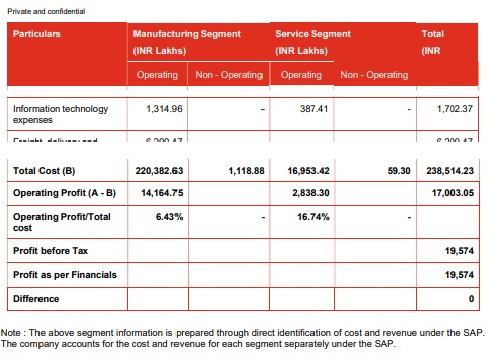
Facts
-
IT Support Services Markup: The assessee, engaged in manufacturing and software development services, availed IT support services (including third-party software/licences like Office 365, Salesforce, and Zoom) from its AE with a 5% markup on cost. The assessee aggregated these transactions and benchmarked them under TNMM. The TPO isolated the third-party software costs, treated them as pure reimbursements without a service element, applied a different method, excluded the 5% markup, and set the Arm’s Length Price (ALP) at Nil.
-
Notional Interest on Receivables: The TPO made a transfer pricing adjustment for notional interest on delayed outstanding receivables from AEs, despite the assessee being a debt-free entity.
-
R&D Capital Expenditure: The assessee claimed a 100% deduction under Section 35(1)(iv) for capital expenditure on scientific research incurred at its R&D facility in Ambattur, Chennai. The Assessing Officer (AO) disallowed the claim on the grounds of insufficient evidence and failure to satisfy requirements such as obtaining Form 3CM.
Decision
-
TP Adjustment on IT Services Markup: Held in favour of the assessee. Once the TPO accepts the overall margins as being at arm’s length under TNMM, he cannot selectively carve out inextricably linked IT support services, apply a different method, and determine the ALP at Nil without proper justification.
-
Notional Interest on Receivables: Held in favour of the assessee. For a debt-free company, no transfer pricing adjustment is warranted towards notional interest on outstanding receivables from AEs.
-
Section 35(1)(iv) R&D Expenditure: Held in favour of the assessee. Deduction under Section 35(1)(iv) for capital expenditure on scientific research is allowable even under the concessional tax regime of Section 115BAA. Form 3CM is a mandate required only for weighted deduction under Section 35(2AB), not for claiming deduction under Section 35(1)(iv).
Key Takeaways
-
TNMM Aggregation Integrity: Tax authorities cannot cherry-pick specific components of closely linked aggregated international transactions to benchmark them separately at Nil once the overall TNMM analysis is accepted.
-
Debt-Free Status Protects Against Notional Interest: A debt-free company does not incur interest costs, making notional interest adjustments on AE receivables unsustainable.
-
Form 3CM Limited to Section 35(2AB): Procedural requirements like Form 3CM certification apply specifically to Section 35(2AB) claims and cannot be forcefully applied to restrict capital expenditure deductions under Section 35(1)(iv).
-
Section 115BAA Compatibility: Opting into the Section 115BAA concessional tax regime does not automatically disentitle a taxpayer from claiming valid scientific research capital deductions under Section 35(1)(iv).
IN THE ITAT CHENNAI BENCH ‘D’
ZF Commercial Vehicle Control Systems india Ltd.
v.
Deputy Commissioner of Income-tax
ABY T. VARKEY, Judicial Member
and Ms. Padmavathy S., Accountant Member
and Ms. Padmavathy S., Accountant Member
IT(TP)A No. 51 (CHNY) of 2026
[Assessment year 2022-23]
[Assessment year 2022-23]
SEPTEMBER 2, 2026
Ashik Shah, C.A for the Appellant. K. Jayaganesh, CIT for the Respondent.
ORDER
Ms. Padmavathy S., Accountant Member.- This appeal by the assessee is against the final order of the assessment passed by National Faceless Assessment Unit (in short “AO”) passed u/s. 143(3) r.w.s 144C(13) of the Income Tax Act, 1961 (in short “the Act”) dated 21.01.2026 for Assessment Year (AY) 2022-23. The assessee raised the following grounds of appeal:
“1. General Ground
1.1. The TPO, AO and DRP (hereinafter collectively referred as ‘lower authorities’) erred in finalizing an order of assessment which suffers from legal defects such as being passed in violation of principles of natural justice, contrary to the provisions of the Income Tax Act, 1961 (“the Act”), barred by limitation, is devoid of merits, contrary to facts on record and applicable law and has been completed without adequate inquiries, therefore is liable to be quashed.
2. Jurisdictional grounds
2.1. The impugned final assessment order dated January 21, 2026 passed under section 143(3) read with section 144C(13) read with section 144B of the Act, having been passed beyond the limitation provided in section 153(1) read with section 153(4) of the Act is barred by limitation and therefore is void ab initio, bad in law thereby liable to be quashed.
2.2. The notice issued by the Ld. AO, under Section 143(2) of the Act, dated June 02, 2023, is contrary to the provisions of the Act and the binding circulars issued by the Central Board of Direct Taxes (‘CBDT) and accordingly the consequential final assessment order passed by the Ld. AO under Section 143(3) read with Section 144C(13) read with Section 144B of the Act, dated January 21, 2026, is void-ab-initio and is accordingly liable to be quashed.
3. Transfer Pricing (“TP”) adjustment towards payment for IT support services
3.1. The lower authorities erred in rejecting the Transfer Pricing (“TP”) documentation maintained by the Appellant, in good faith, as required under Section 92D of the Act read with Rule 10D of the Rules, without demonstrating the satisfaction of the conditions stipulated in section 92C(3) of the Act.
3.2. The lower authorities erred in determining the markup as NIL without appreciating the service rendered by the AEs and without appreciating that such markup is benchmarked by the Appellant under the provisions of the Act.
3.3. The lower authorities erred in disregarding the Appellant’s aggregation approach for benchmarking the IT support service fee paid to Associated Enterprises (‘AEs’), failing to appreciate that the underlying services are closely linked and integral to the Appellant’s overall business operations.
4. TP adjustment towards interest on outstanding trade receivables
4.1. The lower authorities have erred in making a TP adjustment of INR 0.56 crores towards notional interest on overdue receivables from AEs, by treating the outstanding receivables as a separate international transaction.
4.2. The lower authorities erred in violating the principles of judicial discipline by disregarding the Hon’ble Jurisdictional Tribunal’s in Appellant’s own case for AY 20-21 and 21-22, wherein the TP adjustment towards notional interest on overdue receivables was deleted
4.3. The Lower Authorities erred in making the said adjustment by erroneously re-characterizing the overdue receivables as an interest free loan granted to the AEs, and without undertaking a valid benchmarking and arbitrarily adopting a 30 day-credit period and 6-month LIBOR + 350 bps.
4.4. The lower authorities have erred in not factoring the business and commercial expediency of the Appellant’s business and failed to acknowledge that the Appellant is a debt free company and hence interest cannot be levied on the overdue receivables.
4.5. The outstanding receivables, being consequential to the primary international transaction of sales and services, does not warrant a separate TP adjustment and is subsumed in the adjustment, if any, in relation to the ALP of such primary transactions.
5. Disallowance of deduction claimed under section 35(1)(iv) of the Act
5.1. The lower authorities erred in denying the deduction claimed under Section 35(1)(iv) of the Act without appreciating that the Appellant had incurred capital expenditure on scientific research related to the business carried on by the Appellant.
5.2. The lower authorities erred in violating the principles of judicial discipline by disregarding the Hon’ble Jurisdictional Tribunal’s ruling in Appellant’s own case for AY 20-21 and 21-22, wherein the deduction under Section 35(1)(iv) was allowed by this Hon’ble Tribunal after considering the facts of the Appellant’s case.
5.3. The lower authorities erred in not allowing the claim of deduction under section 35(1)(iv) of the Act for non-submission of Form 3CM without appreciating the fact that furnishing of Form 3CM is not a requirement under the Act for claim of deduction under section 35(1)(iv) of the Act.
5.4. The lower authorities erred in disallowing the deduction claimed under section 35(1)(iv) of the Act without appreciating that the deduction 35(2AB) of the Act could not have been claimed by the Appellant for the subject year since beneficial tax regime under section 115BAA of the Act was opted by the Appellant.
6. Miscellaneous Grounds
6.1. The Ld. AO has, in the facts and circumstances of the case and in law, erred in computing interest under section 234A and 234B of the Act.”
2. The assessee is a company primarily engaged in manufacture and selling of automotive components and also provides software development and other services to its group companies. The assessee filed a return of income for AY 2022-23 on 29.11.2022 declaring total income of Rs.2,25,58,80,483/-. The case was selected for scrutiny, and the statutory notices were duly served on the assessee. Since the assessee had international transactions, the A.O made a reference to the Transfer Pricing Officer (TPO) to compute the Arm’s Length Price (ALP) of the international transactions. The TPO proposed the TP Adjustments are as under:
| i. | Downward margin adjustment – Rs. 47,42,726/-. |
| ii. | Upward adjustment towar5ds interest on receivables – Rs. 55,98,519/ |
3. The AO passed the draft assessment incorporating the above TP adjustments. The AO also made a disallowance towards expenditure on scientific research amounting to Rs.2,19,87,252/-. Aggrieved the assessee filed its objections before the Disputes Resolution Panel (in short “DRP”) who upheld the TP adjustments and the disallowance made by the AO. The assessee is in appeal before the Tribunal against the final order of the A.O passed pursuant to the directions of the DRP.
Downward margin adjustment – Ground No.3
4. During the year under consideration, the assessee has availed IT support services from its AE which is in the nature of multiple third-party software/licenses like Microsoft office 365, sales force, zoom etc. to streamline the centralized IT operations cost efficiency. The AE charged a markup of 5% from the assessee on the cost incurred by the AE. In the TP documentation, the assessee has aggregated the international transaction which included the impugned transactions and benchmarked the same using transactions net margin method. The TPO held that the expenses related to the third-party software/licenses must be considered as reimbursement of expenses rather than payment for services rendered with the markup. The TPO further held that no service element is involved in the process and therefore, the markup charged by the AE is not at Arm’s length. Accordingly, the TPO excluded the markup of 5% and proposed a downward adjustment by adopting other method for benchmarking the transactions.
5. The Ld. AR submitted that the TPO has accepted the overall margin earned by the assessee from manufacture segment which included the cost of impugned IT support services and held that the same has with arm’s length. The Ld. AR further submitted that the TPO after having accepted the overall margin cannot carve out one element separately to benchmark and determine the ALP at Nil. The Ld. AR in this regard relied on the decision of the Hon’ble Delhi High Court in the case of Magneti Marelli Powertrain India (P.) Ltd. v. Dy. CIT [2016] 75 taxmann.com 213/389 ITR 469 (Delhi). The Ld. AR further submitted that the Hon’ble Supreme Court has dismissed the SLP filed against the above decision of the Hon’ble Delhi High Court and therefore, the impugned issue has reached finality.
6. The Ld. DR on the other hand vehemently argued that the cost paid by the assessee is akin to reimbursement of expenses incurred by the AE and the AE has not rendered any services in this regard to warrant any markup.
7. We have heard the parties and perused the material available on record. The primary argument of the assessee regarding the adjustment made by the AO towards margin is that the TPO has accepted the overall margin as within Arm’s length which included the impugned expenses. In this regard, the Ld. AR submitted the segmental financials as of 31.03.2022 as extracted below from the perusal of which we notice that the margin of manufacture segment of 6.43% includes the information technology expenses of Rs. 1314.96 Lakhs and the service segment margin of 16.74% includes the information technology expenses of Rs.387.41 Lakhs. –
8. The Ld. AR in this regard submitted that the said cost is inclusive of the margin charged by the AE towards services rendered. Therefore, we see merit in the argument of the Ld. AR that the overall margin accepted by the TPO as at arm’s length includes the impugned cost and accordingly carving out the impugned expenses to make an adjustment using other method is not tenable. We further notice in this regard that the Hon’ble Delhi High Court has considered an identical issue in the case of Magneti Marelli Powertrain India (P.) Ltd. (supra) where it is held that:
“17. As far as the second question is concerned, the TPO accepted TNMM applied by the assessee, as the most appropriate method in respect of all the international transactions including payment of royalty. The TPO, however, disputed application of TNMM as the most appropriate method for the payment of technical assistance fee of Rs. 38,58,80,000 only for which Comparable Uncontrolled Price (“CUP”) method was sought to be applied. Here, this court concurs with the assessee that having accepted the TNMM as the most appropriate, it was not open to the TPO to subject only one element, i.e payment of technical assistance fee, to an entirely different (CUP) method. The adoption of a method as the most appropriate one assures the applicability of one standard or criteria to judge an international transaction by. Each method is a package in itself, as it were, containing the necessary elements that are to be used as filters to judge the soundness of the international transaction in an ALP fixing exercise. If this were to be disturbed, the end result would be distorted and within one ALP determination for a year, two or even five methods can be adopted. This would spell chaos and be detrimental to the interests of both the assessee and the revenue. The second question is, therefore, answered in favour of the assessee; the TNMM had to be applied by the TPO/AO in respect of the technical fee payment too.”
9. In the present case as already stated the TPO has accepted the overall margin as within arm’s length under TNMM whereas he has carved out one of the elements i.e. impugned expenses to compute the ALP as Nil using other method. Further, the TPO has not justified the reason for benchmarking the impugned cost separately given the submission that the impugned services are inextricably linked to the core business of the assessee. We in this regard notice that an identical issue has been considered by the coordinate bench of the Tribunal in the case of Haworth India (P.) Ltd v. Dy. CIT [2025] 179 taxmann.com 220 (Chennai – Trib.) where it is held that –
“We have noted the facts of the present case are akin to those available in judicial precedence discussed herein above. Thus, as the Assessee’s core business activity and sale is inextricably linked/dependent on the Global Account Management service from its AEs, the payment of these charges cannot be segregated and benchmarked separately. The judicial precedence discussed hereinabove also support this line of thinking. Accordingly, in respectful compliance to the same, we hold that the Assessee has rightly aggregated and benchmarked this transaction under TNMM. Accordingly, we hold that the TPO having accepted the overall TNMM analysis, was not right in excluding Global Account Management charges for separate benchmarking analysis. Accordingly, we set aside the order of lower authorities and direct the Ld.AO to delete the impugned addition of Rs.5,08,36,826/- on account of downward adjustment of payment of management fees towards global account management charges. All the grounds of appeal raised by the Assessee on this issue are therefore allowed.”
10. Considering that the facts in assessee’s case being similar, in our considered view the ratio laid down by the Hon’ble High Court is applicable to the assessee’s case also. Therefore, respectfully following the above we hold that the TPO is not correct in making the downward adjustment towards margins of IT support services and accordingly direct the AO/TPO to delete the adjustment made in this regard.
Upward adjustment towards interest on receivables – Ground No.4
11. We have heard the parties and perused the material available on record. The primary submission of the assessee regarding interest on receivables is that the assessee is a debt free company and hence no interest adjustment is warranted towards outstanding receivables. In this regard, we notice that the impugned issue is considered in assessee’s own case for AY 2020-21 and 2021-22 ZF Commercial Vehicle Control Systems India Ltd. v. Dy. CIT [IT(TP)A Nos.50 & 132 (Chny) of 2024, dated 6-6-2025] where it is held that:
“109. We have heard the rival contentions and gone through the orders of the authorities along with the paper and book and decided case laws relied on by the parties. The issue of TP adjustment on account of interest on overdue receivables from AE is covered by the decision of this Tribunal in the case of Temenos India Private Limited (ITTPA No.32/CHNY/2024). Since the assessee is a debt free company and the assessee does not incur any significant interest cost, the TP adjustment of notional interest on overdue receivable is not warranted. The above principle has also been followed in the recent decision of this Tribunal in the case of Trimble Information Technologies India Private Limited (ITTPA No.28/CHNY/2024).
110. In light of the factual matrix of the present case, and in consonance with the judicial precedents of this Hon’ble Tribunal, we are of the considered view that the transfer pricing adjustment on account of notional interest pertaining to overdue receivables is unwarranted. Accordingly, we direct the Transfer Pricing Officer (TPO) to delete the said adjustment and to recompute the Arm’s Length Price (ALP) in accordance with the above observations. In view thereof, the grounds of appeal raised by the assessee are allowed.
12. For the year under consideration, we notice from the financials that the assessee is a debt free company for the year ended 31.03.2022 also and therefore, in our considered view the ratio laid down in the above case is applicable for the year under consideration also. The revenue, for the year under consideration, did not bring any new material on record for us to take a different view. Therefore, respectfully following the above decision, we direct the AO/TPO to delete the adjustment made towards interest on receivables.
Disallowance u/s. 35(1)(iv) of the Act – Ground No.5:
13. The assessee has a R&D facility at Ambattur, Chennai and during the year under consideration the assessee claimed 100% of deduction u/s.35(1)(iv) of the Act. The AO disallowed the deduction on the ground that the claim of the assessee is not properly evidenced. The Ld. AR in this regard submitted that the issue of allowability of deduction claimed u/s. 35(1)(iv) of the Act in assessee’s own case for AY 2020-21 & 2021-22 is considered by the Coordinate Bench where it is held that:
“146. We have heard the rival contentions and gone through the orders of the authorities along with the paper and book and decided case laws relied on by the parties. Admittedly the assessee has opted to section 115BAA of the Act for concessional tax rate of 22% plus surcharge of 10% and cess of 4% for domestic companies subject to satisfaction of certain conditions.
147. As per clause (i) of sub-section (2) to Section 115BAA of the Act, certain deductions are not allowed to claim the concessional rate of tax, which is reproduced below:
“(2) For the purposes of sub-section (1), the total income of the company shall be computed,—
(i) without any deduction under the provisions of section 10AA or clause (iia) of sub-section (1) of section 32 or section 32AD or section 33AB or section 33ABA or sub-clause (ii) or sub-clause (iia) or sub-clause (iii) of sub-section (1) or sub-section (2AA) or sub-section (2AB) of section 35 or section 35AD or section 35CCC or section 35CCD or under any provisions of Chapter VI-A other than the provisions of section 80JJAA or section 80M;”
148. On perusal of the provisions of section 115BAA, there is no restriction on claiming the deduction u/s.35(1)(iv) of the Act. However, the section prohibits claiming of deduction u/s.35(2AB) of the Act. Therefore, the AO has erred in denying the deduction claimed u/s.35(1)(iv) of the Act.
149. Further, we note that the assessee has received recognition from Department of Scientific and Industrial Research (DSIR) for the said R&D unit in Form 3CM to prove that the assessee is carrying on R&D activities (Pg. 123 of paper book).
150. Further, we note that the assessee has not claimed depreciation u/s.32 of the Act and weighted deduction u/s.35(2AB) of the Act on the aforesaid expenditure.
151. We observed that the AO/DRP during the assessment proceedings for AY 2020-21, rejected the claim of the assessee stating that Form 3CM submitted by the assessee is for the purpose of approval to do in house R&D under section 35(2AB), and thereby allegedly stating that there is lack of evidence to support the claim of the assessee, rejected the deduction claimed u/s.35(1)(iv) of the Act.
152. We also note that the AO during the assessment proceedings for AY 2021-22, rejected the claim of the assessee stating that Form 3CM submitted by the assessee is valid till 31.03.2020 only and allegedly denied the claim u/s.35(1)(iv) of the Act in the absence of Form 3CM. The contention of lower authorities to deny the claim u/s.35(1)(iv) of the Act on the basis of failure to obtain Form 3CM or failure to quantify the expenses in Form 3CM is not tenable since it is not a mandate prescribed under the provisions of the Act for the claim of deduction u/s.35(1)(iv) of the Act and the same is only a requirement for the purpose of claiming deduction u/s.35(2AB) of the Act. This proposition is upheld in the following decision, wherein it has been held that capital expenditure incurred towards scientific research is allowable u/s.35(1)(iv) of the Act.
153. In light of the foregoing facts and discussion, and respectfully relying upon the judicial precedents cited supra, we are of the considered view that the assessee is eligible for deduction under Section 35(1)(iv) of the Income-tax Act, 1961. The Assessing Officer and the Dispute Resolution Panel have erred in disallowing the said deduction. Accordingly, we direct the Assessing Officer to allow the deduction as claimed, and the grounds of appeal raised by the assessee are allowed.”
14. The facts for the year under consideration being identical respectfully following the above decision of the Coordinate Bench, we direct the AO to allow the deduction as claimed. The grounds raised in this regard are allowed.
15. Ground No. 1 & 2 are not pressed during the course of hearing and the same are dismissed as not pressed. Ground No.6 is consequential not warranting any separate adjudication.
16. In the result, the appeal of the assessee is partly allowed.