


High-turnover and brand-backed entities are invalid transfer pricing comparables, while unproven GST expenses are non-deductible.
Issue
Whether companies with material functional, asset, scale, and brand differences can be included as transfer pricing comparables, whether separate interest adjustments on delayed receivables are warranted under TNMM, and whether business expenditure disallowances based on non-genuine GST invoices are legally sustainable.
Facts
-
The assessee operated an online gaming portal and provided Software Development Services (SDS) and IT-enabled Services (ITeS) to its Associated Enterprises (AEs) for Assessment Year 2022-23.
-
The assessee benchmarked its international transactions using the Transactional Net Margin Method (TNMM), selecting 10 comparables to demonstrate an arm’s length price.
-
The Transfer Pricing Officer (TPO) rejected the assessee’s study, selected 21 comparables using revised filters, and proposed transfer pricing adjustments.
-
The TPO included companies with significantly higher turnover, substantial brand-related intangible assets, superior bargaining power, and scale efficiencies compared to the assessee’s SDS turnover of ₹166.74 crore.
-
The TPO treated overdue receivables as an independent international transaction and computed separate interest adjustments using a 30-day credit period.
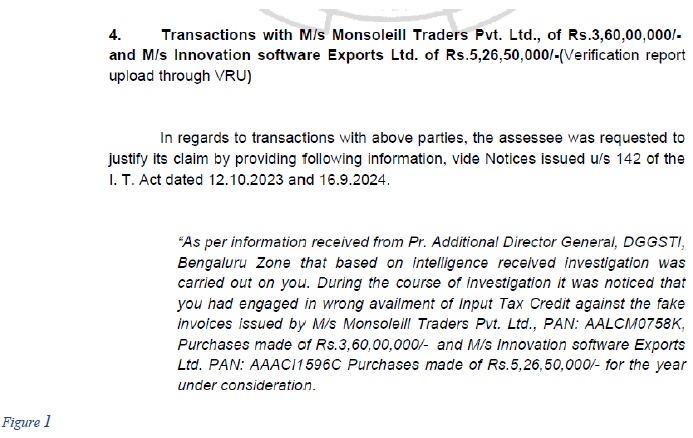
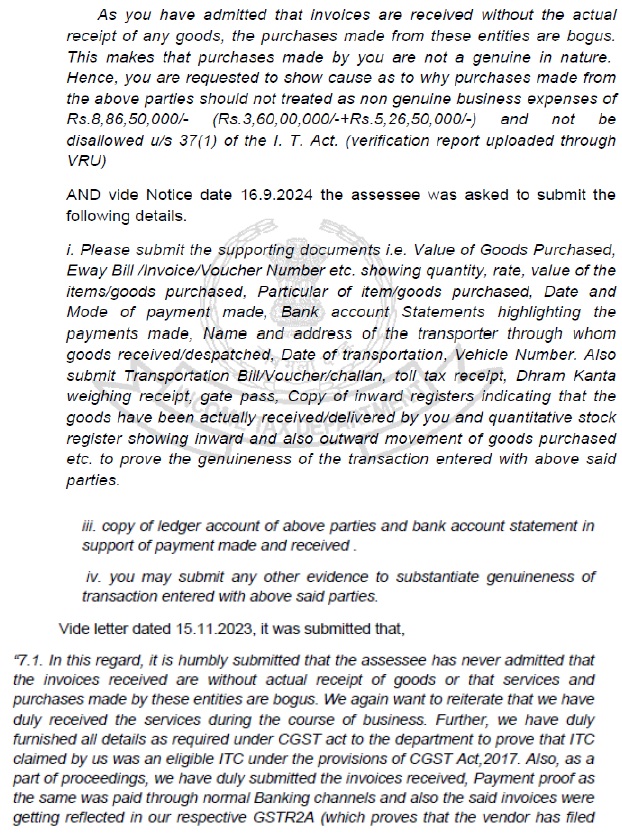
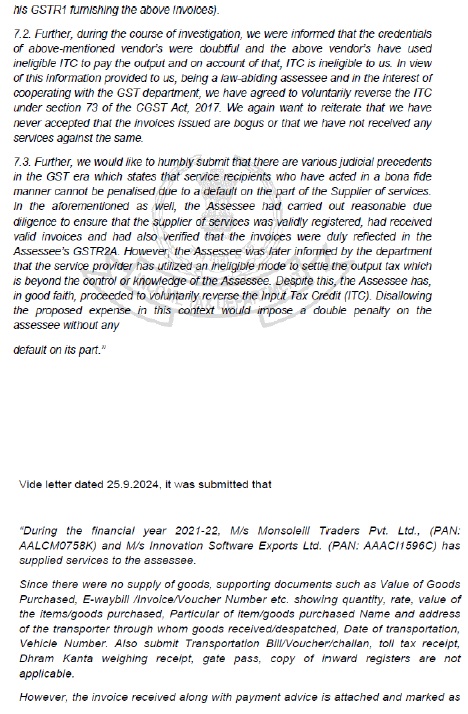
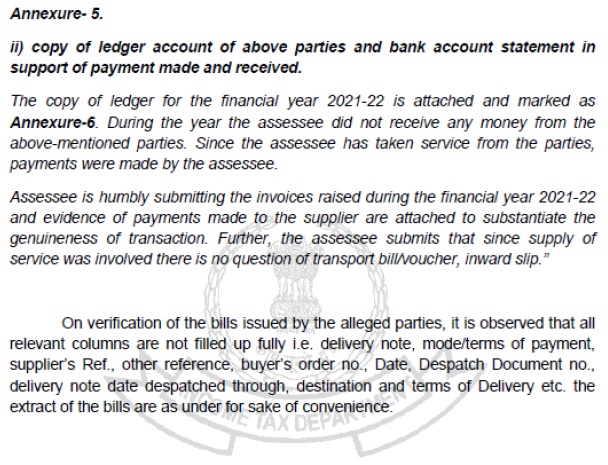
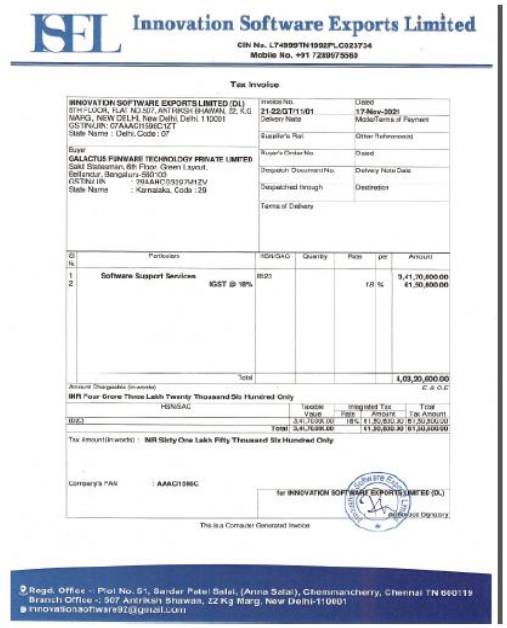
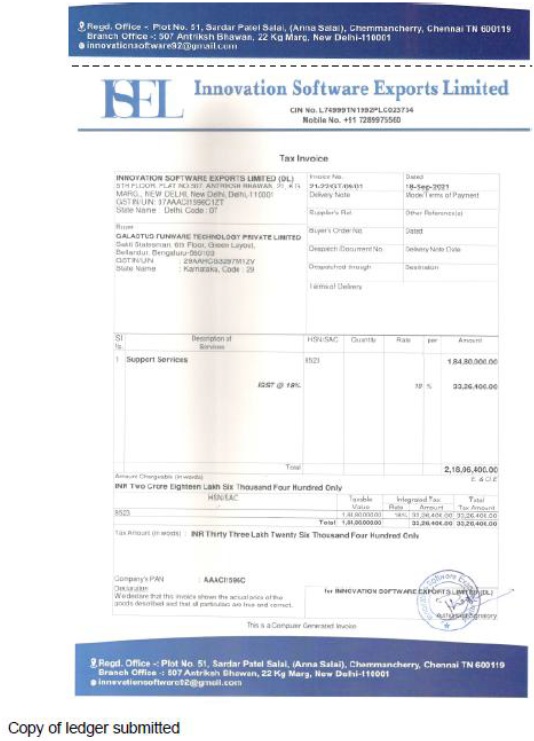
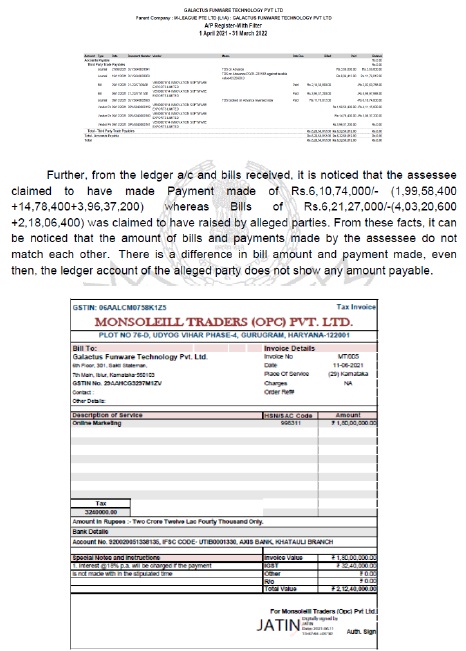
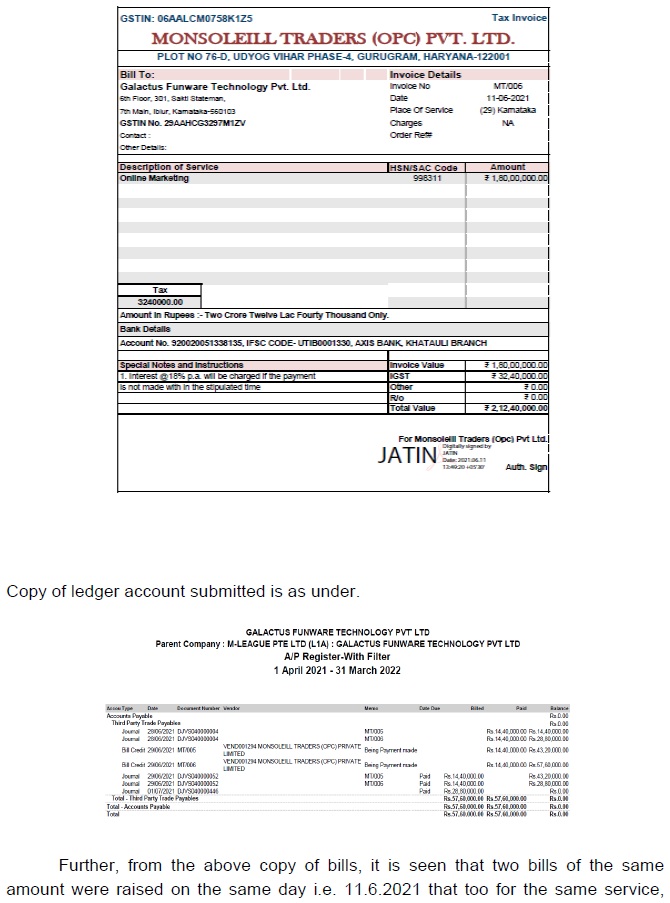
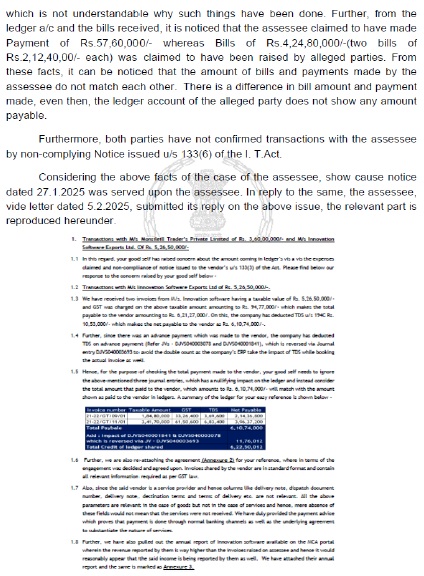
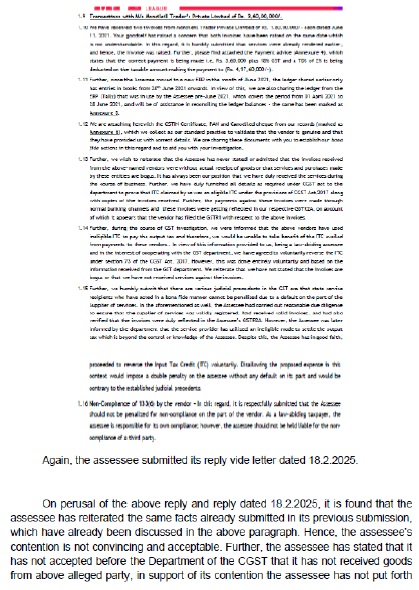
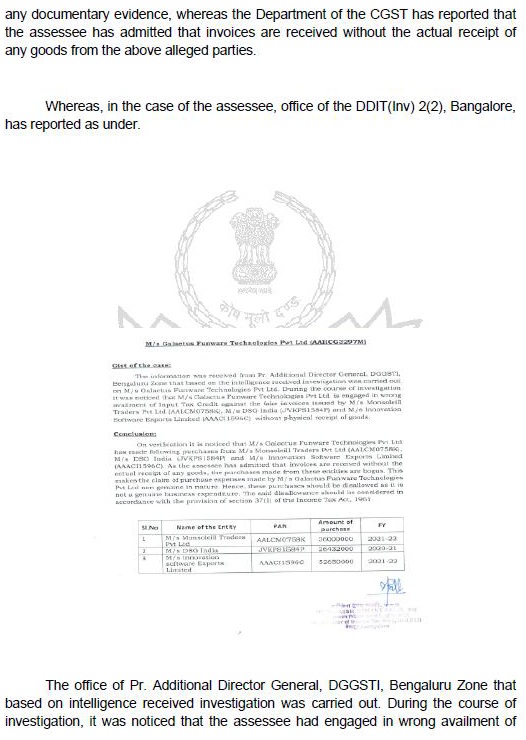
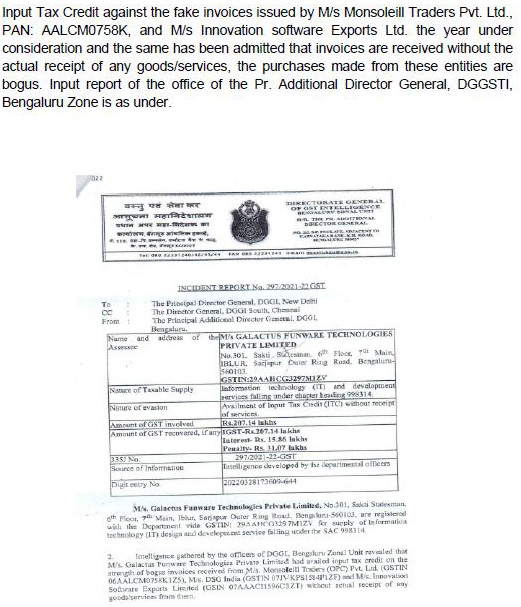
-
The Assessing Officer disallowed business expenditure under section 37(1) based on GST authority findings regarding fake invoices, incomplete invoice particulars, payment discrepancies, duplicate invoices, and the assessee’s voluntary reversal of Input Tax Credit (ITC).
Decision
-
Exclusion of High-Brand and Scale Comparables: In favour of the assessee; companies with substantial brand intangibles, superior bargaining power, and vast operational scale are functionally non-comparable to the assessee for SDS and ITeS segments.
-
General Turnover Filter: Partly in favour of the assessee; companies lacking service-specific details or possessing disproportionately high turnovers were excluded, but remaining comparables could not be rejected solely on turnover where comparability criteria were otherwise satisfied.
-
No Separate Interest on Delayed Receivables: In favour of the assessee; under TNMM, separate interest adjustments for delayed receivables are unnecessary when working capital adjustments are factored into the comparables’ margins under Rule 10B.
-
Disallowance of Unproven GST Business Expenditures: In favour of the revenue; mere production of invoices, agreements, and bank entries fails to prove actual rendition of services, and voluntary ITC reversal supports the lack of genuine business expenditure.
KeyTakeaways
-
Asset and Intangible Filters in TP: Companies possessing significant brand equity, high turnover scale, and proprietary intangibles cannot be selected as valid comparables against captive service providers.
-
Working Capital Aggregation under TNMM: Delay in receivable realization is subsumed within working capital adjustments; separate interest adjustments are uncalled for when benchmarking under TNMM.
-
Burden of Proof for Section 37(1): Paper documentation (invoices and ledger entries) does not automatically prove service rendition; failure to substantiate real business operations justifies expenditure disallowance.
IN THE ITAT BANGALORE BENCH ‘C’
Galactus Funware Technology (P.) Ltd.
v.
Deputy Commissioner of Income-tax
Prashant Maharishi, Vice President
and Soundararajan K., Judicial Member
and Soundararajan K., Judicial Member
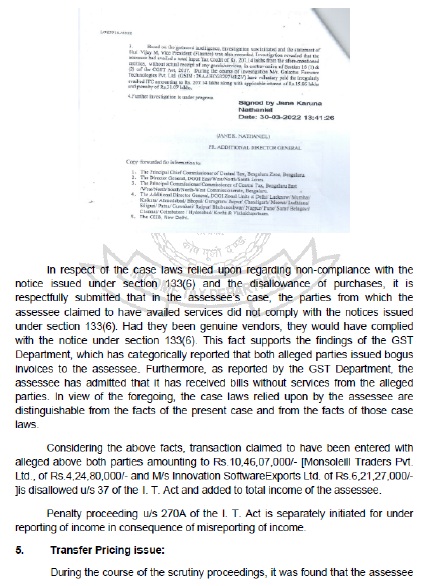
IT(TP) Appeal No. 851 (Bang) of 2026
[Assessment year 2022-23]
[Assessment year 2022-23]
OCTOBER 6, 2026
Padam Kincha, CA for the Appellant. Smt. Divya K.J., CIT DR for the Respondent.
ORDER
Prashant Maharishi, Vice President. – Galactus Funware Technology Private Limited (the assessee/appellant) filed this appeal against the assessment order for assessment year 2022-23, passed by the Income Tax Department’s Assessment Unit on 23rd 2025 under section 143(3), read with sections 144C(13) and 144B of the Income-tax Act, 1961 (the Act), pursuant to the directions issued by the learned Dispute Resolution Panel-2, Bangalore (the learned DRP) on 29 November 2025 under section 144C(5) of the Act.
2. The assessee operates an online gaming portal in India that offers skill- and learningbased games developed by third-party developers through its web-based portal, mobile application, and other platforms.
3. The assessee filed its return of income on 9 November 2022, declaring a loss of Rs. 395,26,88,944. The return was selected for scrutiny, and the Assessing Officer issued a notice under section 143(2) on 1 June 2023. As the assessee had entered into international transactions, the matter was referred to the learned Transfer Pricing Officer to determine the arm’s-length price.
4. The assessee primarily operates the online gaming platform Mobile Premier League, which offers a wide range of games, including fantasy sports, adventure, and action games, to provide users with an immersive gaming experience. It also provides software development and support services to M League under an agreement that defines the scope of services and provides for remuneration on a cost-plus basis. According to the assessee’s declaration, it entered into nine international transactions with its associated enterprises, principally involving two segments: software development services and IT-enabled services. Revenue from software development services provided to associated enterprises was Rs. 166,74,06,684, while revenue from IT-enabled services was Rs. 11,94,00,000. The assessee reported an 18% margin in each segment, and neither the learned Transfer Pricing Officer nor the assessee disputed these margins.
5. To benchmark the two transactions separately, the assessee took itself as a tested party, adopted the transactional net margin method as the most appropriate method, using operating profit to operating cost as the profit-level indicator.
6. For the software development segment, the assessee treated itself as the tested party, applied various filters, and selected ten comparable companies with margins ranging from 6.22% to 20.22%. As its margin was 18%, the assessee concluded in its transfer pricing study report that the software development services were provided at arm’s length.
7. For the IT-enabled services segment, the assessee applied various filters, treated itself as the tested party, and selected eight comparable companies with margins ranging from 11.10% to 17.98%. As its margin was 18%, the assessee concluded in its transfer pricing study report that the international transactions were at arm’s length.
8. The learned Transfer Pricing Officer examined the transfer pricing study report and rejected it under section 92C(3) of the Act for both the segments and proceeded to carry out his own search to find out the right set of comparables.
9. Using the Prowess database, the learned TPO conducted a fresh search with revised filters and reviewed the assessee’s comparables using the keywords “computer software,” “software services,” and “consultancy.” The search produced 21 comparable companies, with margins of 20.18% at the 35th percentile, 23.87% at the median, and 32.72% at the 65th percentile. After considering the assessee’s objections, the learned TPO retained all 21 comparables and determined the arm’s-length price of the international transaction at Rs. 175,03,55,331, as against the transaction value of Rs. 166,74,06,684, resulting in an adjustment of Rs. 8,29,48,647 for the software development segment.
10. For the ITeS segment, the learned TPO conducted a fresh search of the Prowess database using the keywords “IT-enabled services,” “call centre,” “BPO,” “ITS,” “IT consultancy,” “information technology-enabled services,” and “KPO.” The search identified 13 comparable companies, with margins of 18.74% at the 35th percentile, 25.86% at the median, and 33.66% at the 65th percentile, after which the assessee was issued a show-cause notice. Using these comparables, the learned TPO determined the arm’s-length price at Rs. 12,73,35,873, compared with the transaction value of Rs. 119,383,704, resulting in an adjustment of Rs. 7,952,169.
11. The learned Transfer Pricing Officer considered the assessee’s overdue receivables to warrant imputation of interest. Rejecting the assessee’s request to aggregate them with the software development and ITeS transactions, he computed interest of Rs. 33,347,374 at the SBI PLR of 12.26%, allowing a 30-day credit period.
12. Accordingly, the Joint Commissioner of Income Tax (Transfer Pricing)-1(3), Bangalore (the learned TPO), by order dated 23 January 2025 under section 92CA(3) of the Act, proposed a total adjustment of Rs. 124,248,190 under section 92CA of the Act.
13. Based on the above, the assessee’s Assessment Unit passed a draft assessment order on 25 February 2025 under section 144C(1) of the Act, incorporating the transferpricing adjustment.
14. During the assessment proceedings, the learned Assessing Officer also examined transactions of Rs. 360 lakhs with Monsoleill Traders Private Limited and Rs. 52,650,000 with Innovation Software Exports Limited. Based on information received from the Principal Additional Director General of Service Tax, Bangalore Zone, the assessee was asked to explain intelligence indicating that an investigation had found it to have wrongfully availed input tax credit on fake invoices issued by these parties. It was alleged that the assessee had admitted receiving invoices without the corresponding goods or services and that purchases of Rs. 88,650,000 were therefore non-genuine and inadmissible under section 37(1) of the Income-tax Act. The assessee was directed to furnish supporting documents, ledger accounts, and other evidence establishing the genuineness of the purchases. In response, the assessee denied admitting that it had received invoices without goods or services or that the purchases were bogus. It maintained that the services were received in the ordinary course of business and that it had furnished the GST authorities with the information required to substantiate its eligibility for input tax credit under the GST Act. It also produced invoices, proof of payment through normal banking channels, evidence that the invoices appeared in GSTR-2A, and copies of the parties’ ledger accounts. On examining the invoices, the learned Assessing Officer observed that several relevant fields were incomplete, including those relating to delivery notes, payment terms, supplier references, buyer order numbers and dates, dispatch documents, destination, and delivery terms. The learned Assessing Officer further noted a discrepancy between payments of Rs. 61,074,000 shown in the ledger and bills of Rs. 62,127,000 purportedly raised by the parties, and consequently regarded the invoices as non-genuine. Notices issued to both parties under section 133(6) of the Act were not complied with. After issuing a further show-cause notice and considering a report from the DDIT (Investigation)-2(2), Bangalore, stating that the transactions involved fake invoices, the learned Assessing Officer also examined Incident Report No. 297/2021-22 and disallowed purchases of Rs. 104,67,00,000 from the two parties under section 37 of the Income-tax Act.
15. In the draft assessment order, the assessee’s total income was accordingly assessed at a loss of Rs. 3,723,833,754, as against the returned loss of Rs. 395,26,88,944.
16. The assessee raised objections before the learned Dispute Resolution Panel, which issued its directions on 29 November 2025. Giving effect to those directions under section 144C of the Act, the learned Transfer Pricing Officer passed an order on 18 December 2025 reducing the arm’s-length price adjustment for the software development services segment from Rs. 82,948,647 to Rs. 58,502,732. The adjustments of Rs. 7,952,169 for the ITeS segment and Rs. 33,347,374 for interest on delayed receivables were retained. Consequently, the total transfer-pricing adjustment was reduced from Rs. 124,248,190 to Rs. 9,98,02,281. The disallowance of Rs. 104,607,000 under section 37 of the Income-tax Act was also sustained, and the total loss was determined at Rs. 3,748,279,663. The assessee has appealed against this order.
17. Assessee has raised the following grounds of appeal:
1. Jurisdictional Grounds
Grounds relating to notice under section 143(2) issued without jurisdiction
1.1 The learned AU has erred in law in passing the assessment order under section 143(3) read with section 144C(13) read with section 144B without having any jurisdiction to pass the same.
1.2 The learned AU has failed to appreciate that the assessment orders in cases assigned to International Tax Charges fall outside the ambit and scope of faceless assessment scheme and therefore could not have been assessed under section 144B.
1.3 The assessment order so passed being without jurisdiction is bad in law, void ab initio and liable to be quashed.
Grounds relating to notice under section 143(2) being bad in law
1.4 The learned AU has erred in issuing a notice under section 143(2) without adhering to the format prescribed by the Central Board of Direct Taxes which mandates stating the issues selected for examination. The notice so issued is bad in law. The assessment order based on such notice issued by the learned AU is without jurisdiction and is liable to be quashed.
2. Transfer Pricing Grounds
General Grounds
2.1 The Learned Assessing Officer/ Transfer Pricing Officer (“Ld. AO/ Ld. TPO”) erred in understanding the facts and circumstances of the case and disregarding the submissions made by the Appellant and the Hon’ble Panel erred in upholding the same.
2.2 The Ld. AO / Ld. TPO / Hon’ble Panel have erred in law and on facts by rejecting the transfer pricing documentation and the economic analysis undertaken by the appellant in accordance with the provisions of the Act read with Income-tax Rules, 1962 (“Rules”) and conducting fresh economic analysis for determination of the arm’s length price in connection with the impugned international transaction and holding that the Appellant’s international transaction is not at arm’s length.
2.3 The Ld. AO / Ld. TPO / Hon’ble Panel have erred in making the following transfer pricing adjustments in the captioned order:
| S. No. | Adjustments | Amount |
| 1 | Software Development Services (“SWD”) | 5,85,02,738 |
| 2 | Information Technology Enabled Services (“ITES”) | 79,52,169 |
| 3 | Interest on delayed receivables | 3,33,47,374 |
| Total | 9,98,02,281 |
Related Party Transaction Filter
2.4 The Ld. AO / Ld. TPO / Hon’ble Panel have erred in law and on facts by arbitrarily applying a modified related party transaction (“RPT”) filter of RPT income/Total sales as well as RPT Expense/ Total expense and relying on the same for comparability purpose rather than applying the filter of Total RPT/ Sales.
Software Development Services Segment
2.5 The Ld. TPO / Ld. AO / Hon’ble Panel erred in facts and in law by not applying the appropriate upper turnover filter of INR 200 Crores and selecting the following companies having high turnover in the final list of comparable companies:
| Sr. No. | Name of Company |
| 1 | Tata Elxsi Ltd. |
| 2 | Tata Consultancy Services Ltd. |
| 3 | Cybage Software Pvt. Ltd. |
| 4 | Robosoft Technologies Pvt. Ltd. |
| 5 | Happiest Minds Technologies Ltd. |
| 6 | Ltimindtree Ltd. |
| 7 | Mindtree Ltd. [Merged] |
2.6 The Ld. AO / Ld. TPO / Hon’ble Panel has erred in law and on facts by rejecting the following functionally comparable companies selected by the Appellant:
| • | Rheal Software Pvt Ltd |
| • | Toxsl Technologies Pvt. Ltd. |
| • | Data Collection Infotech (India) Pvt. Ltd. |
| • | Enlighten Software Services Pvt. Ltd. |
| • | Digital Mesh Softech (India) Pvt. Ltd. |
2.7 The Ld. AO / Ld. TPO / Hon’ble Panel erred in law and on facts, in including the below mentioned comparable companies pertaining to the SWD segment having significant brand presence:
| • | Mindtree Ltd. [Merged] |
| • | Ltimindtree Ltd. |
| • | Tata Consultancy Services Ltd. |
2.8 The Ld. AO / Ld. TPO / Hon’ble Panel erred in law and on facts, in including the below mentioned functionally dissimilar companies pertaining to the SWD segment:
| • | Nintec Systems Ltd. |
| • | Apttus Software Pvt. Ltd. |
| • | Mindtree Ltd. [Merged] |
| • | Q S G Technologies Pvt. Ltd. |
| • | Ltimindtree Ltd. |
| • | Happiest Minds Technologies Ltd. |
| • | Systango Technologies Ltd. |
| • | Tata Elxsi Ltd. |
| • | Robosoft Technologies Pvt. Ltd. |
| • | Tata Consultancy Services Ltd |
| • | I D S Infotech Ltd. |
| • | Cybage Software Pvt. Ltd. |
2.9 The Ld. AO / Ld. TPO / Hon’ble Panel erred in law and on facts, in including the below mentioned comparable companies undertaking “sale of products” towards the arm’s length analysis of the SWD segment:
| • | Tata Elxsi Ltd. |
| • | Wipro Ltd. |
| • | Ltimindtree Ltd |
2.10 The Ld. AO / Ld. TPO / Hon’ble Panel erred in law and on facts, in including the below mentioned comparable companies having “intangible assets” towards the arm’s length analysis of the SWD segment:
| • | Tata Elxsi Ltd. |
| • | Tata Consultancy Services Ltd. |
| • | Wipro Ltd. |
| • | Ltimindtree Ltd |
| • | Cybage Software Pvt. Ltd. |
| • | Robosoft Technologies Pvt. Ltd. |
| • | Happiest Minds Technologies Ltd. |
| • | I D S Infotech Ltd. |
| • | Mindtree Ltd. [Merged] |
2.11 The Ld. AO / Ld. TPO / Hon’ble Panel erred in law and on facts, in including the below mentioned comparable companies undertaking “research and development functions” towards the arm’s length analysis of the SWD segment:
| • | Tata Elxsi Ltd. |
| • | Tata Consultancy Services Ltd. |
| • | Wipro Ltd. |
| • | Ltimindtree Ltd |
| • | Happiest Minds Technologies Ltd. |
| • | Mindtree Ltd. [Merged] |
2.12 The Ld. AO / Ld. TPO / Hon’ble Panel erred in law and on facts, in including the below mentioned comparable companies incurring “advertisement and promotion expenses” towards the arm’s length analysis of the SWD segment:
| • | Apttus Software Pvt. Ltd. |
| • | Mindtree Ltd. [Merged] |
| • | Q S G Technologies Pvt. Ltd. |
| • | Ltimindtree Ltd. |
| • | Happiest Minds Technologies Ltd. |
| • | Systango Technologies Ltd. |
| • | Tata Elxsi Ltd. |
| • | Robosoft Technologies Pvt. Ltd. |
| • | Tata Consultancy Services Ltd |
| • | I D S Infotech Ltd. |
| • | Cybage Software Pvt. Ltd. |
| • | Wipro Ltd. |
2.13 The Ld. AO / Ld. TPO / Hon’ble Panel erred in law and on facts, in including the below mentioned comparable companies having “significant onsite revenue” towards the arm’s length analysis of the SWD segment:
| • | Mindtree Ltd. [Merged] |
| • | Tata Elxsi Ltd. |
2.14 The Ld. AO / Ld. TPO / Hon’ble Panel erred in law and on facts, in including “Robosoft Technologies Pvt. Ltd.” As a comparable companies in spite of recording an “extraordinary event” in the books of account towards the arm’s length analysis of the SWD segment
2.15 The Ld. AO / Ld. TPO have erred in facts in not giving effect to the specific directions of the Hon’ble DRP to verify the quantitative filters and include “Signity Software Solutions Private Limited” in the final list of comparable companies.
2.16 The Ld. AO / Ld. TPO/ Hon’ble Panel erred in law and on facts by not accepting the below mentioned additional comparable companies submitted before the Ld. TPO during the assessment proceedings, although the companies are functionally comparable and pass all the filters of the Ld. TPO:
| • | Kcube Consultancy Services Pvt. Ltd. |
| • | Peerbits Solution Pvt. Ltd |
| • | Vertex Systems Limited |
| • | Great Software Laboratory Pvt. Ltd. |
2.17 The Ld. AO / Ld. TPO/ Hon’ble Panel erred in law and on facts by not accepting the below mentioned additional comparable companies submitted before Hon’ble Panel during the appeal proceedings, although the companies are functionally comparable and pass all the filters of the Ld. TPO:
| • | Kals Information System Private Limited |
| • | Hurix Systems Pvt. Ltd. |
| • | C E S Ltd. (segment) |
ITES SEGMENT
2.18 The Ld. TPO / Ld. AO / Hon’ble Panel erred in facts and in law by not applying the appropriate upper turnover filter of INR 200 Crores and selecting the following companies having high turnover in the final list of comparable companies:
| Sr. No. | Name of Company |
| 1 | Sutherland Global Services Pvt. Ltd. |
| 2 | Tech Mahindra Business Services Ltd. [Merged] |
| 3 | T T E C India Customer Solutions Pvt. Ltd. |
2.19 The Ld. AO / Ld. TPO / Hon’ble Panel has erred in law and on facts by rejecting the following functionally comparable companies selected by the Appellant:
| • | Cheers Interactive (India) Pvt. Ltd |
| • | Microland Ltd. (segment) |
2.20 The Ld. AO / Ld. TPO / Hon’ble Panel erred in law and on facts, in including the below mentioned functionally dissimilar companies pertaining to the ITES segment:
| • | E Care India Pvt. Ltd |
| • | Sutherland Global Services Pvt. Ltd. |
| • | Tech Mahindra Business Services Ltd. [Merged] |
| • | Sagacious Research Pvt. Ltd |
| • | Bahar Infocons Pvt. Ltd. |
| • | Domex E-Data Pvt. Ltd. |
| • | T T E C India Customer Solutions Pvt. Ltd. |
2.21 The Ld. AO / Ld. TPO / Hon’ble Panel erred in law and on facts, in including the below mentioned comparable companies having “intangible assets” towards the arm’s length analysis the ITES segment:
| • | E Care India Pvt. Ltd |
| • | Sutherland Global Services Pvt. Ltd. |
| • | Tech Mahindra Business Services Ltd. [Merged] |
| • | Sagacious Research Pvt. Ltd |
| • | T T E C India Customer Solutions Pvt. Ltd. |
2.22 The Ld. AO / Ld. TPO / Hon’ble Panel erred in law and on facts, in including the below mentioned comparable companies undertaking “research and development functions” towards the arm’s length analysis the ITES segment:
| • | Tech Mahindra Business Services Ltd. [Merged] |
| • | Sagacious Research Pvt. Ltd |
2.23 The Ld. AO / Ld. TPO / Hon’ble Panel erred in law and on facts, in including the below mentioned comparable companies incurring “advertisement and promotion expenses” towards the arm’s length analysis the ITES segment:
| • | E Care India Pvt. Ltd |
| • | Tech Mahindra Business Services Ltd. [Merged] |
| • | Sagacious Research Pvt. Ltd |
| • | Bahar Infocons Pvt. Ltd |
2.24 The Ld. AO / Ld. TPO / Hon’ble Panel erred in law and on facts by not accepting additional comparable companies submitted before Hon’ble Panel during the appeal proceedings that qualifies all quantitative and qualitative filters:
| • | Silgate Solutions Ltd. |
| • | Savista Global Solutions Private Limited |
| • | Datascribe Infotech Pvt. Ltd. |
| • | Maa Business Solutions Private Ltd |
| • | Orchasp Limited |
Erroneous Margin Computation
2.25 The Ld. AO / Ld. TPO erred in law and on facts by erroneously computing the margin of comparable companies (pertaining to both SWD and ITES segments) by the Ld. TPO despite the fact that Hon’ble Panel has directed the Ld. TPO to re-compute the margin of comparable companies as per annual reports.
Disallowance of Working Capital and Risk Adjustments
2.26 The Ld. AO / Ld. TPO / Hon’ble Panel erred in facts and in law by disallowing working capital adjustment to the Appellant.
2.27 The Ld. TPO / Ld. AO / Hon’ble Panel erred in facts and in law by disallowing risk adjustment to the Appellant
Interest on delayed receivables
2.28 The Ld. AO / Ld. TPO / Hon’ble Panel grossly erred in determining a transfer pricing adjustment on account of the interest on delayed receivables amounting to INR 3,33,47,374.
2.29 The Ld. AO / Ld. TPO / Hon’ble Panel have erred in law and on facts in treating delayed receivables as a separate international transaction for the purpose of computing notional interest.
2.30 The Ld. AO / Ld. TPO / Hon’ble Panel erred in facts by not appreciating that the overdue receivables are closely and inextricably linked to the primary transaction of provision of SWD services and ITES.
2.31 The Ld. AO / Ld. TPO / Hon’ble Panel have erred in facts and in law by not appreciating that the Appellant is a debt-free company and thus no notional interest on deferred receivables is warranted.
2.32 The Ld. AO / Ld. TPO / Hon’ble DRP erred in not granting appropriate working capital adjustment while determining the arm’s-length margin under TNMM, despite the Assessee’s operating margin already factoring in interest cost. Consequently, the separate adjustment made towards alleged interest on receivables is unwarranted and ought to be deleted upon allowing the proper working capital adjustment.
2.33 The Ld. AO / Ld. TPO / Hon’ble Panel erred in making an adjustment towards alleged interest on delayed receivables without appreciating that the Appellant had outstanding payables to its AEs on which no interest was charged.
2.34 The Ld. AO / Ld. TPO / Hon’ble DRP have erred in making an adjustment towards alleged interest on delayed receivables without demonstrating any pattern or trend of significant outstanding receivables, and without establishing that the receivable period of the Assessee is abnormal or inconsistent with industry norms.
Without prejudice to the above grounds,
2.35 The Ld. AO / Ld. TPO / Hon’ble Panel have erred in computing interest on delayed receivables on a gross basis without adjusting for the Appellant’s outstanding payables to its AEs.
2.36 The Ld. AO / Ld. TPO have erred in facts by applying the prime lending rate of State Bank of India (“SBI PLR”) for computation of interest on delayed receivables despite the explicit directions from Hon’ble Panel to consider the LIBOR as the reference rate for computing the notional interest.
3. Corporate Tax Grounds
3.1 The Ld. AO / Hon’ble Panel have erred in law and on facts by disallowing the Appellant’s business expenditure of INR 10,46,07,000 under section 37(1) of the Act relating to transactions with M/s Monsoleill Traders Private Limited and M/s Innovation Software Exports Limited, and incorrectly holding that the said expenditure was not incurred wholly and exclusively for the purposes of the Appellant’s business.
3.2 The Ld. AO and the Hon’ble Panel have erred in law and on facts by treating the Appellant’s voluntary reversal of Input Tax Credit under section 73 of the Central Goods and Services Tax Act, 2017 as an admission that services were not received, when such reversal was undertaken in good faith and in the spirit of cooperation with the GST authorities, and does not constitute evidence that the expenditure was not genuinely incurred for business purposes.
3.3 The Ld. AO has erred in law and on facts by:
| • | ignoring the documentary evidence furnished by the Appellant, including invoices, bank statements, ledger accounts, complaint filed with the Upparpet Police Station, Bengaluru and annual report of a vendor; |
| • | concluding that the suppliers are not genuine, without appreciating that one of the suppliers, M/s Innovation Software Exports Limited, is a company whose shares are listed on the Bombay Stock Exchange |
That the Appellant craves leave, to add, to amend, modify, rescind, supplement, or alter any of the grounds stated here-in-above, either before or at the time of hearing of this appeal.
All grounds are independent and without prejudice to each other.
18. Shri Padam Chand Khincha, CA, the learned authorised representative, submitted that Ground No. 1, relating to the notice issued under section 143(2) of the Act, was not pressed. Accordingly, Ground No. 1 is dismissed.
19. On the Transfer pricing issue, his arguments were:
| i. | Regarding Ground No. 2 of the transfer-pricing grounds, he submitted that the assessee, with revenue of Rs. 166.74 crore, had been compared with Tata Elxsi Ltd. [Turnover Rs. 2470 CR], Tata Consultancy Services Ltd. [Turnover Rs 160341 Cr], Cybage Software Pvt. Ltd. [Rs. 1441 Cr], Robosoft Technologies Pvt. Ltd. [Rs 269.39 Cr], Happiest Minds Technologies Ltd. [Rs 1033.545 Cr], LTIMindtree Ltd. [Rs 14640 Cr], and Mindtree Ltd. [Rs 10525 Crs]. He argued that these companies had substantially higher turnover and therefore could not be treated as comparable when determining the arm’s-length price of the softwaredevelopment transaction. He further submitted that Tata Elxsi Ltd., Tata Consultancy Services Ltd., LTIMindtree Ltd., and Mindtree Ltd. possessed significant brand value, and that their functional profiles, asset bases, and scalability rendered them incomparable to the assessee. |
| ii. | Regarding the ITeS segment, he submitted that the assessee, with a turnover of only Rs. 11.94 crore, had been compared with companies whose turnover was substantially higher. He contended that applying an appropriate turnover filter would exclude those companies because their scale of operations and asset bases made them incomparable to the assessee. He Stated that Sutherland Global Services ltd (Turnover of Rs 1944 Crs] Tech Mahindra Business Services Ltd [Turnover of Rs 889.20 Crs] are not at all comparable because of Brand of Mahindra as well. |
| iii. | Regarding the interest imputed on overdue receivables from associated enterprises, he submitted that granting the assessee a working-capital adjustment would eliminate the need for the separate adjustment made by the learned Transfer Pricing Officer. |
20. The learned CIT-DR, Smt Divya K.J., supported the orders of the lower authorities. Regarding the application of a high-turnover filter, she submitted that the Income-tax Rules do not prescribe turnover as a criterion for excluding a company. Referring to Rule 10B (2) of the Income-tax Rules, she contended that the learned authorised representative’s request to exclude companies solely on the basis of turnover was therefore without merit.
21. Regarding the learned authorised representative’s claim for a working-capital adjustment, she submitted that such an adjustment should be granted because the provision of services by the assessee and the outstanding receivables from its associated enterprises are closely linked transactions.
22. We have carefully considered the rival submissions and examined the orders of the learned lower authorities. In the software development segment, the assessee’s turnover was approximately Rs. 166.74 crore, whereas the comparison was with companies whose turnover exceeded it by more than many times. The issue is whether such companies can be regarded as comparable for determining the arm’s-length price.
23. Although turnover is not expressly prescribed as a comparability criterion under Rule 10B(2), Comparability must be assessed with reference to the specific characteristics of the property transferred or services provided; the functions performed, assets employed or to be employed, and risks assumed by the respective parties; the contractual terms; and the prevailing market conditions, including the geographical location and size of the market, applicable laws and government orders, costs of labour and capital, the overall level of economic development and competition, and whether the markets are wholesale or retail.
24. Thus, while Rule 10B (2) does not expressly prescribe turnover as a filter, the scale of operations and the resulting differences in functions, assets, risks, and market conditions remain relevant to the comparability analysis.
25. The turnover filter is intended to narrow the pool of comparable companies. However, where sufficient comparables are unavailable, a company with lower turnover may be compared with one having higher turnover, provided the other comparability criteria under Rule 10B(2) of the Income-tax Rules are satisfied.
26. In the software development segment, Tata Elxsi Ltd. is not comparable to the assessee because of material differences in functions and assets. As a Tata Group company, it possesses substantial brand recognition and records brand-related intangible assets, giving it advantages in bargaining power, scalability, and operating efficiency. Its turnover of Rs. 2,471 crore further reflects a scale of operations materially different from that of the assessee.
27. The same considerations apply to Tata Consultancy Services Ltd., which has a turnover of Rs. 160,341 crore, owns substantial intangible assets, and benefits from the strong brand support of the Tata Group.
28. Mindtree Ltd., with a turnover of Rs. 10,525 crore, is engaged in diversified activities, including consulting and implementation solutions, and does not provide segmental details. It also benefits from the strong Larsen & Toubro brand and owns intangible assets, including patents, intellectual property, and business-alliance relationships acquired through business reorganisation. Its asset base is therefore materially different from that of the assessee.
29. Similarly, LTIMindtree Ltd., with a turnover of Rs. 14,640 crore and the backing of the Larsen & Toubro brand, has an asset base materially different from that of the assessee.
30. The request to exclude the remaining comparables solely on the basis of turnover is rejected, as their inclusion otherwise satisfies the comparability criteria discussed above.
31. Accordingly, in the software development segment, the learned Transfer Pricing Officer is directed to exclude Tata Elxsi Ltd., Tata Consultancy Services Ltd., Mindtree Ltd., and LTIMindtree Ltd. from the final set of comparables.
32. In the information technology-enabled services segment, the assessee, whose turnover was substantially lower, was compared with Tech Mahindra Business Services Ltd., which had a turnover of Rs. 889 crore and benefited from the Mahindra brand. Although the functions performed may be similar, the assets employed in performing those functions are materially different. Accordingly, the company should be excluded from the set of comparables.
33. Sutherland Global Services Pvt. Ltd. had a turnover of approximately Rs. 2,000 crore. However, its annual report does not provide specific details regarding the exact nature of the services rendered in the information technology-enabled services segment. Accordingly, the company cannot be accepted as comparable merely because it was selected by the learned Transfer Pricing Officer.
34. Accordingly, in the ITeS segment, Sutherland Global Services Pvt. Ltd. and Tech Mahindra Business Services Ltd. are directed to be excluded from the set of comparables for computing the arm’s-length margin.
35. Regarding the learned authorised representative’s contention that interest on overdue receivables from associated enterprises should not be separately benchmarked when the transactional net margin method is adopted as the most appropriate method, Rule 10B(1)(e)(iii) provides that differences between controlled and uncontrolled transactions must be adjusted where they materially affect the net profit margin in the open market. Differences in the parties’ working-capital levels may materially affect their margins. Accordingly, where the working-capital adjustment is closely linked to the transaction for which the arm’s-length price is being determined, it should, unless the facts warrant otherwise, be adjusted, whether positive or negative, to arrive at a comparable price.
36. The learned Assessing Officer is directed to compute the working-capital differential and adjust the margins of the comparable companies accordingly to determine the arm’s-length price of the international transactions.
37. No other arguments were advanced, or grounds pressed before us on the issues raised. Accordingly, all other sub-grounds of Ground No. 2, other than those dealt with above, are dismissed.
38. Ground No. 3 concerns the disallowance of Rs. 10,46,07,000 under section 37(1) of the Act in respect of transactions with Monsoleill Traders Private Limited and Innovation Software Exports Limited.
39. The Ld. Assessing Officer dealt with the issue of this corporate disallowance in his assessment order as under: –
40. The learned Dispute Resolution Panel also upheld the disallowance.
41. Before us, the learned authorised representative referred to the agreement dated 1 September 2021 with Innovation Software Exports Limited for software services and the supporting material in the paper book. He submitted that, despite the assessee having produced the agreement, details and confirmations of the services rendered, the lower authorities sustained the addition. He also relied on the order dated 5 May 2022 closing the investigation initiated by the Directorate General of GST Intelligence, which, according to him, contained no finding that the invoices were fictitious.
42. He further submitted that the assessee had furnished evidence identifying the vendors and services, the relevant agreements, and proof of tax deducted at source; therefore, the expenditure could not be regarded as bogus. He relied on the decision of the Hon’ble Bombay High Court in Pr. CIT v. Shapoorji Pallonji & Co. Ltd. 423 ITR 220 (Bombay), which held that an addition for alleged bogus purchases cannot rest solely on suspicion arising from information received from the Sales Tax authorities, without an independent inquiry or an opportunity for the assessee to rebut the sellers’ statements. He also relied on the decision of the Hon’ble Bombay High Court in Ashok Kumar Rungta v. ITO /[2025] 474 ITR 160 (Bombay).
43. The learned departmental representative strongly supported the orders of the lower authorities. Referring to paragraph 14 of the assessment order and the supporting report, she submitted that the assessee had obtained bogus invoices without receiving the corresponding services. According to her, the assessee had not produced evidence establishing the actual rendition of services by the parties. She contended that the ledger accounts, invoices, agreements, payment records, and other documents relied upon by the assessee did not, by themselves, prove that the services had in fact been rendered.
44. In reply, the learned authorised representative submitted that the dispute concerned only the alleged availment of ineligible input tax credit, which the assessee had already reversed. He further stated that the parties’ balance sheets and confirmation letters had been furnished before the learned Assessing Officer. Accordingly, he contended that the invoices could not be treated as unsupported by the rendition of services and that the disallowance should be deleted.
45. We have carefully considered the rival submissions and examined the orders of the lower authorities. During the relevant year, the assessee received taxable services from Monsoleill Traders Private Limited and Innovation Software Exports Limited. Innovation Software Exports Limited issued invoices for services valued at Rs. 5,26,50,000, with GST of Rs. 94,77,000, totalling Rs. 6,21,27,000. Monsoleill Traders Private Limited issued invoices for services valued at Rs. 3,60,00,000, with GST of Rs. 64,80,000, totalling Rs. 4,24,80,000. Thus, the aggregate value of the services was Rs. 8,86,50,000, with GST of Rs. 1,59,57,000, resulting in a total amount of Rs. 10,46,07,000. The assessee claimed that it had deducted tax at source under section 194C of the Act, remitted it to the Government, and paid both vendors by account-payee cheques. It further submitted documents, including the vendors’ permanent account numbers, agreements, and invoices, to establish their identity and the genuineness of the transactions. The assessee also contended that Innovation Software Exports Limited was listed on a recognised stock exchange in India and that its annual report for the year ended 31 March 2022 established its existence and business activities. It further stated that the vendors had filed their income-tax returns and that tax had been duly deducted at the applicable rates. The assessee also lodged a complaint with the jurisdictional police regarding alleged irregularities by the vendors, seeking appropriate action. The same contentions were raised before the learned Dispute Resolution Panel, which was urged not to sustain the disallowance merely because the vendors had failed to comply with notices issued under section 133(6) of the Act. In support, the assessee relied on several judicial precedents.
46. During the assessment proceedings, the learned Assessing Officer received information from the Principal Additional Director General of Goods and Services Tax, Bengaluru, alleging that the assessee had wrongfully availed input tax credit on fictitious invoices issued by Monsoleill Traders Private Limited and Innovation Software Exports Limited. The investigation reportedly found that the assessee had obtained invoices without receiving the corresponding goods or services, rendering the related purchases non-genuine. The assessee denied making any such admission and maintained that the services had been received in the ordinary course of business. It explained that, after being informed that the vendors’ credentials were doubtful and the input tax credit might be ineligible, it voluntarily reversed the credit under section 73 of the Central Goods and Services Tax Act, 2017, without admitting that the underlying goods or services had not been received. To substantiate its claim, the assessee produced the vendors’ ledger accounts, bank statements evidencing payment, and copies of the agreements. On examining the invoices, the learned Assessing Officer found several particulars incomplete, including delivery-note details, payment terms, supplier references, buyer-order details, dispatch documents, destination, and delivery terms. He also noted discrepancies between the invoice values and the payments recorded in the ledgers, as well as unexplained instances of two invoices for identical amounts and services being issued on the same date. The vendors did not comply with notices issued under section 133(6) of the Act. After considering the assessee’s response and the GST authorities’ report that invoices had been obtained without any corresponding goods or services, the learned Assessing Officer held that the assessee had failed to establish the genuineness of the transactions. He therefore disallowed Rs. 10,46,07,000, comprising Rs. 4,24,80,000 paid to Monsoleill Traders Private Limited and Rs. 6,21,27,000 paid to Innovation Software Exports Limited.
47. The learned Assessing Officer relied on the investigation report of the Principal Additional Director General of Goods and Services Tax, Bengaluru, which stated that the assessee had availed input tax credit on invoices issued by the vendors without any corresponding supply of goods or services. The assessee’s reversal of the credit during the investigation was treated as an admission that the credit was ineligible. The learned Dispute Resolution Panel regarded these as independent statutory findings and observed that the assessee had produced no evidence of actual receipt of the services. Even before us, the assessee failed to establish that the services had been rendered. Mere production of invoices, ledger entries, agreements, and similar documents does not prove either the rendition of services or that the expenditure was incurred wholly and exclusively for business purposes. The voluntary reversal of the credit when questioned by the GST authorities further indicates the absence of supporting evidence. Moreover, the vendors did not comply with notices issued under section 133(6) of the Act, and the assessee’s subsequent police complaint against them does not establish that the services were rendered. The letter dated 5 May 2022 records that the GST investigation was closed at the assessee’s request dated 12 April 2022 after payment of the tax, interest, and penalty involved. It further records that tax of Rs. 2,07,14,760, interest of Rs. 15,86,115, and penalty of Rs. 31,07,214 were admitted and paid during the investigation. Had the invoices related to services actually rendered, there would have been no reason to reverse the corresponding input tax credit. We therefore find no infirmity in the disallowance made by the learned Assessing Officer under section 37(1) of the Act.
48. The assessee’s reliance on the decision of the Hon’ble Bombay High Court in Shapoorji Pallonji & Co. Ltd. (supra) is misplaced because the facts are distinguishable. In that case, information from the Sales Tax Department alleged that two parties had not supplied the goods purchased by the assessee. In response to the Assessing Officer’s notice, the assessee produced invoices and corresponding entries in its books of account relating to purchases of glass mosaic tiles from one party and a stainless-steel top from the other. Nevertheless, the Assessing Officer treated the purchases as non-genuine and made an addition under section 69C of the Act. In the present case, however, the assessee admitted before the GST authorities that the input tax credit claimed was ineligible. The cited decision therefore does not assist the assessee.
49. The assessee also relied on the decision of the Hon’ble Bombay High Court in Ashok Kumar Gupta(supra), in which the High Court reversed the coordinate Bench’s order and directed the Assessing Officer to delete the percentage-based addition. That decision is also distinguishable. There, the Assessing Officer relied solely on information received from the State Sales Tax Department without conducting an independent inquiry. Here, however, the Assessing Officer examined the invoices alleged to be unsupported by any supply of goods or services, specifically required the assessee to produce evidence of delivery or receipt of services, and received none. He also independently issued notices to the vendors under section 133(6) of the Act, but they remained uncomplied with. The assessee’s subsequent police complaint against the vendors does not establish the genuineness of the purchases. Accordingly, the cited decision does not assist the assessee.
50. For the foregoing reasons, we find no merit in the assessee’s contention and dismiss Ground No. 3 of the appeal.
51. Accordingly, the appeal is partly allowed.