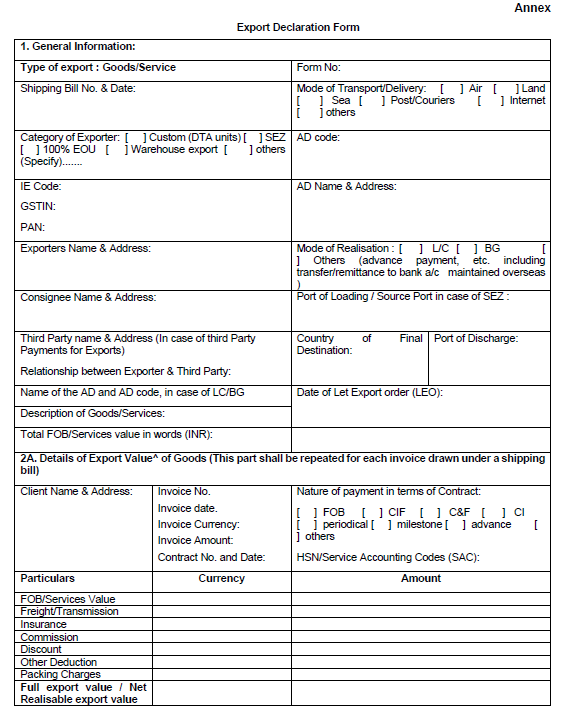
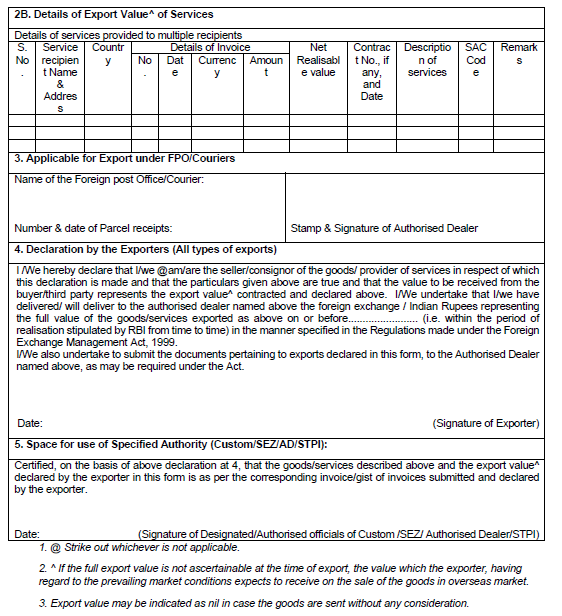
Effective 1 October 2026, the Reserve Bank of India (RBI) implemented a major change under the new Foreign Exchange Management (Export and Import of Goods and Services) Regulations, 2026. The new regulations bring all service and software exporters under a mandatory Export Declaration Form (EDF) framework, vastly expanding compliance requirements that previously only applied to goods and specific IT software exporters.
What is the EDF?
The Export Declaration Form (EDF) is a legal declaration submitted to your Authorised Dealer (AD) Category-I bank. It declares the full value of the services or goods exported from India.
Once submitted, the bank logs the details into the RBI’s Export Data Processing and Monitoring System (EDPMS). This system tracks the transaction until the foreign payment is received and reconciled, allowing the bank to issue an electronic Bank Realisation Certificate (eBRC).
🔍 Key Structural Changes
| Feature | Old Framework | New Framework (From 1 Oct 2026) |
|---|---|---|
| Software Exports | Handled through the SOFTEX mechanism. | SOFTEX is completely retired; software now falls under the unified EDF. |
| General Service Exports | No prior export declaration form was required. | Mandatory EDF filing for all covered service exports. |
| Who it Covers | Traditional goods exporters and IT firms. | Extended to Freelancers, Consultants, SaaS companies, Global Capability Centres (GCCs), and Digital Creators/Influencers receiving overseas income. |
Filing Deadlines & Provisos
- General Service & Software Deadline: Exporters must file the EDF within 30 days from the end of the month in which the invoice was raised. For example, if you raise an invoice on 15 October 2026, your EDF is due by 30 November 2026.
- Consolidation: To reduce paperwork, a single consolidated EDF can be filed to cover all invoices raised to multiple recipients during that single calendar month.
- The Non-Software Proviso: For services other than software, exporters can alternatively choose to file the EDF on or before the date of receipt of payment.
- Goods Exports: For goods exported via EDI (Electronic Data Interchange) ports, the shipping bill acts automatically as the EDF. For non-EDI ports, it must be submitted physically.
Realisation and Settlement Rules
- The 9-Month Rule: The full export value of goods and services must be realised and repatriated to India within 9 months from the invoice date.
- The INR Exception: If the export is invoiced or settled in Indian Rupees (INR), the timeline is extended to 12 months.
- Small Value Relaxation: Invoices with an export value up to ₹10 lakh can be reconciled and closed on the basis of a self-declaration by the exporter. Larger amounts require stricter backing documents like FIRAs (Foreign Inward Remittance Advices).
⚠️Why Missing the Deadline Matters
Failing to submit your EDF or delaying compliance can lead to severe operational issues:
- Blocked eBRC: Your bank will not close the entry in EDPMS, blocking the generation of your electronic Bank Realisation Certificate.
- Held Up Incentives & Refunds: An open EDPMS entry will stall your ability to claim GST refunds on zero-rated exports or export incentives.
- FEMA Penalties: Continued non-compliance shifts your status into a violation of FEMA regulations, opening up businesses and individuals to significant regulatory penalties.
FORMAT OF EDF