Adjustments retained in a final assessment order must be adjudicated on merits during appeals.

By | June 25, 2026

Adjustments retained in a final assessment order must be adjudicated on merits during appeals.

Issue

Whether the Commissioner (Appeals) is legally justified in refusing to decide the merits of a tax adjustment simply because the assessee did not file a separate appeal against the initial Section 143(1) intimation, even though that same adjustment was formally carried forward and retained in the final Section 143(3) scrutiny assessment order.

Facts

  • The case of the assessee was scrutinized for Assessment Year 2020-21.

  • An initial tax adjustment amounting to ₹9.14 lakhs was made against the assessee in the automated intimation issued under Section 143(1).

  • The assessee did not file an independent appeal against this initial Section 143(1) intimation.

  • Subsequently, the regular scrutiny assessment proceedings were completed, and the Assessing Officer formally retained the exact same ₹9.14 lakh adjustment in the final assessment order passed under Section 143(3).

  • The assessee filed an appeal challenging the final Section 143(3) assessment order before the Commissioner (Appeals).

  • The Commissioner (Appeals) dismissed the challenge and declined to evaluate the merits of the ₹9.14 lakh addition, ruling that the issue was barred because no appeal had been filed against the original Section 143(1) intimation.

Decision

  • The order of the Commissioner (Appeals) is set aside, and the specific dispute regarding the ₹9.14 lakh adjustment is remanded back to his file.

  • Even if an assessee chooses not to appeal against an initial Section 143(1) intimation, they retain the full legal right to contest that adjustment if it is subsequently incorporated and sustained in a final Section 143(3) assessment order.

  • The Commissioner (Appeals) is legally required to examine and decide the dispute on its actual commercial and statutory merits.

  • The First Appellate Authority is directed to pass a comprehensive, reasoned speaking order on the merits after giving the assessee a fair and reasonable opportunity to present their case.

Key Takeaways

  • Scrutiny Orders Absorb Prior Intimations: A Section 143(1) intimation is a preliminary automated processing step. Once a formal scrutiny assessment is initiated and a final order is passed under Section 143(3), the preliminary findings merge into the final order. An omission to appeal at the preliminary stage does not strip a taxpayer of their right to contest the final assessment.

  • Appellate Authorities Cannot Avoid Merits on Technicalities: The First Appellate Authority is a court of fact and law. It cannot summarily dismiss a substantive grievance regarding tax additions based on procedural technicalities if the final, actionable tax demand arises out of a scrutiny assessment order.

IN THE ITAT LUCKNOW BENCH ‘B’
Paliwal Diagnostics (P.) Ltd.
v.
Deputy Commissioner of Income-tax
Kul Bharat, Vice President
and Anadee Nath Misshra, Accountant Member
IT Appeal No. 684 (Lkw) of 2025
[Assessment year 2020-21]
JUNE  2, 2026
Abhishek Pandey, CA for the Appellant. R. R. N. Shukla, Add CIT(DR) for the Respondent.
ORDER
Anadee Nath Misshra, Accountant Member. – This appeal has been filed by the assessee against the impugned appellate order of learned CIT(A)/National Faceless Appeal Centre (NFAC), Delhi vide order dated 08.07.2025 for the AY 2020-21. The assessee has raised the following grounds of appeal:
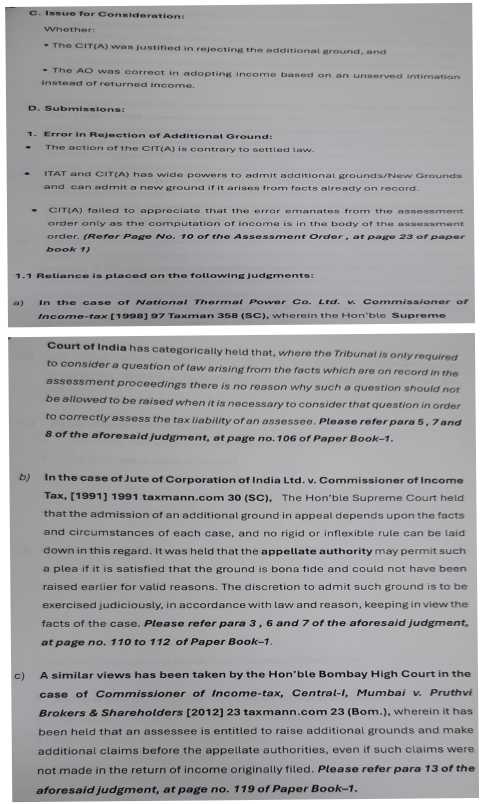
“1. That the Learned CIT(A) has erred, both in law and on facts, in dismissing the additional ground raised by the Appellant and in upholding the addition of Rs. 9,14,620/-.
2. That the action of the Learned CIT(A) in dismissing the additional ground is against the principles of natural justice.
3. That the appellant reserve the right to add to, alter or modify the above grounds before or during the hearing before the Hon’ble Tribunal so as to enable the Hon’ble Tribunal to decide on the grounds raised by the appellant as per Law.”
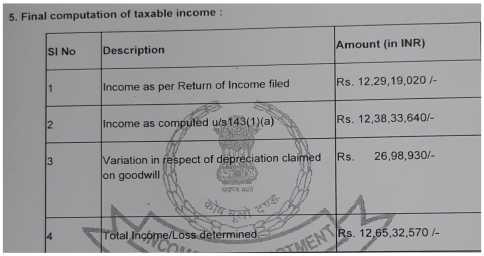
(B) In this case, assessment order dated 20.09.2022 was passed by the Assessing Officer under section 143(3) r.w.s. 144B of the Income Tax Act, 1961 (the Act) wherein the assessee’s total income was determined at Rs. 12,65,32,570/- as against the returned income of Rs. 12,29,19,020/-. The computation of total income is worked out in the assessment order is as under:
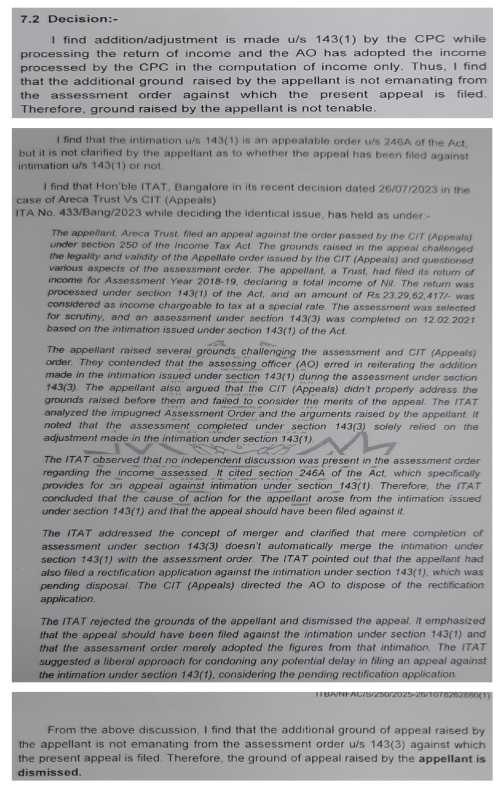
(C) The assessee’s appeal against the assessment order was partly allowed by the Learned CIT(A) vide impugned order dated 08.07.2025. The Learned CIT(A) deleted the addition of Rs. 26,98,930/- as per aforesaid computation of taxable income referred to in foregoing paragraphs (B) of this order. However, the assessee’s appeal against the adjustment of Rs. 9,14,620/- made by way of adjustment under section 143(1) of the Income Tax Act, 1961 (the Act) was left and undisturbed by the Learned CIT(A). The relevant portion of the order of the Learned CIT(A) is reproduced below:
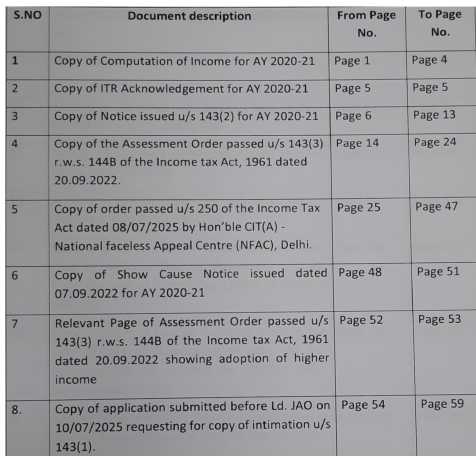
(D) The present appeal has been filed by the assessee against the aforesaid impugned appellate order of Learned CIT(A). In the course of appellate proceedings in Income Tax Appellate Tribunal, a Paper Book containing the following particulars were filed from the assessee side.
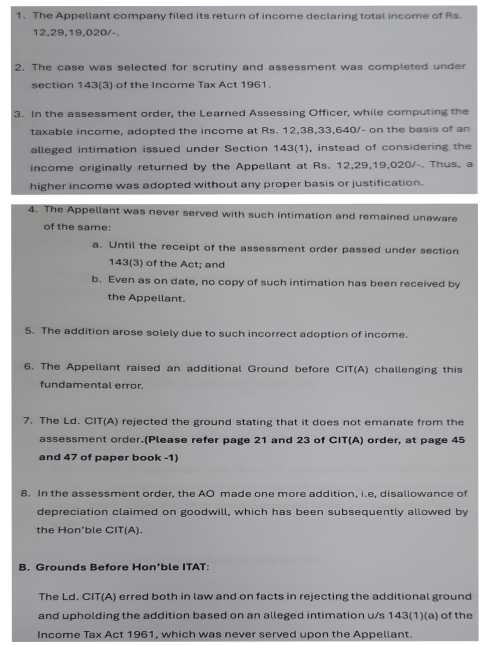
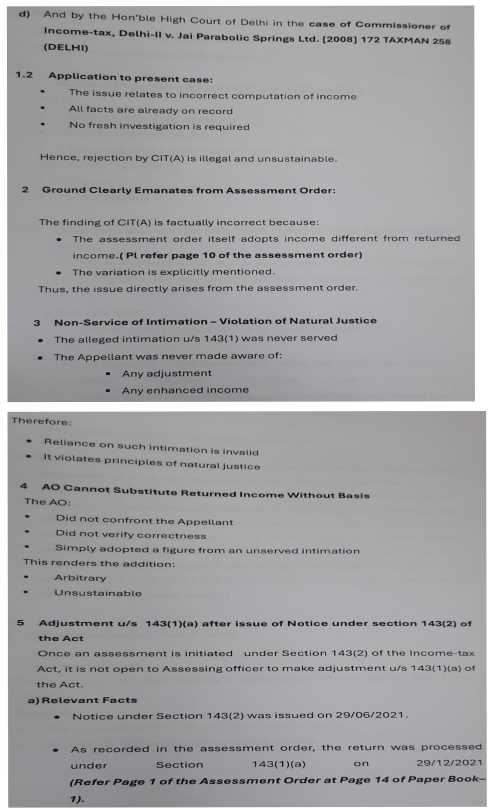
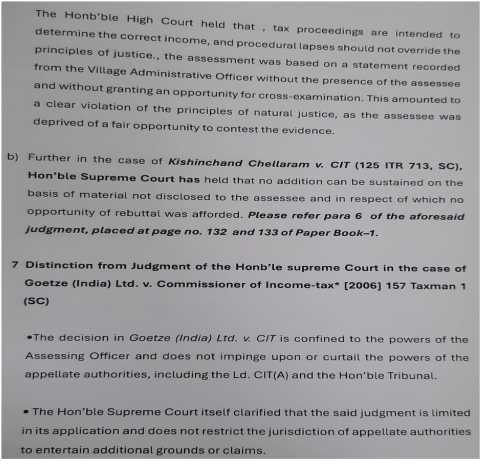
(D.1) Further, written submissions were also filed from the assessee’s side which is reproduced below for the ease of reference:
(D.1.1) At the time of hearing before us, the Learned Authorized Representative for the assessee placed reliance on the aforesaid Paper Book referred to in foregoing paragraph (D) of this order and on the aforesaid written submissions referred to in foregoing paragraph (D.1) of this order. The Learned Departmental Representative placed reliance on the assessment order and on the impugned appellate order of the Learned CIT(A).
(D.2) We have heard both sides. We have perused the materials on record. The assessee had contended before the Learned CIT(A) during the appellate proceedings in the office of the Learned CIT(A) that the assessee had not received intimation under section 143(1) of the Act showing the adjustment made by the Income Tax Department under section 143(1) of the Act. Once again, in the written submissions referred to in foregoing paragraph (D.1) of this order, the assessee has contended that the aforesaid intimation under section 143(1) of the Act was not received by the assessee. Revenue has not placed any evidence to show that the intimation under section 143(1) of the Act was actually issued and served on the assessee. If the assessee has not been served with intimation under section 143(1) of the I.T. Act, this in itself is an adequate explanation on the part of the assessee for not filing appeal against the intimation under section 143(1) of the Act. Further, in view of the written submissions referred to in foregoing paragraphs (D) of this order, we are inclined to accept the contention of the assessee that the issue regarding aforesaid addition of Rs. 26,98,930/- by way of adjustment under section 143(1) of the Act did emanate from the aforesaid assessment order dated 20.09.2022; which is further established on perusal of computation of taxable income [referred to in foregoing paragraph (B) of this order] wherein the returned income as well as income determined under section 143(1) of the Act have been indicated at Rs. 12,29,19,020/- and Rs. 12,38,33,640/- respectively, thereby confirming that adjustment made under section 143(1) of the Act is part of income assessed in the assessment order.
(D.2.1) Notwithstanding the foregoing discussion, we are of the view that the assessee had, in the present facts and circumstances of the case, multiple remedies available to the assessee, including:
(i) Application for rectification of Intimation issued under section 143(1) of the Act; under section 154 of the Act.
(ii) Appeal against the refusal to carry out rectification under section 154 of the Act. [If the assessee’s remedy exercised under (i) above is unsuccessful]
(iii) Direct appeal against the intimation under section 143(1) of the Act, under Chapter-XXA of the Act.
(iv) Appeal against the assessment order, under Chapter XXA of the Act; if the adjustment made under section 143(1) of the Act is retained in the assessment order.
(v) Revision petition under section 264 of the Act.
(D.3) It is the assessee’s choice to pursue one or more among aforesaid remedies available to the assessee as mentioned in foregoing paragraph (D.2.1) of this order. If the assessee has not opted for one or more of possible and available remedies; it is not proper on the part of Departmental Authorities to not decide the issue on merits in course of proceedings pursuant to choice of any other remedy/remedies opted for by the assessee. Therefore, even if the assessee had received intimation under section 143(1) of the Act, and even if the assessee had not filed appeal against the intimation issued under section 143(1) of the Act; it was still open for the assessee to appeal against the adjustment made in intimation under section 143(1) of the Act if such adjustment is retained in the assessment order. In view of the foregoing, we are of the view that the Learned CIT(A) was required to decide the assessee’s appeal against the aforesaid adjustment made under section 143(1) of the Act amounting to Rs. 9,14,620/-, on merits, while deciding the assessee’s appeal, if the assessee had taken a ground in the appeal filed before the Learned CIT(A) against the adjustment made in intimation under section 143(1) of the Act. In view of the foregoing discussion, the issue in dispute regarding adjustment of Rs. 9,14,620/- made under section 143(1) of the Act is restored back to the file of the Learned CIT(A) with the direction to decide this issue on merits through speaking order after providing reasonable opportunity to the assessee.
(E) All grounds of appeal are treated as disposed off, in accordance with the aforesaid directions. For statistical purposes, the appeal is allowed.