


How timber from a WWII airship hangar became part of Google campuses

How timber from a WWII airship hangar became part of Google campuses
In 1943, as World War II made materials like steel more scarce, the U.S. Navy turned to timber to construct airship hangars at Moffett Federal Airfield, located at what is now NASA Ames Research Center. The structures were built in just 208 days using Douglas fir, widely assumed to have been harvested from the forests of the Pacific Northwest, and became part of a strategic West Coast hub for blimp operations during the war.
In 2014, Planetary Ventures LLC, a subsidiary of Google, entered a long-term lease of the airfield and assumed management of the historic hangars. Though Hangar 3 stood for over 80 years, the structure was compromised by substantial engineering challenges. Ultimately, ongoing efforts to repair and preserve the historic structure could not prevent progressing damage, prompting the difficult decision to remove the now hazardous hangar.
A typical demolition would have routed this historic timber to the landfill, but Google’s sustainability and real estate teams saw a different opportunity: salvaging the wood for reuse in modern buildings.
How timber from a WWII
Salvaging 119,000 board feet of old growth lumber
Once engineering assessments confirmed Hangar 3 couldn’t be preserved in its original form, the question became how best to remove the structure. Typical demolition wasn’t an option: the wood within the structure had been exposed to a variety of chemicals, creating a high risk of contamination. So the 1,000-foot-long structure would have to be systematically dismantled.
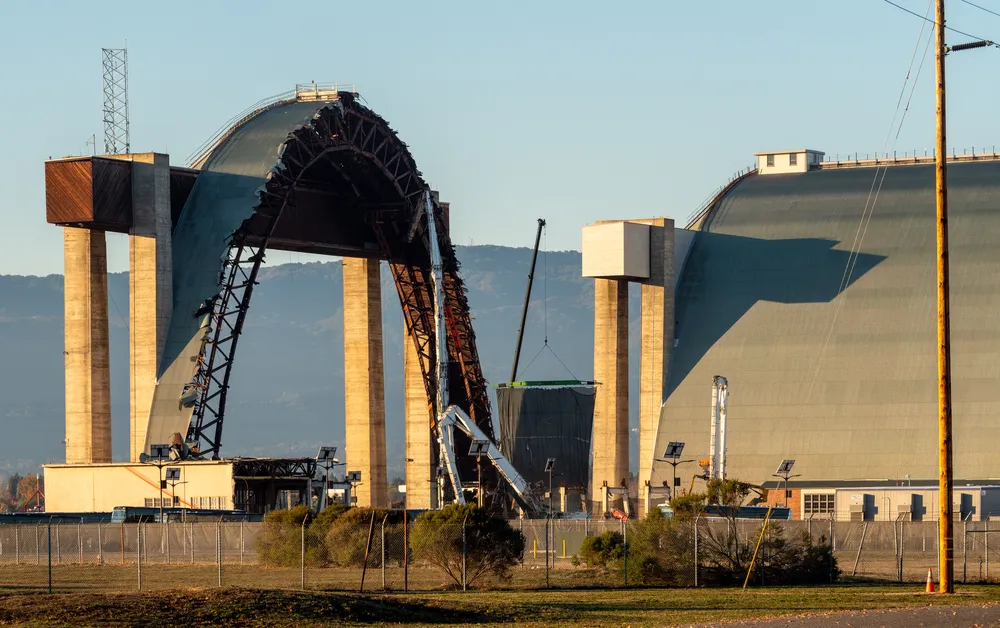
Teams used high-reach excavators to surgically disassemble the hangar, salvaging approximately 119,000 board feet of the most structurally sound Douglas fir boards (roughly 178 tons of material).
Some of this salvaged wood — shipped back up to Spokane, Washington, for evaluation and remanufacturing — is now destined for a Google mass timber office prototype in the Dalles, Oregon. It’s a homecoming of sorts: returning the wood to the regional timber economy from which it was likely harvested over eight decades ago.
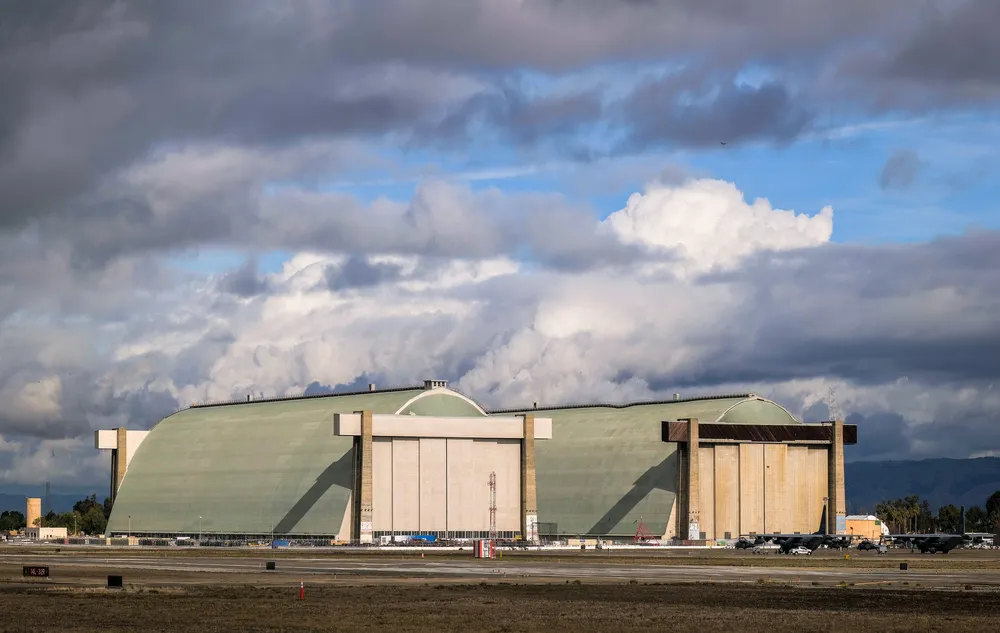
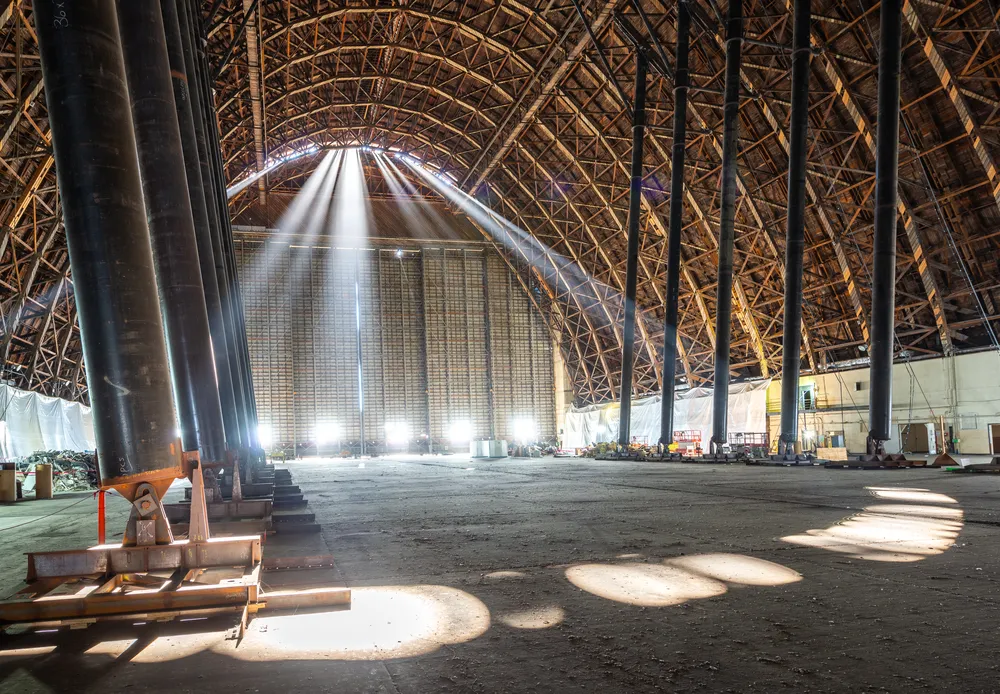
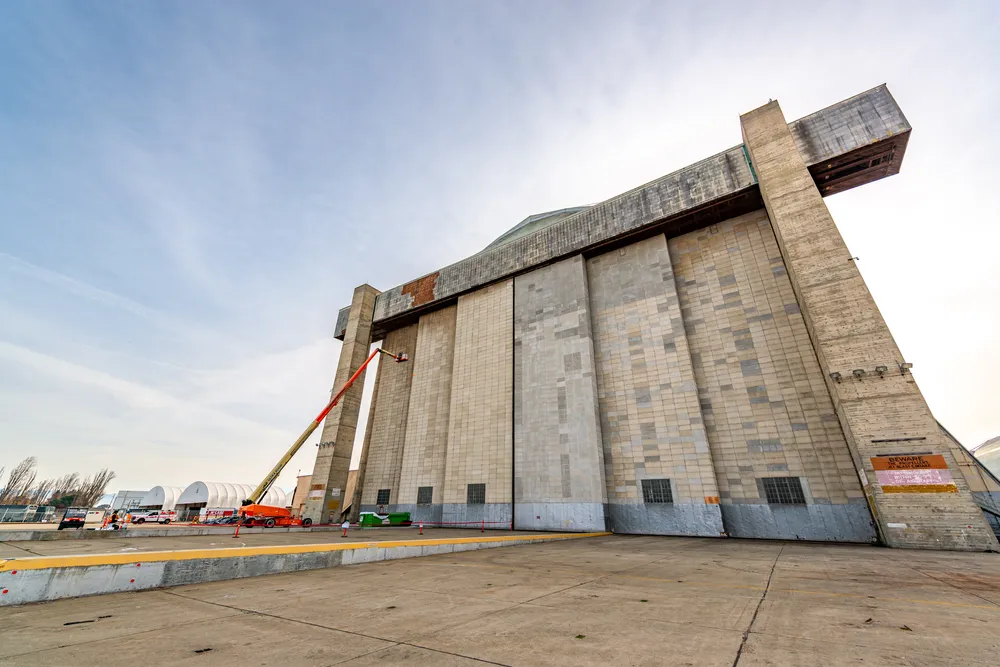
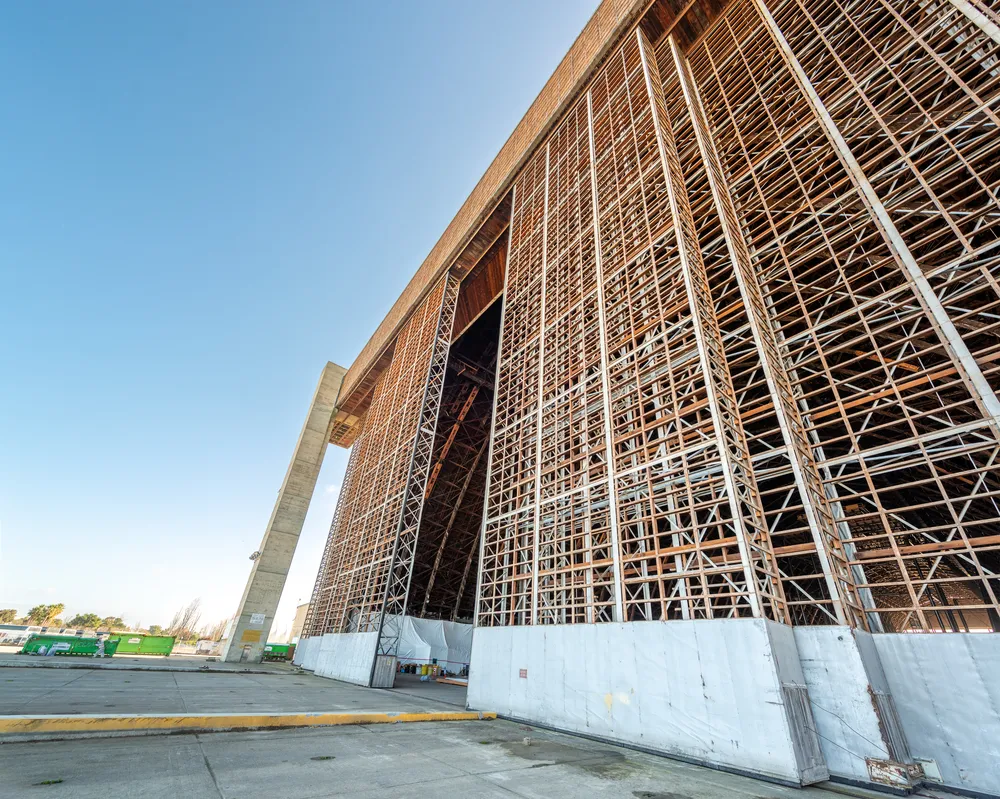
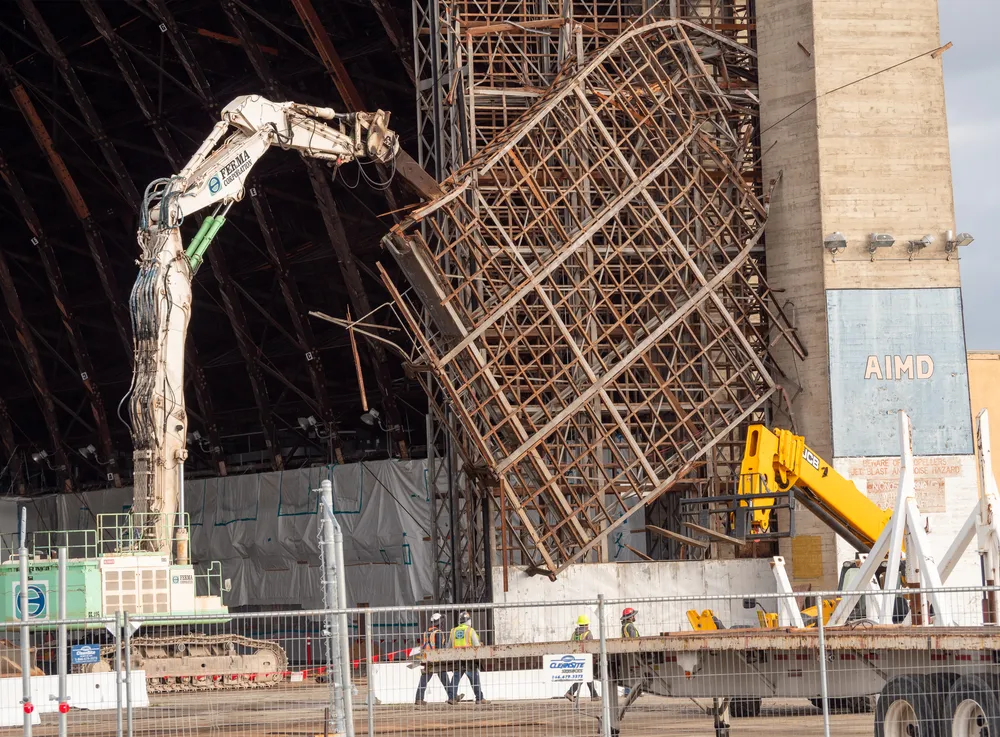
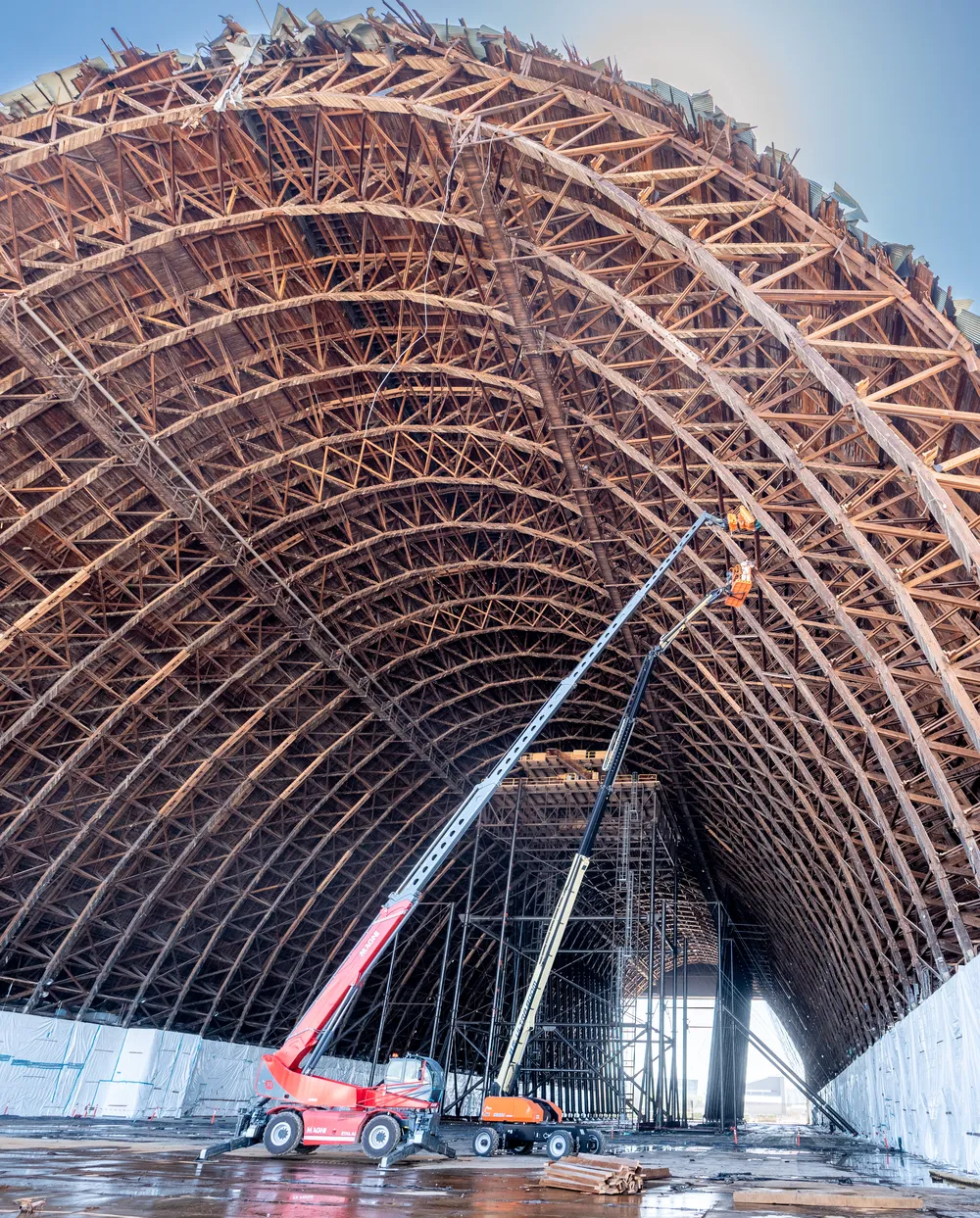
The Hangar 3 structure at Moffett Field is carefully deconstructed using specialized equipment.
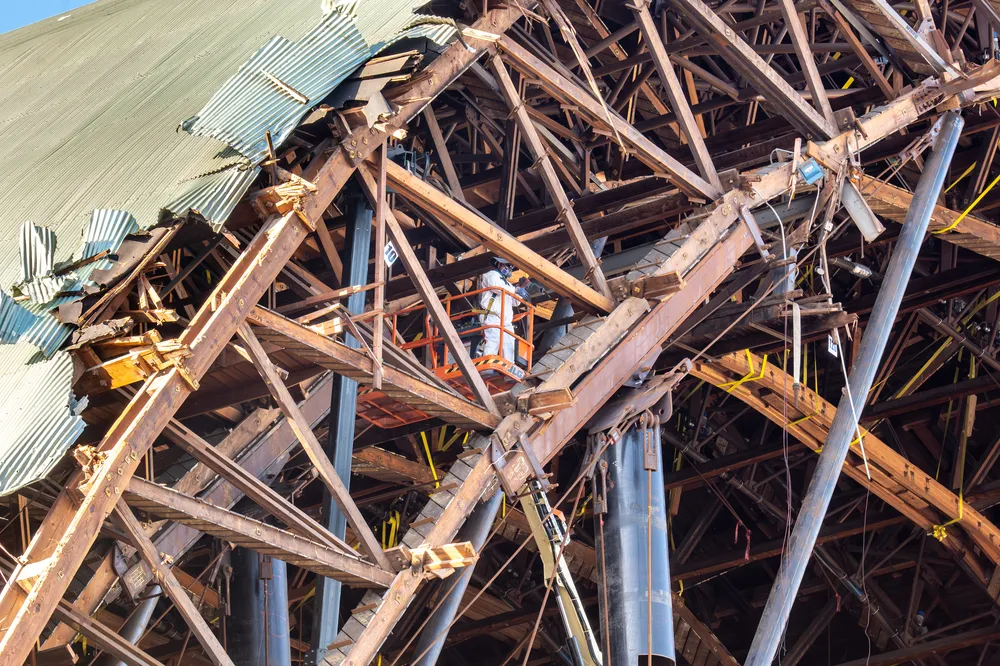
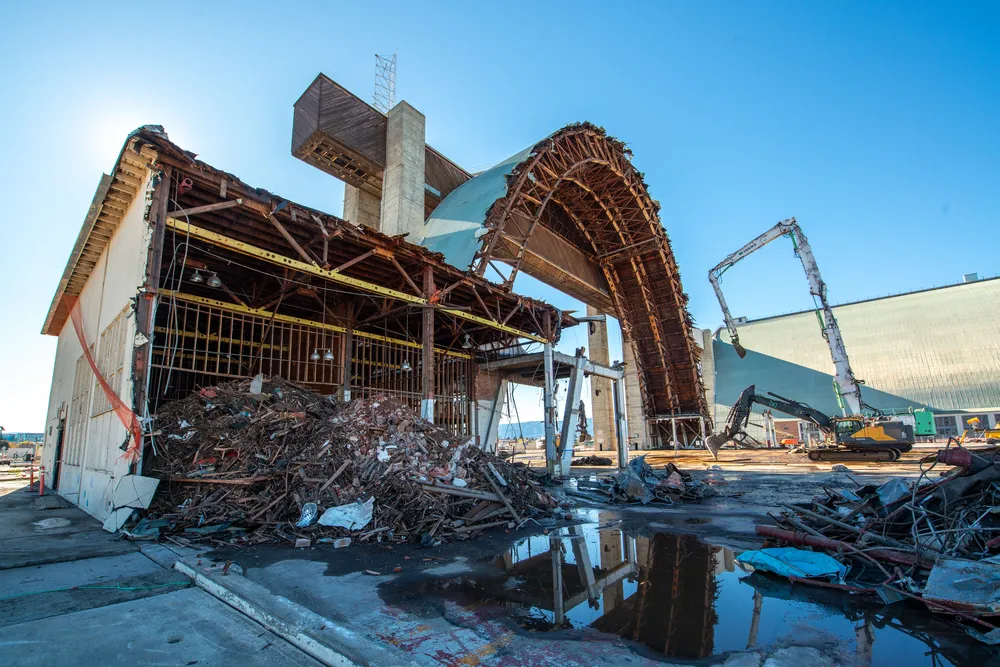
Not everything can be salvaged from a deconstruction project like this.
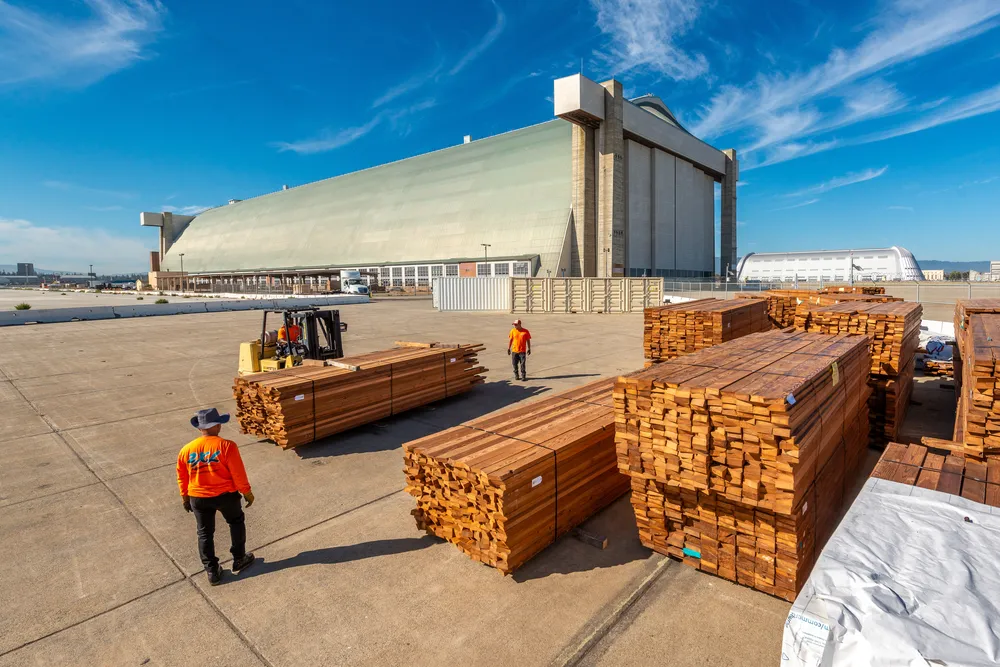
Salvaged boards are stacked prior to being shipped for testing and reuse, with Hangar 2 in the background.
Writing a new playbook
Reclaiming used lumber on such a large scale is often dismissed as unpredictable, labor-intensive and costly. Modern building codes assume builders are using freshly milled lumber, so there’s no easy path to certify reclaimed wood.
In the absence of a roadmap, the Hangar 3 project team created their own. They consulted wood scientists, structural engineers and mass timber manufacturers to rigorously test the structural integrity of the salvaged timber.
After planing away the contaminated outer layers, testing yielded incredible news: the historic Douglas fir still possessed robust, predictable structural strength. In the end, approximately 66,000 board feet of the material successfully met the rigorous requirements for mass timber remanufacturing.
Viewing old buildings as material banks, not waste
Our Hangar 3 journey underscores the opportunity presented by deconstruction and reuse. It shows that if we can view our existing physical assets as “material banks” for future uses, then we can minimize the economic and environmental costs of purchasing new materials.
The lumber salvaged from Hangar 3 is now getting a new life in showcase installations across Google campuses in the Bay Area, California, and for mass timber construction at supporting office facilities on Google data center campuses.

-
- Careful Deconstruction: Instead of traditional demolition, specialists systematically took apart Hangar 3—which was originally built by the US Navy in just 208 days. [1, 2]
- Testing and Refurbishment: The reclaimed lumber was rigorously inspected and tested to ensure it met modern structural safety standards for mass timber and aesthetic finishes. [1, 2]
- Campus Integration: The historic Douglas fir was remanufactured and deployed as structural beams and interior design elements in new Google offices and showcase installations. [1, 2]
- Google’s corporate deconstruction and circularity white papers
- The mass timber manufacturing techniques used to recycle the old-growth wood
- Other historic adaptive reuse projects in Google’s real estate portfolio
How timber from a WWII
Read more
. Microsoft Introducing MAI-Image-2.5 | Microsoft AI Models
. Introducing 7 new Microsoft AI models
. NVIDIA BioNeMo accelerates Anthropic Claude Science
. Why B3 chose Android for secure AI-enabled productivity
. Google Workspace Weekly Recap – July 3, 2026
. Powerful enterprise protection starts here
. Group project, but make it 1776
. Japan’s answer to its worker shortage: An AI model for 10 million robots
. GPT 5.6, Mythos ban lifted, realtime avatars, Seedance 2.5, brain ultrasound: AI NEWS
. Google investing $1 million in Africa’s indie game developers.
for more refer Gemini website click here
for more refer Artificial Intelligence website click here