


Reassessment Order Based on Mechanical Sanction Under Section 151 Lacking Year-Wise Investment Examination Is Invalid
Issue Whether a reassessment initiated under Section 147 is legally sustainable when the approval under Section 151 suffers from non-application of mind regarding year-wise property payments, and whether Section 292BC can retrospectively validate an invalid Section 151 approval obtained prior to April 1, 2021.
Facts
-
Return of Income: The assessee, an individual, filed his return of income for AY 2017-18 declaring a total income of ₹14.15 lakhs.
-
Initiation of Reassessment: The Assessing Officer (AO) reopened the assessment under Section 147 by issuing a notice under Section 148 after obtaining approval under Section 151.
-
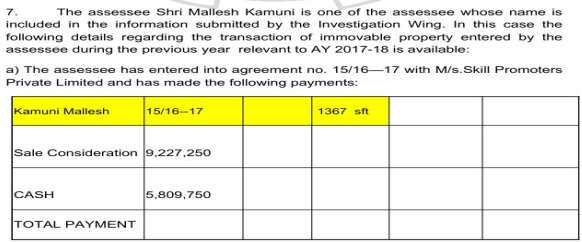
AO’s Addition: In the reassessment completed under Section 147 read with Section 144B, the AO noted the purchase of a commercial property valued at ₹92.27 lakhs (including ₹58.09 lakhs paid in cash) and treated the entire ₹92.27 lakhs as an unexplained investment under Section 69 for AY 2017-18, determining the total income at ~₹1.06 crores.
-
Lapse in Year-Wise Examination: The information relied upon pertained to property investment payments made across multiple previous years rather than exclusively during the relevant assessment year.
-
Mechanical Approval: The prescribed authority granted approval under Section 151 without examining the year-wise payment breakdown or verifying the exact assessment year in which the income allegedly escaped assessment.
-
Invocation of Section 292BC: The Revenue sought to cure the defect in the Section 151 approval by relying on Section 292BC (deemed validity of notices/approvals).
Decision
-
Verification of Multi-Year Investments: When information forming the basis of reopening relates to investments spread over multiple previous years, the AO must examine the exact year-wise breakdown before concluding that income escaped assessment for a specific assessment year [Para 8].
-
Invalid Mechanical Sanction Under Section 151: Approval granted under Section 151 without considering material facts regarding year-wise payments reflects non-application of mind, failing the statutory requirements of Section 151 [Para 9].
-
Quashing of Reassessment Proceedings: Reassessment proceedings initiated on the strength of an invalid, mechanical sanction under Section 151 are legally unsustainable [Para 11].
-
Prospective Scope of Section 292BC: Section 292BC (effective from April 1, 2021) cannot be invoked retrospectively to cure or validate an invalid Section 151 approval obtained prior to April 1, 2021 [Para 10].
-
All issues decided in favour of assessee.
Key Takeaways
-
Mandatory Duty to Verify Payment Timelines: Before issuing a reopening notice for multi-year property transactions, the AO must verify the specific assessment years in which payments actually occurred rather than making a lump-sum addition in a single year.
-
Section 151 Sanction Is Not a Rubber Stamp: The sanctioning authority under Section 151 must independently examine the underlying material; mechanical, routine approval without analyzing basic factual details renders the entire reassessment void ab initio.
-
Limits on Curative Savings Provisions: Section 292BC cannot be given retrospective effect to validate fundamental jurisdictional defects in Section 151 approvals granted before April 1, 2021.
IN THE ITAT HYDERABAD BENCH ‘A’
Kamuni Mallesh
v.
Dy. CIT
VIJAY PAL RAO, VICE PRESIDENT
and MADHUSUDAN SAWDIA, ACCOUNTANT MEMBER
and MADHUSUDAN SAWDIA, ACCOUNTANT MEMBER
IT Appeal No. 851 (Hyd.) OF 2026
[Assessment year 2017-18]
[Assessment year 2017-18]
OCTOBER 16, 2026
Bhupesh Kumar Dand, CA for the Appellant. Mohan Babu, Sr. AR for the Respondent.
ORDER
Madhusudhan Sawdia, Accountant Member. – This appeal is filed by Shri Kamuni Mallesh (“the assessee”), feeling aggrieved by the order passed by the Learned Commissioner of Income Tax (Appeals), National Faceless Appeal Centre (NFAC) Delhi (“Ld. CIT(A)”) dated 14.01.2026 for the A.Y. 2017-18.
2. The assessee has raised the following grounds of appeal:
1. Invalid Reopening of Assessment
The order of the CIT(A) / NFAC is erroneous in law and on facts in confirming the reopening of the assessment under section 147, without appreciating that the reopening was initiated without proper jurisdiction and without furnishing the reasons recorded within a reasonable time as mandated by law.
2. Violation of Principles of Natural Justice
The CIT(A) / NFAC erred in confirming the assessment order passed by the Assessing Officer without appreciating that the Assessing Officer failed to provide adequate opportunity to the appellant and did not properly consider the explanations and submissions furnished by the appellant.
3. Addition under Section 69 – Unexplained Investment
The CIT(A) / NFAC erred in confirming the addition made by the Assessing Officer under section 69 treating the alleged investment as unexplained income of the appellant for AY 2017-18.
4. Wrong Assessment Year Considered
The authorities below failed to appreciate that the property transaction relied upon by the Assessing Officer took place on 19.06.2019, which falls in Assessment Year 2020-21 and therefore cannot be taxed in Assessment Year 2017-18.
5. Addition Based on Incorrect Facts
The addition confirmed by the CIT(A) / NFAC is based on incorrect assumptions and without proper verification of the facts and documentary evidence placed on record. The CIT(A) / NFAC erred in confirming the assessment determining the income at Rs 1,06,42,350 as against the returned income of Rs 14,15,100, without any valid legal basis.
6. Other Grounds
The appellant craves leave to add, alter, amend, or withdraw any of the above grounds at the time of hearing.
3. The brief facts of the case are that the assessee is an individual who filed his return of income for the assessment year 2017-18 on 29.03.2018, declaring a total income of Rs. 14,15,100/-. Subsequently, the case of the assessee was reopened by the Assessing Officer (“AO”) under section 147 of the Income Tax Act, 1961 (“the Act”) and accordingly, notice under section 148 of the Act dated 30.03.2021 was issued to the assessee. In response to the said notice, the assessee filed his return of income on 09.04.2021, declaring the same total income of Rs. 14,15,100/-. During the assessment proceedings, the AO observed that the assessee had purchased a commercial property from M/s. Skill Promoters Private Limited for a total consideration of Rs. 92,27,250/-, out of which an amount of Rs. 58,09,750/- was paid in cash. The AO was not satisfied with the explanation furnished by the assessee regarding the source of investment in the said property. Accordingly, the AO treated the entire purchase consideration of Rs. 92,27,250/- as unexplained investment under section 69 of the Act and added the same to the income of the assessee. Consequently, the AO completed the assessment under section 147 read with section 144B of the Act, vide order dated 30.03.2022, determining the total income of the assessee at Rs. 1,06,42,350/-.
4. Aggrieved by the assessment order, the assessee preferred an appeal before the Ld. CIT(A), who partly allowed the appeal of the assessee.
5. Aggrieved by the impugned order of the Ld. CIT(A), the assessee is in appeal before this Tribunal. At the outset, the Learned Authorized Representative (“Ld. AR”) submitted that Ground Nos. 1 and 2 of the appeal relate to the validity of the reassessment proceedings initiated under section 147 of the Act on account of mechanical approval granted by the prescribed authority under section 151 of the Act. The Ld. AR submitted that the approval granted by the prescribed authority was without proper application of mind to the material available on record and, therefore, the reassessment proceedings initiated on the basis of such approval are not sustainable in law. The Ld. AR further submitted that the provisions of newly inserted section 292BC of the Act, introduced by the Finance Act, 2026 with retrospective effect from 01.04.2021, cannot come to the rescue of the Revenue in the present case, as the approval under section 151 of the Act was obtained prior to 01.04.2021, whereas the said provision has been made applicable with effect from 01.04.2021. The Ld. AR further invited our attention to para nos. 7 and 8 of the assessment order, wherein the AO has reproduced the details of payments made by the assessee towards the purchase consideration of Rs. 92,27,250/-. Referring to the said details, the Ld. AR submitted that the entire purchase consideration was not paid during the assessment year under consideration, i.e., assessment year 2017-18. Certain payments towards the purchase of the said property were also made during the assessment years 2018-19 and 2019-20. However, despite the availability of such details, the AO proceeded on the premise that the entire purchase consideration of Rs. 92,27,250/- represented income escaping assessment for the assessment year 2017-18. The Ld. AR submitted that the details of payments spreading over different assessment years were available before the AO at the time of recording the reasons for reopening the assessment and were also relevant for consideration by the prescribed authority while granting approval under section 151 of the Act. However, without examining the year-wise details of the investment, the prescribed authority granted approval for reopening the assessment on the premise that the entire amount of Rs. 92,27,250/- had escaped assessment during the assessment year 2017-18. The Ld. AR, therefore, contended that the approval was granted in a mechanical manner without proper application of mind to the relevant facts and material available on record. Accordingly, he submitted that the approval granted under section 151 of the Act is invalid and the consequential reassessment proceedings are liable to be quashed.
6. On the other hand, the Learned Departmental Representative (“Ld. DR”) relied upon the orders of the lower authorities and supported the validity of the reassessment proceedings initiated by the AO.
7. We have heard the rival submissions and perused the material available on record. We find that the principal issue arising for our consideration under ground nos. 1 and 2 of the appeal is whether the approval granted by the prescribed authority under section 151 of the Act for reopening the assessment was granted after due application of mind to the material available on record or whether the same was granted in a mechanical manner, thereby rendering the consequential reassessment proceedings invalid. It is an undisputed fact that the AO reopened the assessment for the assessment year 2017-18 on the basis of information relating to the purchase of a commercial property by the assessee for a total consideration of Rs. 92,27,250/- The AO proceeded on the premise that the entire purchase consideration represented income escaping assessment for the assessment year under consideration. However, the contention of the Ld. AR is that the said amount was not entirely paid during the relevant previous year and that certain payments were made during the subsequent previous years relevant to the assessment years 2018-19 and 2019-20. We have carefully gone through para nos. 7 and 8 of the assessment order, wherein the AO has reproduced the details of payments made by the assessee towards the purchase consideration of Rs. 92,27,250/-, the same is reproduced as under:
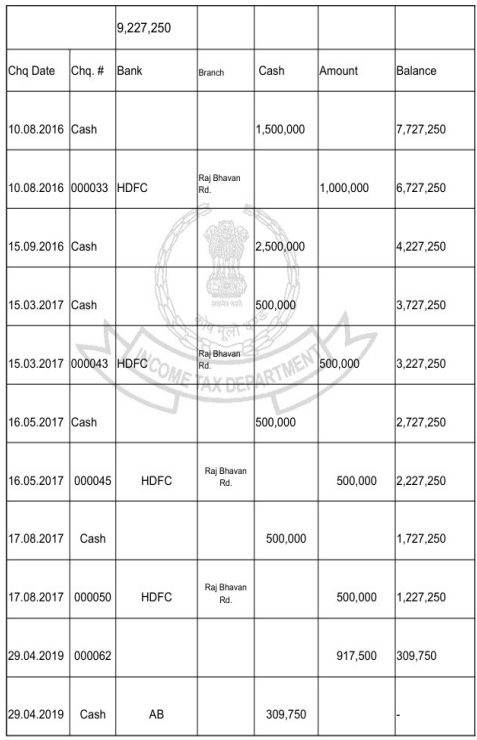
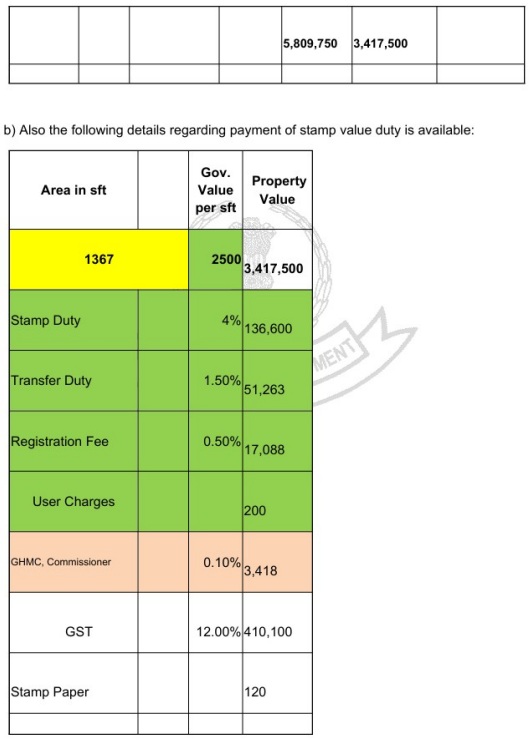
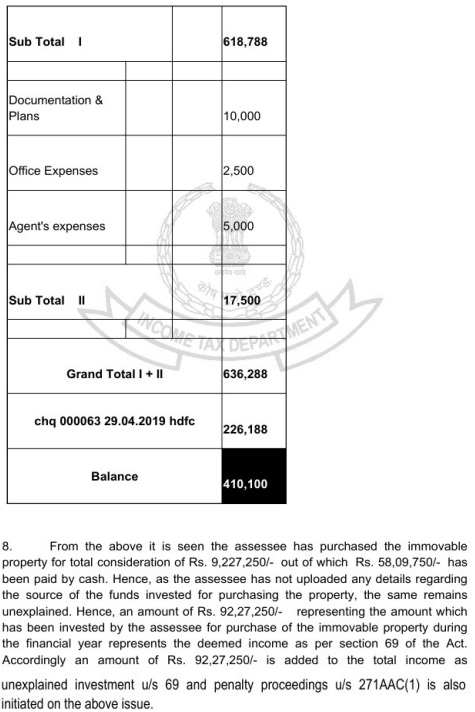
8. On perusal of the above, we find that the contention advanced by the Ld. AR regarding the payments having been spread over different assessment years is supported by the details reproduced in the assessment order itself. We observe that certain payments were made during the subsequent previous years relevant to the assessment years 2018-19 and 2019-20. Thus, the entire purchase consideration of Rs. 92,27,250/- cannot be treated as an investment made during the previous year relevant to the assessment year 2017-18 merely because the total consideration for the property was Rs. 92,27,250/-. The actual dates of payments and the year in which the investment was made are relevant considerations for determining whether any income chargeable to tax had escaped assessment for the particular assessment year. We further find that the AO, while initiating the reassessment proceedings, proceeded on the basis that the entire purchase consideration of Rs. 92,27,250/- had escaped assessment for the assessment year 2017-18, without giving due consideration to the fact that the payments towards the said property were spread over different assessment years. In our considered opinion, where the information forming the basis of reopening relates to an investment made over more than one previous year, it is necessary for the AO to examine the relevant details before arriving at a conclusion regarding escapement of income for a particular assessment year. The mere fact that a property was purchased for a particular consideration does not, by itself, establish that the entire consideration constituted an investment made during one previous year.
9. We are conscious of the fact that, at the stage of reopening an assessment, the AO is not required to conclusively establish escapement of income. However, there must be a rational connection between the material available on record and the formation of belief that income chargeable to tax has escaped assessment for the relevant assessment year. The requirement of obtaining approval under section 151 of the Act is an additional statutory safeguard intended to ensure that the power of reopening an assessment is exercised after due consideration of the relevant material and in accordance with law. The approval contemplated under section 151 of the Act is not an empty formality. The prescribed authority is required to examine the reasons recorded by the AO and the relevant material forming the basis of the proposed reassessment proceedings before granting approval. Such approval must reflect due application of mind to the circumstances of the case. A mechanical approval, without consideration of the material facts relevant to the formation of belief regarding escapement of income, would defeat the very purpose for which the statutory requirement of prior approval has been prescribed. In the present case, we find that the reassessment proceedings were initiated on the premise that the entire investment of Rs. 92,27,250/- related to the assessment year 2017-18, whereas the details reproduced by the AO in para nos. 7 and 8 of the assessment order indicate that the payments were made over different assessment years. This discrepancy goes to the very basis of the formation of belief regarding escapement of income for the assessment year under consideration. The year- wise details of the payments constituted material facts which required consideration before approval for reopening the assessment was granted. In our considered opinion, the prescribed authority, while granting approval under section 151 of the Act, was required to examine whether the reasons recorded by the AO were consistent with the material available on record, particularly when the alleged escapement of income was based on the entire purchase consideration of an immovable property, payments towards which were spread over different assessment years. The approval granted without addressing this material discrepancy cannot be regarded as an approval granted after due application of mind. We further find that the statutory requirement of approval under section 151 of the Act is intended to provide an independent examination of the reasons recorded by the AO before the jurisdiction to reopen a completed assessment is exercised. If such approval is granted mechanically, without examining the material facts relevant to the assessment year sought to be reopened, the statutory safeguard becomes illusory. Therefore, the requirement of approval cannot be treated as a mere procedural formality.
10. So far as the contention of the Ld. AR regarding the applicability of section 292BC of the Act is concerned, we find that the notice under section 148 of the Act was issued on 30.03.2021 and the approval under section 151 of the Act was necessarily obtained prior to the issuance of the said notice. Thus, the approval in question pertains to a period prior to 01.04.2021. Since the newly inserted provision, as submitted by the Ld. AR, has been made applicable with effect from 01.04.2021, the same cannot be invoked to validate an approval granted prior to the said date. Accordingly, we find merit on the said contention of the assessee that the provisions of newly inserted section 292BC of the Act, introduced by the Finance Act, 2026 with retrospective effect from 01.04.2021, cannot come to the rescue of the Revenue in the present case.
11. In view of the foregoing discussion, we are of the considered opinion that the approval granted by the prescribed authority under section 151 of the Act, without due consideration of the material facts relating to the year-wise payments towards the purchase of the immovable property, suffers from non- application of mind. Such mechanical approval does not satisfy the statutory requirement contemplated under section 151 of the Act. Consequently, the reassessment proceedings initiated on the basis of such invalid approval cannot be sustained in law. Accordingly, we hold that the approval granted under section 151 of the Act is invalid and, consequently, the reassessment proceedings initiated under section 147 of the Act and the assessment order passed under section 147 read with section 144B of the Act dated 30.03.2022 are hereby quashed.
12. Since we have quashed the reassessment proceedings on the aforesaid legal ground, the other grounds raised by the assessee challenging the additions made on merits have become academic in nature and, therefore, do not require separate adjudication.
13. In the result, the appeal filed by the assessee is allowed.