


Advancing clean electricity on India’s grid
Advancing clean electricity on India’s grid
India’s power sector is undergoing a sweeping grid modernization and clean energy transition, targeting 500 GW of non-fossil fuel capacity by 2030. Actionable steps like tracking energy on the India Smart Grid Knowledge Portal and leveraging corporate agreements are actively expanding the nation’s renewable footprint and grid reliability. [1, 2, 3]
The transformation of India’s electricity grid relies on several core initiatives and technological breakthroughs to balance rapid renewable deployment with grid stability: [1, 2]
1. Large-Scale Infrastructure and Capacity Additions
- Renewable Milestones: India has surpassed 150 GW of installed solar capacity, with non-fossil fuel sources now making up over 50% of the total installed electric power capacity. [1, 2]
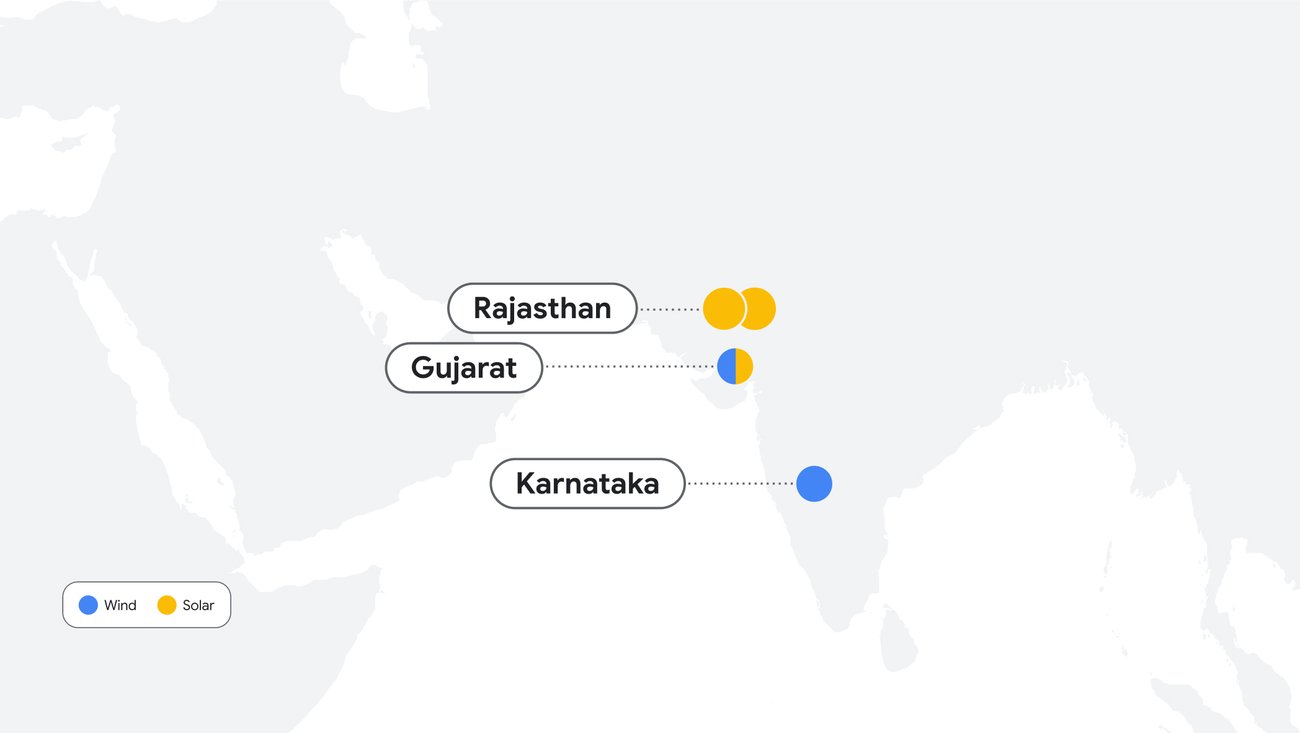
- Corporate Participation: Major global tech firms are directly investing in this transition. For example, Google’s Clean Energy Blog details a partnership with ReNew enabling a 150 MW solar project in Rajasthan to help add new zero-carbon generation to the grid. [1, 2, 3, 4]
- Distributed Solar: The PM Surya Ghar program has helped millions of households install rooftop solar systems, while PM-KUSUM provides solar pumps to agricultural hubs to reduce diesel dependence. [1]
2. Grid Modernization and Flexibility
- Smart Grid Investments: The India Smart Grid Forum (ISGF) is guiding the transition through large-scale investments in Green Energy Corridors and High Voltage Direct Current (HVDC) lines. [1]
- Storage Technologies: Battery Energy Storage Systems (BESS) and pumped storage projects are being developed to store excess solar and wind power, enabling 24/7 reliable energy. [1]
- Grid Rules: To manage the influx of variable renewable power, federal regulators are implementing stricter grid operation and communication rules to maintain frequency stability, though these have occasionally faced market resistance. [1, 2]
3. Long-Term Energy Outlook
- Nuclear and Coal: While renewables are expanding fast, India’s energy roadmap maps out a strategic role for nuclear power (targeted to reach up to 135 GW by 2070). Coal will also continue to play a baseline or low-utilization reserve role to guarantee energy security. [1]
- National Grid Flexibility: Initiatives like the National Grid Flexibility Programme by the Rocky Mountain Institute aim to operationalize virtual power plants and aggregator models to match supply with real-time power demand. [1]
If you are interested in a specific area, I can:
- Detail the corporate power purchasing process in India.
- Explain the incentives and rollout of rooftop solar installations.
- Compare the long-term energy storage technologies currently being deployed. [1]
Read more
. The Design of the Nest Doorbell (wired, 3rd gen)
. Introducing the Workspace Policy API mutate endpoints for DLP
. Paris Hilton is Android’s first icon in residence
. Get travel-ready with Google Fi Wireless
. Create campaign concepts and assets with Codex
. Andrea Bocelli, David Guetta, EJAE, Megan Thee Stallion – DNA (FIFA World Cup 2026™)
. Searching For: The Larry O’Brien Trophy + NBA
. Check Point Launches New MSP Platform and Unified Bundles to Secure AI Transformation
. Google Meet now supports sending 1080p HD video from Chrome OS meeting room hardware
for more refer Gemini website click here
for more refer Artificial Intelligence website click here