


Puppets x AI Behind the Scenes with Timmy TPU
Puppets x AI Behind the Scenes with Timmy TPU
AI significantly accelerates the production workflow by enabling faster iteration and reducing the time required to visualize final outputs. According to the video (0:53 – 1:03), tasks that previously took up to three weeks can now be completed in just a few hours.
Key ways AI speeds up the process:
- Rapid Prototyping: AI tools allow creators to take quick initial sketches and immediately test out materials, lighting, and textures on a 3D body (0:43 – 0:53).
- Visual Style Application: By using tools like Nano Banana, creators can quickly apply concept art to raw input footage (like simple puppetry or 3D animation) to bring it into the film’s visual language (1:24 – 1:30).
- Control and Refinement: Models like Gemini Omni and other experimental video tools allow the team to precisely control how scenes look, significantly elevating the visual style while maintaining the human nuances of the original performance (1:32 – 1:41, 1:58 – 2:11).
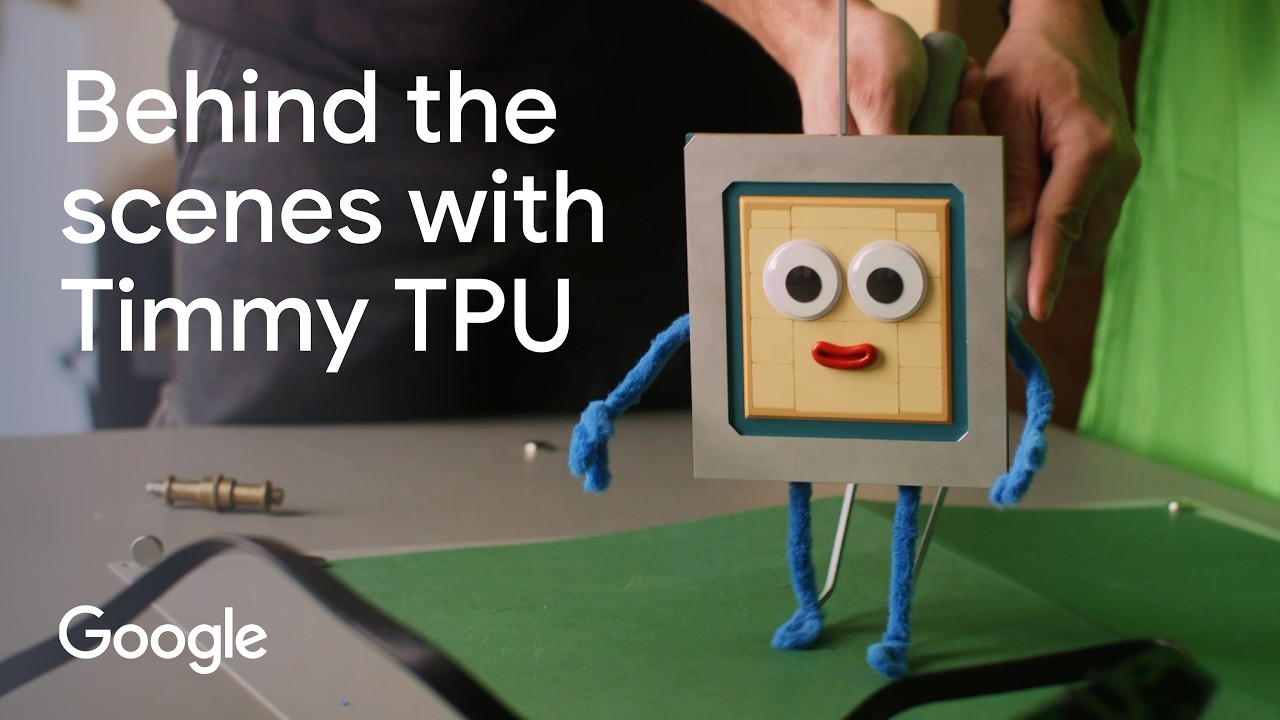
The “Puppets x AI” project was easily one of the most delightful surprises of Google I/O 2026. Rather than opening a highly technical keynote with sterile, futuristic graphics, Google collaborated with Nexus Studios and director Laurie Rowan to create an ’80s-inspired training montage.
The unlikely star? Timmy TPU, a nervous little AI chip trying to get in shape for the big stage. Behind the scenes, the project serves as a perfect case study for how human craftsmanship and generative AI tools can enhance, rather than replace, one another.
The Creative Collision: How It Was Made
The production team described the process as an organic blend of physical and digital artistry, bringing together traditional puppeteers, 3D animators, modelers, and AI engineers under a unified workflow.
1. Built Like a School Project
To give the film its distinct charm, the team constructed physical, lo-fi environments. They used:
-
Handmade puppets for the characters.
-
Cardboard sets and cutouts for the backdrops.
-
Pipe cleaners and tangible materials to establish real-world textures.
By embracing these physical imperfections, the film achieved a tactile warmth that stood out against typical corporate tech imagery.
2. Layering the AI Ecosystem
Once the physical footage was captured, the team utilized Google’s latest frontier models to bridge the gap between puppetry and high-fidelity animation:
-
Gemini Omni: Used during post-production to seamlessly blend the 3D animated overlays with the real-world puppet footage. Because Gemini Omni natively understands and outputs multi-modal data, it helped synthesize realistic lighting and depth maps over the cardboard sets.
-
Experimental Video Tools: Google’s latest generative video models allowed the animators to rapidly iterate, test video effects, and refine character movements in real time without waiting for traditional, weeks-long rendering cycles.
The Takeaway: The campaign was designed to humanize the massive infrastructure powering the “agentic era.” By turning a technical, enterprise-level product like an 8th-generation Tensor Processing Unit into a nervous, underdog puppet, Google managed to make infrastructure tech approachable and memorable.
For an inside look at the production workflow, you can check out the official Puppets x AI Behind the Scenes Featurette. This video breaks down how the crew combined practical puppetry effects with Gemini Omni’s multi-modal video capabilities to pull off the final film.
Read more
. Our new eighth-generation TPUs are designed to power the AI era.
. TPU Training Day for I/O ‘26
for more refer Gemini website click here
for more refer Artificial Intelligence website click here